


Animals suddenly changed their behavior during the solar eclipse
Translated from Polish and summarized by DistantNews. Read the original for the full story.
At a glance
In-depth
Named sources
Context piece
- Researchers from Spain and Portugal observed animals during the Aug. 12 total solar eclipse to study responses to sudden daytime darkness.
- Preliminary findings showed behavioral changes in roughly half of the several dozen species examined, including lions, orangutans, chimpanzees, elephants and butterflies.
- The study involved 13 zoos and aquariums, with the strongest changes reported where the eclipse was total rather than partial.
The sudden darkness of the Aug. 12 total solar eclipse changed the behavior of many animals observed in Spain and Portugal. Preliminary findings showed that about half of several dozen species responded differently during the event.
Researchers used high-resolution cameras and sound-recording systems, including equipment designed to track bird vocalizations. The observations were coordinated by the Iberian Association of Zoos and Aquariums and carried out by staff at 13 zoos and aquariums.
Lions became more active when the eclipse began and increasingly restless as darkness deepened. A male common sitatunga also became more active and repeatedly attempted to mate with females, behavior typical of the species early in the morning. Orangutans stayed outside and repeatedly looked toward the sky. When the light returned, one made vocal sounds while a female embraced her offspring.
Chimpanzees reacted differently, calmly preparing for sleep during the eclipse. The elephants observed changed their behavior only slightly. Indian elephants remained relatively calm and made soft sounds, while African elephants stood motionless in a group during the darkest phase and resumed activity as daylight returned.
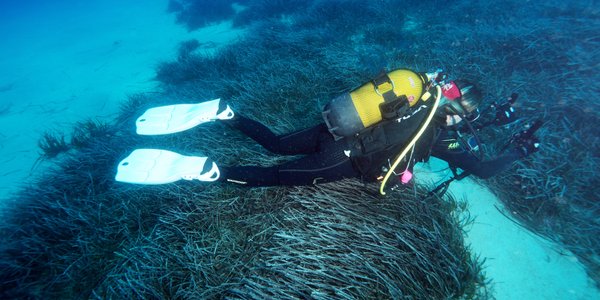
Researchers also studied marine animals at Zoomarine in Portugal’s Algarve. Most species there showed little change, which biologists attributed to the eclipse being only partial in that part of the Iberian Peninsula. Butterflies showed the clearest response: their activity gradually declined, and they remained still on leaves at the eclipse’s peak.
About this summary
Originally published by Rzeczpospolita in Polish. Translated, summarized, and contextualized automatically by DistantNews, with a note on how the source frames the story. Not individually reviewed before publishing. How this works.
More Stories

From Our Blog

News in Translation: What Gets Lost, and How We Keep the Framing

Diaspora Media: How Communities Abroad Follow Home

Traveling Where the Press Is Not Free: How to Read the News There

The Digital Nomad's Guide to Local News

The Same Story, Different Countries: How Coverage Changes at the Border
