


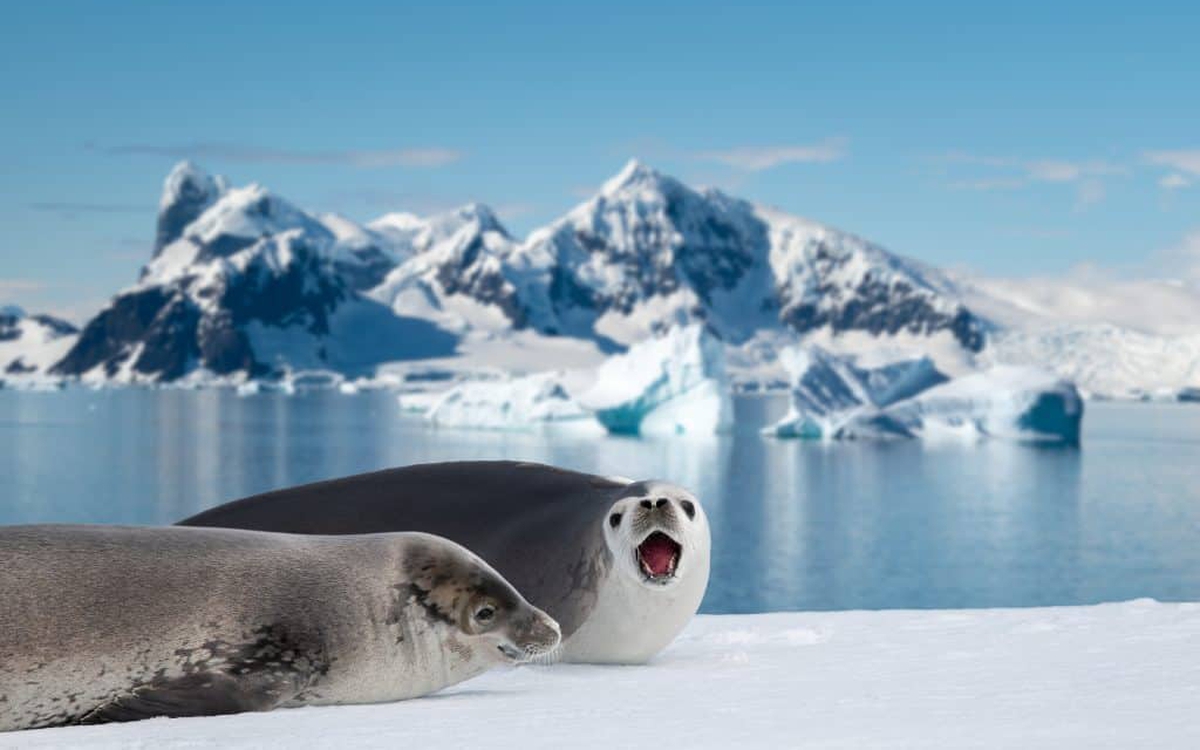
Antarctic seals found to produce ultrasonic sounds, challenging communication understanding
Translated from Vietnamese, summarized and contextualized by DistantNews.
TLDR
- Weddell seals, found in Antarctica, produce a wide range of vocalizations, including ultrasonic sounds previously unknown to science.
- Scientists discovered these seals emit sounds up to nearly 50kHz, far exceeding human hearing limits, resembling electronic effects.
- Researchers hypothesize these ultrasonic calls may serve as a private communication channel or a form of echolocation in the dark Antarctic waters.
The icy depths of Antarctica have yielded another marvel: the Weddell seal, a creature that defies our understanding of marine communication. For years, scientists have been captivated by the diverse sounds these seals produce, sounds so unique they've been used as ambient soundtracks for researchers at McMurdo Station. However, recent discoveries reveal that what we could hear was merely the tip of the iceberg.
Using highly sensitive underwater recording equipment, a team of biologists has uncovered a hidden acoustic world. These seals are not just 'singing' in frequencies we can perceive; they are also producing ultrasonic calls, reaching nearly 50kHz, a range far beyond human auditory limits. This revelation, published in the Journal of the Acoustical Society of America, paints the Weddell seal as a true 'musician of the ocean,' capable of generating complex sound sequences akin to science fiction movie scores.
they are also producing ultrasonic calls, reaching nearly 50kHz, a range far beyond human auditory limits.
The implications of this discovery are profound. Why would these seals produce sounds they themselves can barely hear? One theory suggests a private communication channel, a way to exchange information when lower frequencies are crowded with other sounds. Another, more intriguing hypothesis, proposes a form of echolocation, similar to that used by dolphins and bats, to navigate and hunt in the perpetual darkness of the Antarctic winter. While definitive proof of a full echolocation system is still pending, the prevalence of these ultrasonic sounds during winter months lends significant weight to this idea.
This finding underscores how much we still have to learn about the natural world, especially in extreme environments like Antarctica. It challenges our assumptions about animal communication and opens new avenues for research into marine biology and bioacoustics. For scientists studying this region, it’s a reminder that even the most familiar creatures can hold astonishing secrets.
This finding underscores how much we still have to learn about the natural world, especially in extreme environments like Antarctica.
DistantNews Editorial
Originally published by Tuổi Trẻ in Vietnamese. Translated, summarized, and contextualized by our editorial team with added local perspective. Read our editorial standards.
More Stories



From Our Blog

What Gets Lost (and Found) When News Is Translated

The Critical Role of Diaspora Media in Global News

What Travellers Should Know About Countries with Restricted Press

A Digital Nomad's Guide to Following Local News

How the Same Story Looks Different in Different Countries
