

 Image: Fernanda OH / EL UNIVERSAL
Are Mexico City parking meters operating on September 1?
Translated from Spanish and summarized by DistantNews. Read the original for the full story.
At a glance
News
Documents & data
Context piece
- Ecoparq parking meters in Mexico City will operate normally on September 1 because the day is not an official holiday.
- Standard hours run from 8 a.m. to 8 p.m., while meters in Polanco, Roma and Hipódromo operate until 1 a.m.
- The authorized 2026 rate is 3.40 pesos per 15 minutes, and motorcycles are exempt if parked in designated spaces.
Mexico City drivers will still need to pay for parking on September 1. Ecoparq said its meters will operate normally because the date is not an official holiday.
The announcement addresses uncertainty surrounding the second State of Government Report by President Claudia Sheinbaum, which is scheduled for the following day. Ecoparq’s regular weekday hours will remain in effect, from 8 a.m. to 8 p.m.
Parking hours extend later in several areas. Meters in Polanco, within the area bounded by Arquímedes, Horacio, Moliere and Reforma, as well as in Roma and Hipódromo, operate until 1 a.m. the next day.
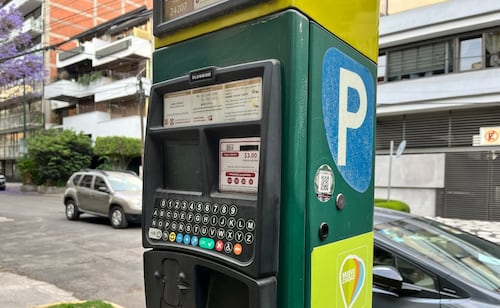
The 2026 authorized rate is 3.40 pesos for every 15 minutes. Drivers can pay with coins, the Mueve Ciudad prepaid card, or the Parkum, Mueve Ciudad and Blinkbay apps in Anzures, Benito Juárez Sur and Norte, Florida, Guadalupe Inn and Lomas. In Juárez and Cuauhtémoc, payment is available through coin boxes, digital kiosks or the ¡Yo! Estacionándome app. Servimet manages the meters in those two neighborhoods.
Motorcycle riders do not pay the meter fee, but they must use designated spaces marked with blue lines and a motorcycle pictogram. Drivers who fail to pay can face fines and the installation of an immobilization device.
About this summary
Originally published by El Universal in Spanish. Translated, summarized, and contextualized automatically by DistantNews, with a note on how the source frames the story. Not individually reviewed before publishing. How this works.
More Stories

From Our Blog

What Press Freedom Means for the News You Read

What Gets Lost (and Found) When News Is Translated

The Critical Role of Diaspora Media in Global News

What Travellers Should Know About Countries with Restricted Press

A Digital Nomad's Guide to Following Local News
