

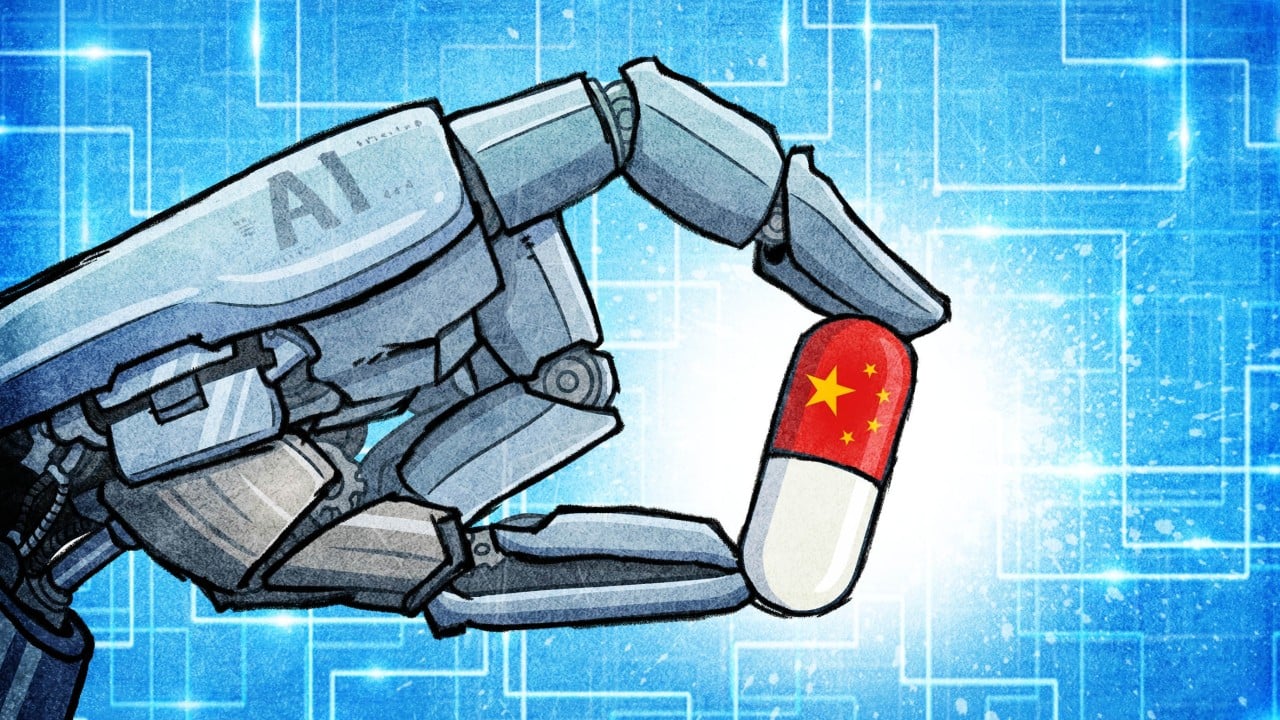
As China’s biotech firms shift gears, can AI floor the accelerator?
Summarized and contextualized by DistantNews.
TLDR
- Chinese biotech firms are increasingly striking large out-licensing deals, signaling a strategic shift from low-cost manufacturing to high-value innovation in the global drug industry.
- Companies like CSPC Pharmaceutical and RemeGen have secured deals worth billions, with Haisco Pharmaceutical Group recently signing a US$745 million agreement with AbbVie.
- The integration of artificial intelligence into drug discovery is expected to further accelerate this transition, potentially positioning China as a top-tier player in the global pharmaceutical value chain within the next three to five years.
The recent surge in multi-billion dollar out-licensing deals by Chinese pharmaceutical companies like CSPC Pharmaceutical and RemeGen, alongside Haisco Pharmaceutical Group's significant agreement with AbbVie, underscores a profound transformation within China's biotech sector. This isn't just about individual successes; it represents a strategic pivot from being a global manufacturing hub to becoming a powerhouse of innovation. As reported by the South China Morning Post, these deals, some reaching up to US$18.5 billion, are not mere transactions but indicators of China's growing ambition and capability in high-value drug development.
In recent months, companies including CSPC Pharmaceutical and RemeGen have struck out-licensing agreements worth up to US$18.5 billion and US$5.6 billion respectively, while Haisco Pharmaceutical Group has added two of its own — most recently a deal worth up to US$745 million.
The timing of this shift is particularly critical. With the global pharmaceutical industry facing a looming patent cliff, major drug makers are actively seeking to replenish their pipelines. Chinese biotech firms are strategically positioned to meet this demand, leveraging their increasing R&D prowess. The involvement of artificial intelligence in drug discovery and development is further amplifying this momentum. AI is not just a tool; it's a catalyst, potentially enabling China to rapidly climb the global industry's hierarchy and secure a leading position in the value chain.
Under the terms of the deal, the Beijing-based Haisco granted US pharmaceutical giant AbbVie the rights to develop, manufacture and sell a portfolio of home-grown pain drug molecules outside China, as global drug makers race to replenish pipelines ahead of a looming patent cliff.
Analysts like Tony Ren from Macquarie Capital highlight that China's role in the global drug value chain is set to expand significantly over the next three to five years. This expansion encompasses all stages, from R&D and clinical trials to manufacturing and commercialization. For China, this evolution is more than just economic; it's about technological sovereignty and global influence in a critical sector. While Western media often focuses on the sheer scale of Chinese deals, the deeper narrative here is about the qualitative leap in innovation and the strategic integration of cutting-edge technologies like AI, which are fundamentally reshaping the future of medicine and China's place within it.
The burst of deal making signals a shift in how Chinese biotech firms are positioning themselves in the global drug industry – moving beyond low-cost manufacturing into higher-value innovation.
DistantNews Editorial
Originally published by South China Morning Post. Summarized and contextualized by our editorial team with added local perspective. Read our editorial standards.
More Stories

From Our Blog

Countries Without a Free Press: What You Need to Know

What Press Freedom Means for the News You Read

What Gets Lost (and Found) When News Is Translated

The Critical Role of Diaspora Media in Global News

What Travellers Should Know About Countries with Restricted Press
