


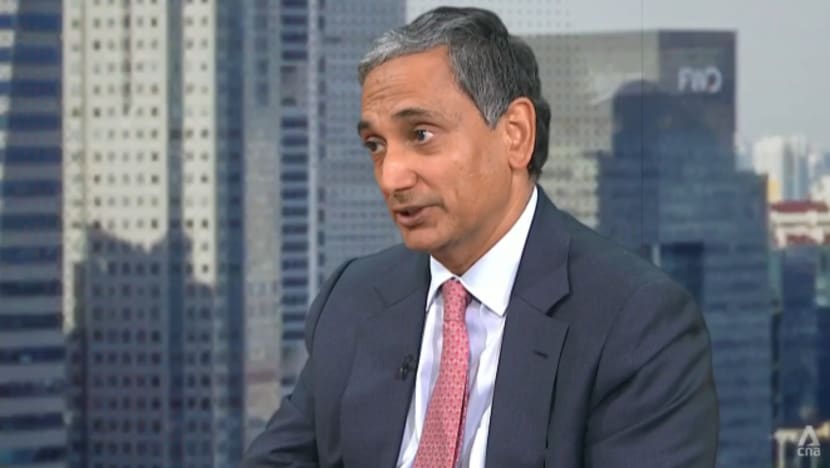
Asian economies should boost trade with each other to weather global shocks: IMF
Summarized and contextualized by DistantNews.
TLDR
- Asian economies can bolster their resilience to global shocks by increasing intra-regional trade, according to the IMF.
- Deeper regional integration could act as a buffer against external risks, though Asia remains heavily dependent on imported energy, particularly from the Middle East.
- Reducing non-tariff barriers within ASEAN and strengthening intra-regional trade in final goods could unlock significant growth potential for the region.
The International Monetary Fund (IMF) has highlighted a crucial strategy for Asian economies to navigate the turbulent global economic landscape: boosting trade amongst themselves. As the region grapples with its significant reliance on imported energy, particularly from the Middle East, deepening regional integration emerges as a vital buffer against mounting external risks. Krishna Srinivasan, director of the IMF’s Asia and Pacific Department, emphasized that increased intra-regional trade can not only insulate economies from repeated shocks but also create jobs.
One way to insulate from repeated external shocks is to trade more with each other. (That in) itself is a buffer.
While Asia possesses immense growth potential and hosts some of the world's largest markets like China, Japan, and India, its trade patterns reveal a continued dependence on American and European markets for final goods. The IMF points out that only about 30 percent of final goods are traded within Asia, despite a higher percentage for intermediate goods. This underscores a significant, yet largely untapped, opportunity for growth and stability within the region itself. Reducing non-tariff barriers, especially within ASEAN, could unlock substantial economic gains, making trade more fluid and accessible.
If countries start trading a lot more within the region, (that) will also create jobs. There's significant potential for intra-region trade, within Asia, within ASEAN (Association of Southeast Asian Nations), and within South Asia.
The IMF's call for greater regional trade comes at a critical juncture, with Asia facing heightened vulnerability due to energy supply disruptions linked to ongoing global conflicts. The region sources a substantial portion of its crude oil from the Middle East, much of which passes through the Strait of Hormuz. This dependence translates to a significant portion of Asia's GDP being tied to energy imports, making it particularly susceptible to price hikes and supply shocks. The IMF warns that prolonged conflict could lead to a cumulative drop in Asia's growth and a significant rise in inflation, narrowing the policy options for governments across the continent. Therefore, strengthening regional economic ties is not just a matter of growth, but of crucial economic security.
Notably for ASEAN countries, which are open economies, they will benefit a lot if (they) reduce non-tariff barriers. There is huge room for an uptick in growth.
DistantNews Editorial
Originally published by CNA. Summarized and contextualized by our editorial team with added local perspective. Read our editorial standards.
More Stories

From Our Blog

What Gets Lost (and Found) When News Is Translated

The Critical Role of Diaspora Media in Global News

What Travellers Should Know About Countries with Restricted Press

A Digital Nomad's Guide to Following Local News

How the Same Story Looks Different in Different Countries
