


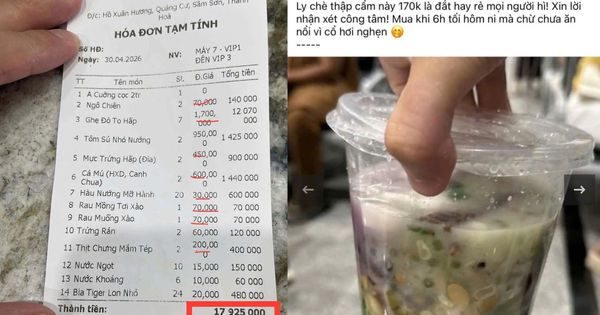
Asking if a restaurant is expensive or cheap: What's the line between sharing and defamation?
Translated from Vietnamese, summarized and contextualized by DistantNews.
TLDR
- Social media discussions about restaurant prices in Vietnam have led to local authorities investigating specific cases, such as expensive crab and mixed dessert drinks.
- While some defend prices based on location and occasion, others deem them too high compared to different times or places.
- Legally, businesses must display prices, and while prices can vary, providing false information or making unsubstantiated negative claims about pricing could be legally problematic.
The recent surge of online discussions in Vietnam regarding the pricing of food and beverages, particularly in tourist areas, highlights a growing tension between consumer expectations and business realities. Cases involving expensive red crab in Sam Son and a high-priced dessert in Hue have ignited passionate debates across social media platforms. While some netizens defend these prices, citing factors like location, quality, and seasonal demand, others vehemently argue they are exorbitant. This public discourse, amplified by social media, often compels local authorities to intervene, seeking to verify claims and mediate disputes. From a legal standpoint, as emphasized by lawyer Pham Thi Kim Truong, businesses are obligated to clearly display their prices. However, the inherent variability of pricing, influenced by numerous economic factors, means that what one person considers expensive, another might find reasonable. The crucial distinction lies between sharing a personal experience or opinion and making unsubstantiated claims that could harm a business's reputation. Vietnam's legal framework prioritizes negotiation and agreement between parties. If a customer agrees to a price before consumption and does not raise objections at the time, later publicizing negative, potentially false, information could be viewed as a violation. This situation underscores the delicate balance between freedom of expression online and the protection of businesses' livelihoods, especially in sectors vital to tourism and local economies.
If there is evidence proving that the parties agreed on the price, or completed payment without any immediate complaint about the price to the seller, then the act of providing untrue information may be considered a violation of the law.
DistantNews Editorial
Originally published by Thanh Niên in Vietnamese. Translated, summarized, and contextualized by our editorial team with added local perspective. Read our editorial standards.
More Stories



From Our Blog

What Gets Lost (and Found) When News Is Translated

The Critical Role of Diaspora Media in Global News

What Travellers Should Know About Countries with Restricted Press

A Digital Nomad's Guide to Following Local News

How the Same Story Looks Different in Different Countries
