


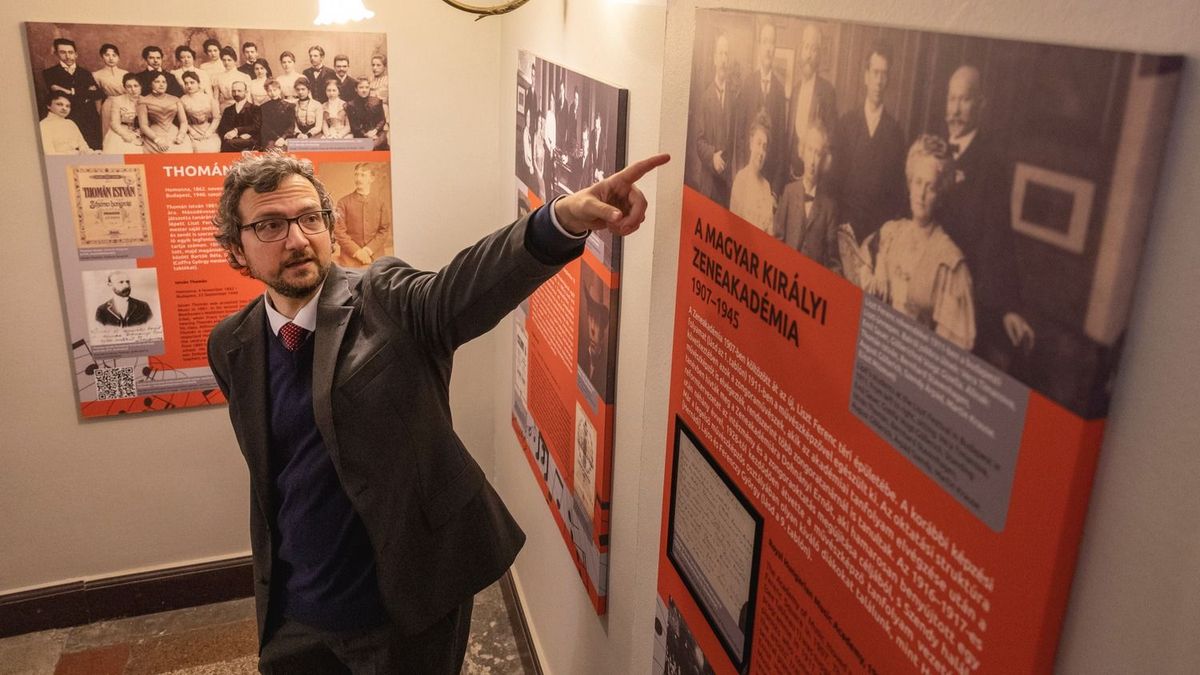
At the Old Academy of Music, Discover What Made Hungarian Pianists World-Famous
Translated from Hungarian, summarized and contextualized by DistantNews.
TLDR
- An exhibition at the Old Academy of Music in Budapest explores the historical tradition that made Hungarian pianists world-famous, tracing a lineage from Franz Liszt to György Cziffra.
- The exhibition, titled "From Franz Liszt to György Cziffra – The History of the Hungarian Piano School," showcases masters, disciples, and the spirit that has shaped Hungarian piano playing for generations.
- It highlights that the Hungarian piano school is not defined by a single style but by a unique approach to music, emphasizing interpretation and musical thinking over mere technicality.
Magyar Nemzet celebrates a significant cultural exhibition, "From Franz Liszt to György Cziffra – The History of the Hungarian Piano School," currently on display at the Old Academy of Music. This exhibition delves into the rich legacy that has propelled Hungarian pianists to international acclaim, presenting a continuous thread of musical excellence from the era of Franz Liszt to the legendary György Cziffra.
The exhibition goes beyond a simple chronological account, instead weaving a tapestry of the intellectual and pedagogical connections that bind Hungary's greatest pianistic figures. It underscores that the famed "Hungarian piano school" is not monolithic in style but is characterized by a distinct philosophy of musical engagement. This approach, originating with Liszt himself, prioritizes interpretive depth and profound musical understanding, a tradition meticulously passed down through generations of esteemed teachers and their talented pupils.
The Hungarian musical tradition lives not only in sheet music and memorable concerts but also in gestures, in a teacher's single sentence, or in a movement passed down from one generation to another.
From a Hungarian perspective, this exhibition is a vital affirmation of a unique national heritage. It reminds us that Hungary's contribution to the global music scene is not merely in producing virtuosos, but in cultivating a specific way of thinking about and performing music. This tradition, nurtured within institutions like the Liszt Ferenc Academy of Music, represents a living, breathing cultural inheritance that continues to inspire and shape musicians today. Magyar Nemzet's coverage emphasizes the enduring spirit and the profound, often intangible, elements that constitute this celebrated school of piano playing.
His teaching method still seems surprisingly modern today: he did not prioritize technical questions but rather interpretation and musical thinking. He helped his students understand how to approach compositions as performers.
DistantNews Editorial
Originally published by Magyar Nemzet in Hungarian. Translated, summarized, and contextualized by our editorial team with added local perspective. Read our editorial standards.
More Stories



From Our Blog

Countries Without a Free Press: What You Need to Know

What Press Freedom Means for the News You Read

What Gets Lost (and Found) When News Is Translated

The Critical Role of Diaspora Media in Global News

What Travellers Should Know About Countries with Restricted Press
