

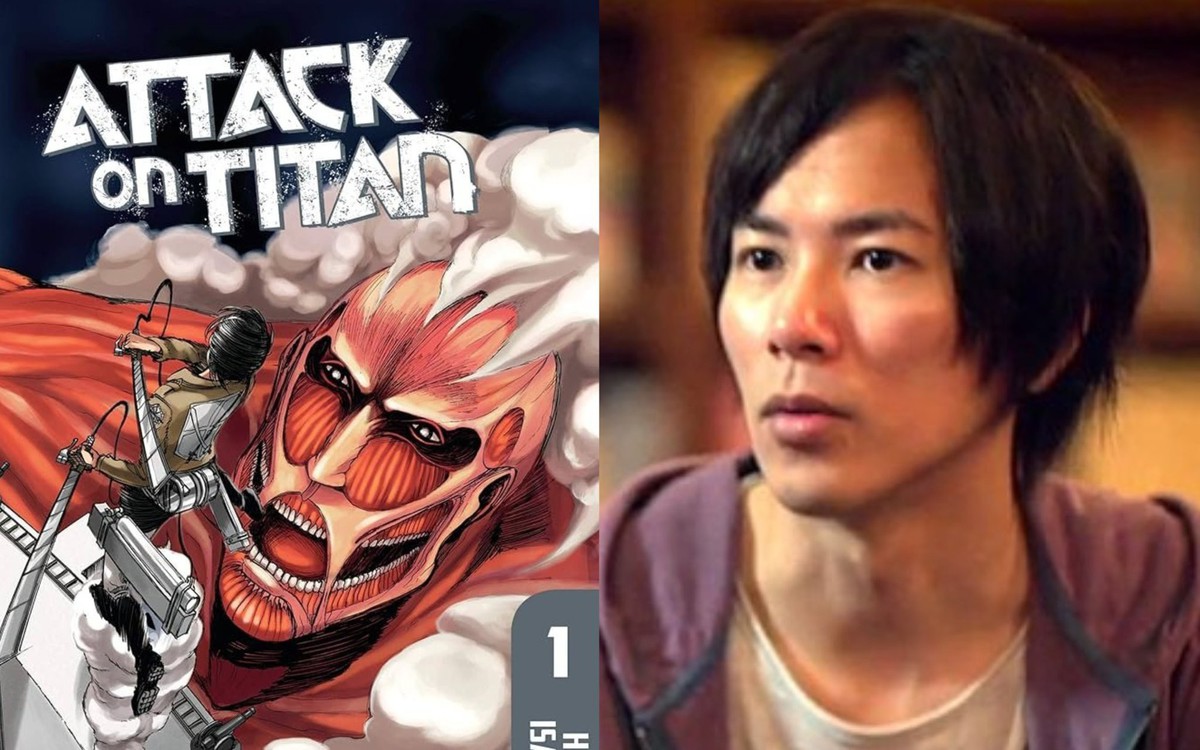
Attack on Titan Author Admits Controversial Ending Felt 'Somewhat Insincere'
Translated from Vietnamese, summarized and contextualized by DistantNews.
TLDR
- "Attack on Titan" author Hajime Isayama expressed regret over the controversial ending of the manga.
- Isayama admitted that the ending felt "somewhat insincere" and acknowledged criticisms about protagonist Eren Yeager's character arc.
- He attributed some of the narrative choices to his own immaturity in his early twenties when writing the story.
For years, the conclusion of Hajime Isayama's epic manga, "Attack on Titan," has been a lightning rod for debate among fans worldwide. Now, the creator himself has broken his silence, admitting that he shares some of the dissatisfaction surrounding the story's controversial ending. This rare self-critique comes from a display at the "Attack on Titan" museum in Japan, where Isayama reportedly confessed that the finale felt "somewhat insincere."
Eren has become a character loved by many readers. In the end, I couldn't completely turn him into a detestable figure.
The narrative pivot of Eren Yeager, from a seemingly heroic figure to the architect of global destruction, deeply divided the fanbase. Many felt Eren's transformation was abrupt and lacked sufficient depth, rendering the conclusion unconvincing. Isayama acknowledges this, admitting that he struggled with portraying Eren as a purely detestable character, given the protagonist's immense popularity.
I was in my early twenties when I wrote this story. My immaturity and innocence became the core of Eren's character.
Isayama pointed to his own immaturity in his early twenties, the period when he was writing the manga, as a significant factor influencing the story's direction. He suggested that his own "naivete and innocence" became intertwined with Eren's character, leading to a complex portrayal that, while intended as a major twist, ultimately proved divisive. The anime adaptation made some adjustments to clarify Eren's accountability, but the debate continues to simmer.
Eren became the main character who committed mass murder on a scale rarely seen in fictional works.
From our perspective here in Vietnam, "Attack on Titan" is more than just a manga; it's a cultural phenomenon that sparked intense discussion. While Western media often focuses on the plot mechanics or the philosophical implications of Eren's actions, we see it as a deeply personal story about the burdens of leadership, the corrupting nature of power, and the tragic consequences of war, all filtered through the lens of a young creator grappling with his own identity. Isayama's willingness to revisit his work, even years later, resonates with an audience that has grown alongside the characters and the story itself.
the ending of the work 'somewhat insincere'
DistantNews Editorial
Originally published by Tuổi Trẻ in Vietnamese. Translated, summarized, and contextualized by our editorial team with added local perspective. Read our editorial standards.
More Stories


From Our Blog

What Gets Lost (and Found) When News Is Translated

The Critical Role of Diaspora Media in Global News

What Travellers Should Know About Countries with Restricted Press

A Digital Nomad's Guide to Following Local News

How the Same Story Looks Different in Different Countries
