

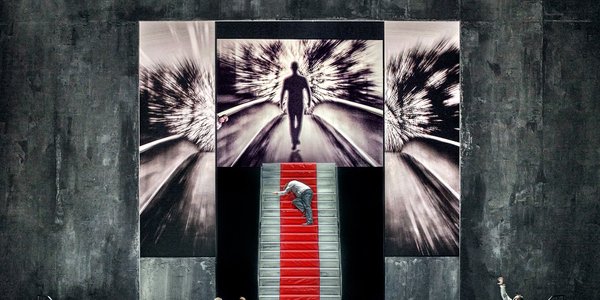
Bayreuth Festival Revives Hitler's Favorite Opera, 'Rienzi'
Translated from Polish, summarized and contextualized by DistantNews.
At a glance
In-depth
Sources not specified
Context piece
- Richard Wagner's opera "Rienzi," once Adolf Hitler's favorite, has returned to the Bayreuth Festival stage after a 150-year absence.
- The opera, which Hitler saw in his youth, is seen as reflecting themes of populist leaders who rise to power by inspiring crowds.
- The production explores how "Rienzi" serves as a mirror to contemporary leaders and the modern political landscape, where information warfare replaces revolution.
Richard Wagner's opera "Rienzi," a work Adolf Hitler cherished and received as a gift on his 50th birthday, has returned to the Bayreuth Festival after a 150-year hiatus. Hitler reportedly kept the composer's manuscript in his private collection until his final days, attributing his life's path to the opera's profound impact on him during a 1906 or 1907 performance.
Despite Wagner's own reservations about "Rienzi," which he completed in his late twenties while seeking fame, he initially admired its protagonist. Wagner described Rienzi as a "hero in the truest sense of the word; a passionate dreamer, who appears like a lightning flash in a declining world, believing that his appearance will allow him to rise and shine."
Rienzi, whom I invented and portrayed – is a hero in the truest sense of the word; a passionate dreamer, who appears like a lightning flash in a declining world, believing that his appearance will allow him to rise and shine.
The opera draws from the life of Cola Rienzi, a 14th-century Roman notary. Rienzi was granted power by citizens weary of feuding noble families, promising a better future. However, his initial success waned as he faced accusations of incompetence and leniency towards former enemies, partly due to an obligatory romantic subplot involving his sister and a young Orsini. His rapid rise was matched by an equally swift fall.
This narrative of an outsider who establishes a new order captivated Hitler. The opera's music, at times bombastic yet powerfully supportive of Rienzi's fiery speeches and actions, reflects a "new spirit" that was desired and anticipated. In the 14th century, such figures were called tribunes of the people; today, they are known as populists, capable of captivating crowds.
And then it began.
DistantNews Editorial
Originally published by Rzeczpospolita in Polish. Translated, summarized, and contextualized by our editorial team with added local perspective. Read our editorial standards.
More Stories


From Our Blog

What Gets Lost (and Found) When News Is Translated

The Critical Role of Diaspora Media in Global News

What Travellers Should Know About Countries with Restricted Press

A Digital Nomad's Guide to Following Local News

How the Same Story Looks Different in Different Countries
