

Beijing's trees may be creating ozone smog, study finds
Translated from English and summarized by DistantNews. Read the original for the full story.
At a glance
News
Sources not specified
Context piece
- Scientists have identified compounds released by trees in Beijing as a likely source of ozone pollution, puzzling researchers who expected cleaner air due to electric vehicles.
- The study found that trees produce high levels of isoprene, a volatile organic compound that reacts with nitrogen oxides to create ground-level ozone.
- This discovery challenges previous assumptions about the sources of smog in the Chinese capital, which has long been a public health concern.
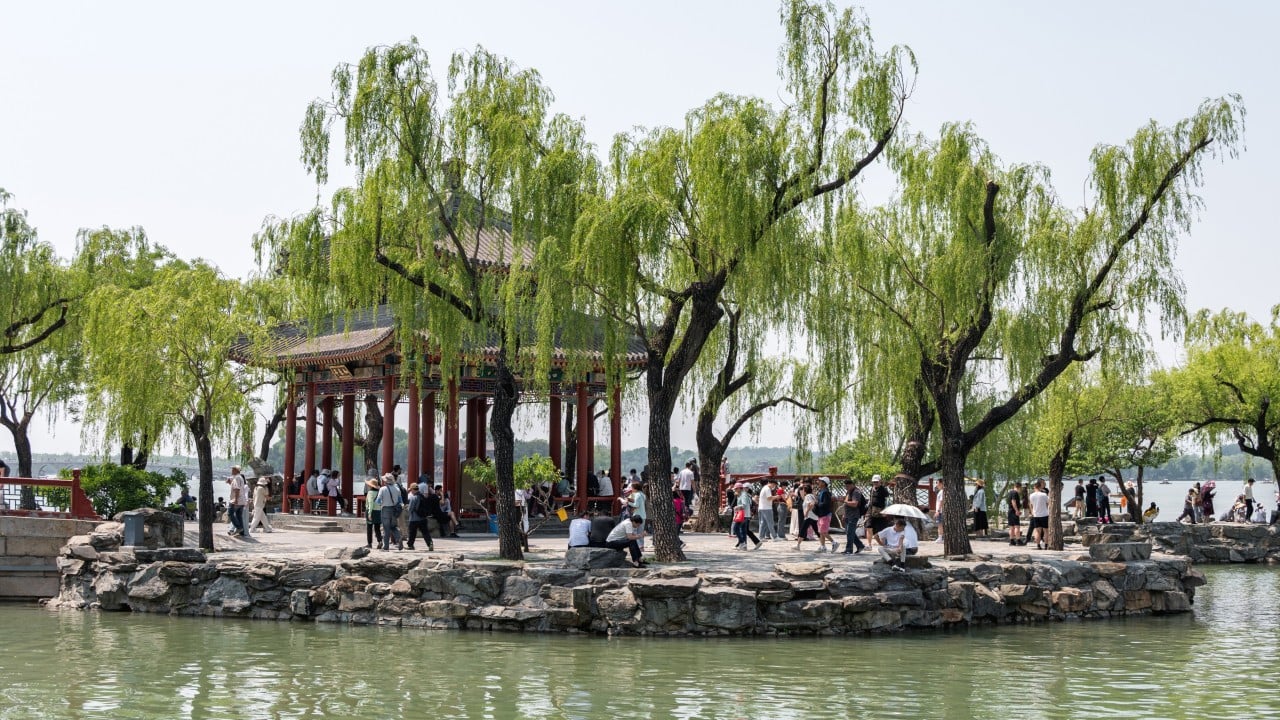
Beijing's extensive urban forests, long celebrated for providing shade and improving the city's environment, may be contributing to its notorious air pollution, according to new research. Scientists have identified trees as a significant source of ozone smog, a finding that challenges previous understandings of the city's air quality issues.
The study, led by scientists from Jinan University in Guangzhou, initially aimed to investigate human activities contributing to ozone pollution. However, researchers were surprised to find that the city's trees generated far more smog than anticipated. This phenomenon is attributed to the high levels of isoprene emitted by trees like weeping willows and poplars. Isoprene is a volatile organic compound that reacts with nitrogen oxides, commonly produced by vehicles and factories, to form ground-level ozone.
this urban greenery may be “choking” the Chinese capital’s 20 million residents by increasing the levels of ozone in the city’s air.
This discovery offers a potential explanation for why Beijing's ozone levels have remained high despite efforts to reduce emissions from vehicles, including a significant shift towards electric cars. The research, published in the journal Science Advances, suggests that the urban greenery, while beneficial in many ways, plays a complex role in the city's air quality. The findings highlight the need to consider natural emissions from urban vegetation when developing strategies to combat air pollution in densely populated areas.
they produce unusually high levels of isoprene, a volatile organic compound (VOC) that produces ground-level ozone when it reacts with the nitrogen oxide typically produced by vehicles or factories.
About this summary
Originally published by South China Morning Post in English. Translated, summarized, and contextualized automatically by DistantNews, with a note on how the source frames the story. Not individually reviewed before publishing. How this works.
More Stories

From Our Blog

Countries Without a Free Press: What You Need to Know

What Press Freedom Means for the News You Read

What Gets Lost (and Found) When News Is Translated

The Critical Role of Diaspora Media in Global News

What Travellers Should Know About Countries with Restricted Press
