


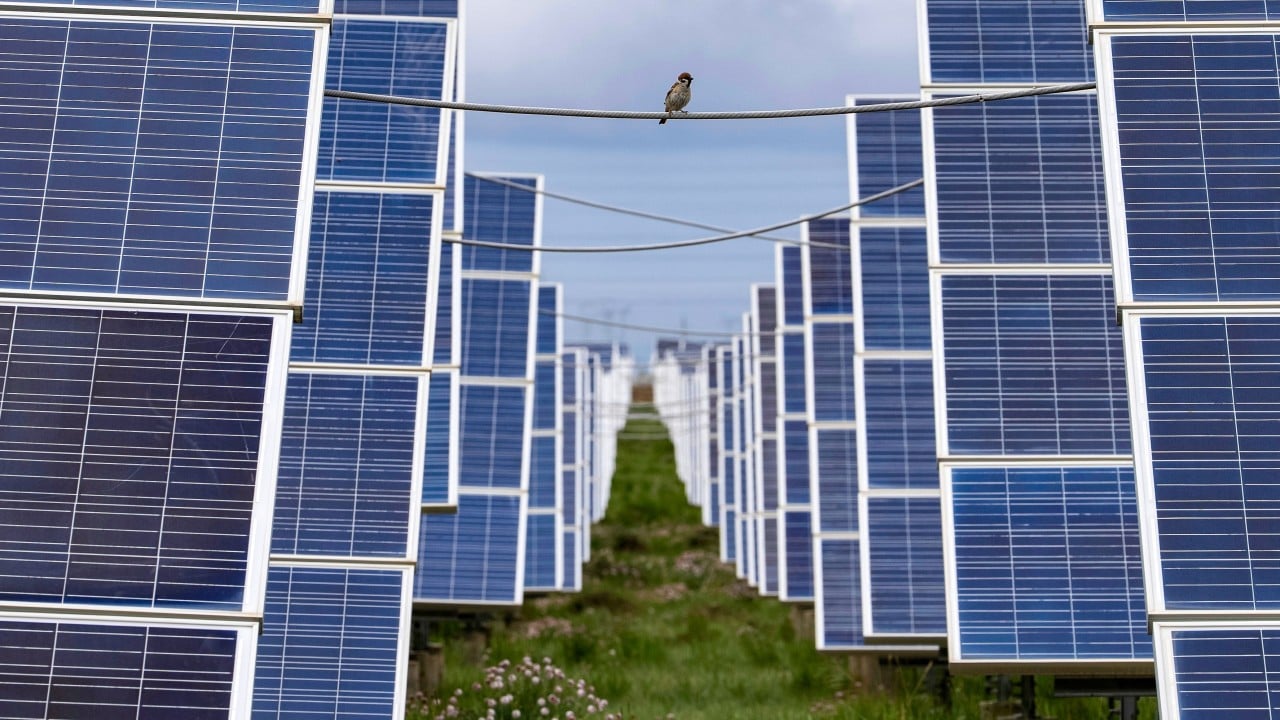
International study finds solar panels in China could be harming birds
Summarized and contextualized by DistantNews.
At a glance
News
Named sources
New plan
- A new study reveals that China's rapid solar panel expansion is negatively impacting bird diversity, particularly in wealthier, non-desert regions.
- The expansion encroaches on birds' habitats for foraging and breeding, leading to fragmentation and species loss.
- Researchers urge for strict biodiversity safeguards alongside future photovoltaic development to address this "green dilemma."
China's ambitious push for solar energy expansion, aimed at reducing carbon emissions, is inadvertently harming bird populations, according to a new international study. Researchers from China and the U.S. found that the proliferation of solar farms has led to a significant reduction in bird diversity, with the most pronounced effects observed in economically developed regions and areas outside of deserts.
The study, published in the journal Science, highlights a critical environmental conflict: the drive for renewable energy versus the conservation of biodiversity. The expansion of solar infrastructure has encroached upon birds' essential foraging and breeding grounds. Furthermore, the remaining available habitat has become more fragmented, making it harder for bird species to thrive.
Our findings highlight a critical green dilemma: without meticulous spatial planning, policy-driven solar expansion can inadvertently compromise local biodiversity.
Researchers noted a pattern of "inferior greening," where an increase in leaf area doesn't necessarily translate to improved wildlife habitat. This suggests that simply increasing vegetation in areas developed for solar energy may not be an effective conservation strategy. The study calls for a re-evaluation of what constitutes ecological health in the context of renewable energy growth.
We argue that future photovoltaic development should be accompanied by strict biodiversity safeguards, especially in economically developed regions with high habitat complexity.
The findings underscore a "critical green dilemma," as the study authors put it. They emphasize that without meticulous spatial planning, policies promoting solar expansion can unintentionally compromise local biodiversity. The research team advocates for integrating strict biodiversity safeguards into all future photovoltaic development plans, especially in complex habitats within economically developed areas.
This research points to the complex challenges of balancing climate goals with environmental protection. While China's commitment to renewable energy is crucial for global climate efforts, the study serves as a stark reminder that such developments must be implemented with careful consideration for their ecological impact.
Our investigation of this mechanism calls for a rethinking of what constitutes ecological health in the context of renewable energy expansion.
DistantNews Editorial
Originally published by South China Morning Post. Summarized and contextualized by our editorial team with added local perspective. Read our editorial standards.
More Stories



From Our Blog

Countries Without a Free Press: What You Need to Know

What Press Freedom Means for the News You Read

What Gets Lost (and Found) When News Is Translated

The Critical Role of Diaspora Media in Global News

What Travellers Should Know About Countries with Restricted Press
