

Orange lichen in your backyard could signal rare earth deposits, Chinese scientists find
Translated from English, summarized and contextualized by DistantNews.
At a glance
News
Sources not specified
New plan
- A Chinese research team discovered that a vibrant orange-yellow lichen can indicate the presence of rare earth deposits.
- This discovery could aid in identifying potential rare earth-bearing carbonates globally when combined with remote sensing technology.
- The finding is considered a significant original scientific discovery in mineral exploration, following a previous indicator found in the 1950s.
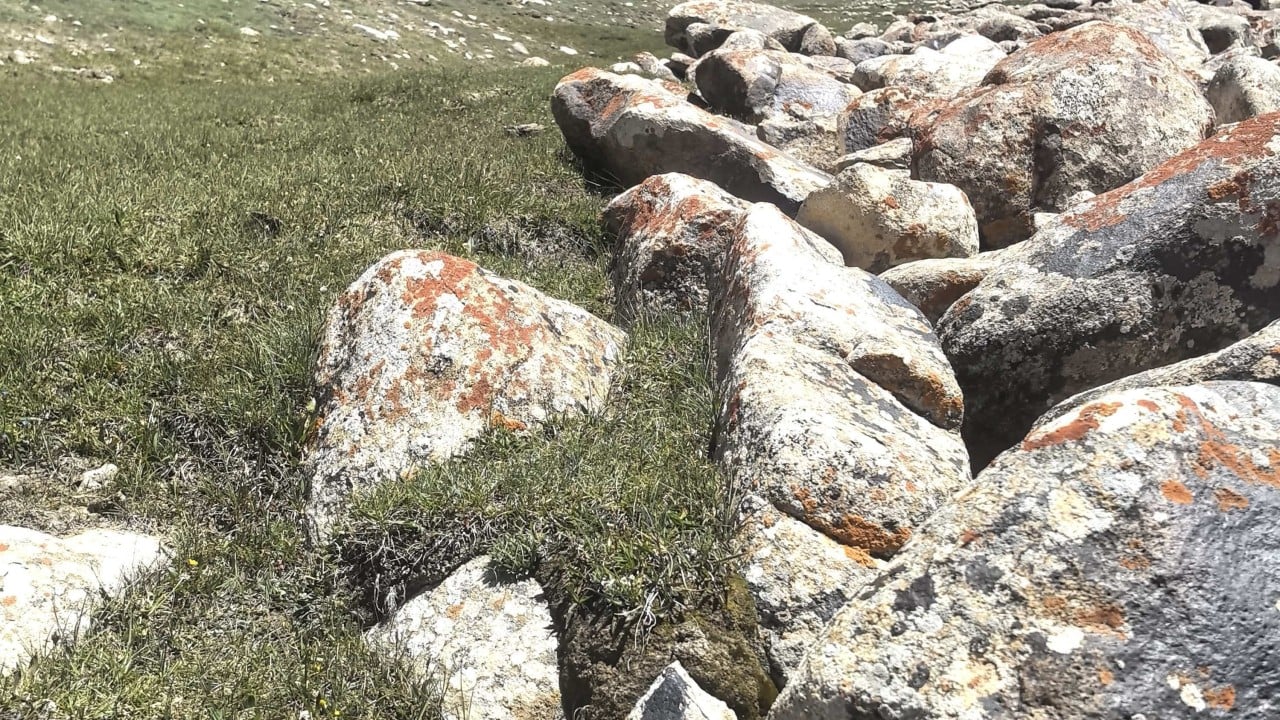
A common sight on rocks, a vivid orange-yellow lichen, may hold the key to uncovering vast underground fortunes. Chinese researchers have identified this humble lichen as a potential field indicator for undiscovered rare earth deposits worldwide. The lichen's distinctive color makes it easily visible on exposed rock surfaces, offering a promising new tool for mineral exploration.
Scientists believe this discovery can be integrated with advanced technologies like unmanned aerial vehicles and hyperspectral remote sensing. This combination would enable large-scale screening of areas for potential rare earth-bearing carbonates. For decades, Chinese scientists have sought biological indicators to help locate mineral deposits, and this lichen represents a significant breakthrough.
Professor Li Yang of Peking University and the Chinese Academy of Sciences highlighted the discovery's importance, noting it as the second such original scientific finding in mineral exploration by Chinese scientists. The first, copper grass, was identified in the 1950s. The study, published in the peer-reviewed journal Economic Geology, details how the lichen can serve as an exploration tool for rare earth element-enriched carbonatites.
This is the second time Chinese scientists have discovered a similar indicator – the first was copper grass in the 1950s – and both are original scientific discoveries in mineral exploration.
DistantNews Editorial
Originally published by South China Morning Post in English. Translated, summarized, and contextualized by our editorial team with added local perspective. Read our editorial standards.
More Stories


From Our Blog

Countries Without a Free Press: What You Need to Know

What Press Freedom Means for the News You Read

What Gets Lost (and Found) When News Is Translated

The Critical Role of Diaspora Media in Global News

What Travellers Should Know About Countries with Restricted Press
