


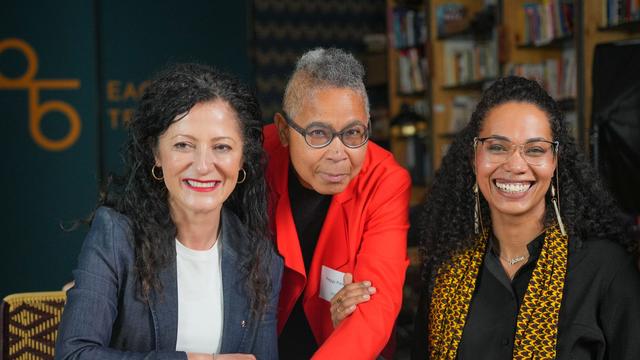
Berlin opens first Black Communities Center, a long-awaited space for exchange and visibility
Translated from German, summarized and contextualized by DistantNews.
TLDR
- Berlin has opened its first Black Communities Center, a unique space for exchange, education, visibility, and participation for Black people and those of African descent.
- The center, funded with 10.5 million euros from state, federal, and lottery sources, aims to foster Black perspectives in public discourse and address colonial history and racism.
- Officials and community representatives highlighted the center as a long-overdue recognition and a safe space, acknowledging prevalent anti-Black racism and violence.
Berlin, a city long shaped by diverse communities, has finally opened the doors to its first Black Communities Center. This landmark institution, inaugurated by Senator for Diversity and Anti-Discrimination Cansel Kiziltepe, represents a significant step towards recognizing and supporting Black individuals and those of African heritage within Germany.
A place that was long overdue and for which many people fought for a long time.
The center is more than just a building; it is a testament to years of advocacy and a space long overdue. As Senator Kiziltepe stated, Black people have always been part of Berlin's fabric, yet they have lacked a dedicated space to foster their presence and contributions. This center aims to rectify that, providing a platform for exchange, education, and visibility.
Funded by a substantial 10.5 million euros from the state, federal government, and lottery proceeds, the center is equipped to host a variety of events, house associations, and offer crucial advisory services. Its mission extends to confronting Germany's colonial past and tackling contemporary forms of racism, issues that resonate deeply within the Black community and are often under-addressed in mainstream discourse.
Black people and those with African roots have long belonged to Berlin. They just haven't had the space they deserve until now.
Community representatives, such as Lina Mitschke from the supporting association Each One Teach One (Eoto), emphasized the center's role in acknowledging the struggles faced by Black, African, and Afro-diasporic people, who are increasingly subjected to discrimination and violence. From a German perspective, this center is not just about providing services; it's about actively working towards a more inclusive society and confronting uncomfortable historical truths. The existence of such a dedicated space highlights a growing awareness and commitment to addressing systemic racism, a conversation that continues to evolve within Germany.
All the more reason why this building is also a sign of recognition for these people.
DistantNews Editorial
Originally published by Die Zeit in German. Translated, summarized, and contextualized by our editorial team with added local perspective. Read our editorial standards.
More Stories



From Our Blog

What Gets Lost (and Found) When News Is Translated

How the Same Story Looks Different in Different Countries

The Critical Role of Diaspora Media in Global News

What Travellers Should Know About Countries with Restricted Press

A Digital Nomad's Guide to Following Local News
