


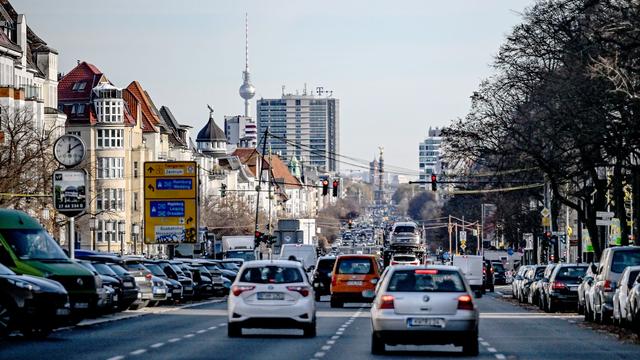
Berlin's traffic policy: What has the Senate achieved?
Translated from German, summarized and contextualized by DistantNews.
At a glance
News
Named sources
Context piece
- Critics accuse Berlin's Senate administration of prioritizing car drivers over other road users.
- The current coalition government promised to consider all traffic participants but is criticized for not advancing a "traffic transition" (Verkehrswende).
- Key initiatives like expanding bike lanes have been slowed or altered, with a focus shifting to safer intersections rather than network expansion.
Berlin's transportation policy is under scrutiny as critics argue the current Senate administration, led by the CDU and SPD coalition, has failed to deliver on its promise of a comprehensive "traffic transition" (Verkehrswende). Three years after pledging to consider all road users, the government faces accusations of primarily serving the interests of car drivers.
The Senate did not want a traffic transition.
Traffic researchers like Andreas Knie from the Berlin Centre for Social Research (WZB) contend that the Senate has shown little commitment to promoting alternative transport methods like public transit and cycling while making driving less attractive. This approach, known as the "push-and-pull" strategy, is seen as largely absent in Berlin's recent policies.
A significant point of contention is the expansion of bike lanes. Shortly after taking office, the former transport senator, Manja Schreiner (CDU), halted nearly 20 planned bike lane projects for review. While the current mayor, Kai Wegner (CDU), has expressed support for building new bike lanes, the government has not met its own targets for expansion. The Senate administration now states its focus is on improving safety, particularly at intersections where most accidents occur, rather than simply increasing lane mileage.
It is not exclusively about realizing as many additional kilometers as possible for us.
Furthermore, amendments to the Mobility Law have softened previous goals. For instance, not every main road is now required to have a bike lane if cyclists can use quieter side streets. The deadline for completing the priority cycling network has also been extended from 2030 to 2035. Critics, including various alternative transport associations, argue these changes are merely adjustments to accommodate the government's own inaction.
Most accidents occur there.
DistantNews Editorial
Originally published by Die Zeit in German. Translated, summarized, and contextualized by our editorial team with added local perspective. Read our editorial standards.
More Stories


From Our Blog

What Gets Lost (and Found) When News Is Translated

How the Same Story Looks Different in Different Countries

The Critical Role of Diaspora Media in Global News

What Travellers Should Know About Countries with Restricted Press

A Digital Nomad's Guide to Following Local News
