


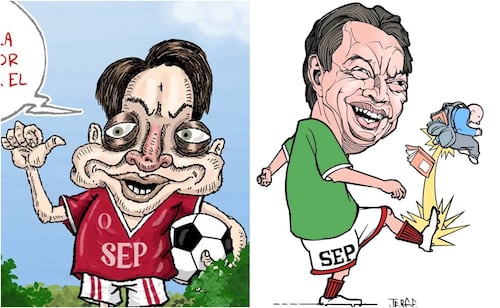
Between balls and empty classrooms; cartoons mock the SEP and Mario Delgado over the 2026 World Cup
Translated from Spanish, summarized and contextualized by DistantNews.
TLDR
- Mexico's Secretariat of Public Education (SEP) has proposed advancing the end of the 2025-2026 school year from July 5 to June 5.
- The SEP claims this change will not affect student learning and is intended to protect children from heatwaves and the 2026 FIFA World Cup activities.
- The proposal has faced significant criticism from education specialists and parents, prompting a meeting to finalize the school calendar.
The Secretariat of Public Education (SEP) has announced a significant adjustment to the 2025-2026 school calendar, proposing to end the academic year on June 5 instead of the originally scheduled July 5. This decision, presented by SEP head Mario Delgado, aims to shorten the school year by six weeks. Delgado asserts that this measure will not compromise the 100% coverage of the study plan and learning outcomes for students.
el cierre del ciclo se adelantó del 15 de julio al 5 de junio, es decir, seis semanas menos a lo previsto originalmente.
The stated justifications for this early closure are twofold: firstly, to safeguard students' health from the intense heatwaves currently affecting the country, and secondly, to mitigate risks associated with the upcoming 2026 FIFA World Cup, which Mexico is co-hosting. The government, including President Claudia Sheinbaum, has indicated that while Delgado's proposal is under consideration, a final calendar is yet to be defined. A meeting with state education secretaries is scheduled to reach a consensus.
este recorte al ciclo escolar no tendrá repercusiones en el aprendizaje de los estudiantes y el Plan de Estudios se cubrirá al 100%.
This proposed calendar modification has ignited a firestorm of debate across Mexico. Education specialists and parents have voiced strong opposition, raising concerns about the potential impact on the quality of education and the rushed nature of the decision. The timing, coinciding with major national events like the World Cup, has led to widespread criticism and satirical commentary in the media.
estas modificaciones pretenden proteger la salud de las y los niños de los efectos de la ola de calor que azota al país, y también forma parte de una estrategia logística para disminuir la exposición a riesgos de los menores por las actividades que girarán alrededor de la Copa Mundial de Fútbol 2026 de la FIFA
Political cartoonists have seized upon the issue, with several prominent artists offering sharp critiques. Cartoons depict Delgado encouraging students to watch the World Cup instead of studying, or portray the education system as a donkey being led astray. These visual commentaries reflect a broader public sentiment that the SEP's decision prioritizes logistical convenience and national events over educational integrity. From our perspective at El Universal, while the government cites health and safety, the swiftness and lack of broad consultation surrounding this proposal raise serious questions about its educational merit and the potential consequences for students' learning. The debate highlights a tension between immediate concerns and the long-term goals of Mexico's education system.
aún no se tiene un calendario definido y que el comunicado de la SEP es únicamente una "propuesta" de Delgado.
DistantNews Editorial
Originally published by El Universal in Spanish. Translated, summarized, and contextualized by our editorial team with added local perspective. Read our editorial standards.
More Stories



From Our Blog

What Press Freedom Means for the News You Read

What Gets Lost (and Found) When News Is Translated

The Critical Role of Diaspora Media in Global News

What Travellers Should Know About Countries with Restricted Press

A Digital Nomad's Guide to Following Local News
