

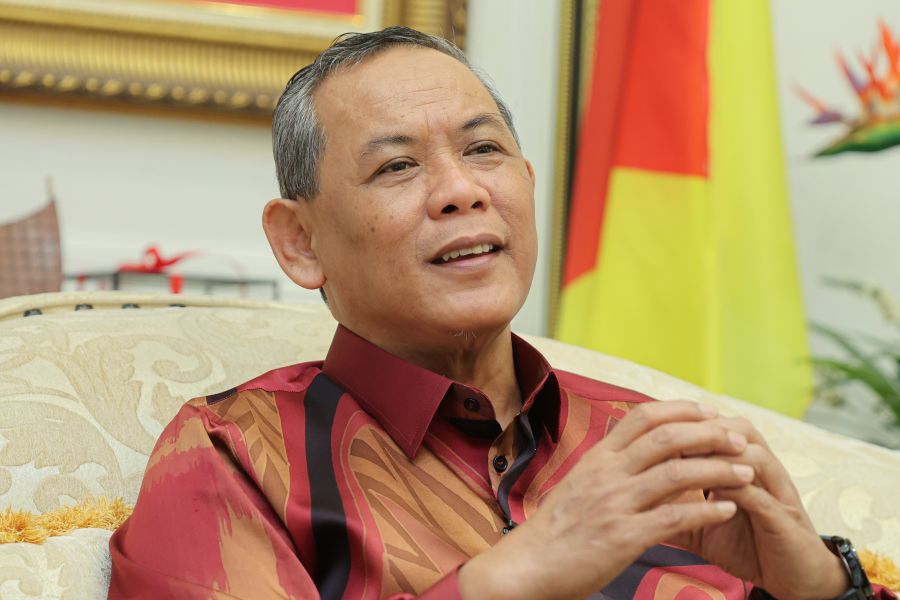

BN-PN Alliance Aims to Unite Malay Vote in Negeri Sembilan
Translated from Malay, summarized and contextualized by DistantNews.
At a glance
News
Named sources
Context piece
- UMNO Negeri Sembilan Secretary Datuk Mustapha Nagoor stated that the understanding between Barisan Nasional (BN) and Perikatan Nasional (PN) is a major hope for Malay voters to prevent vote splitting.
- He emphasized that this cooperation is crucial for political stability and forming a stronger state government in Negeri Sembilan.
- Mustapha urged voters to support BN candidates where they run and PN candidates where BN does not, referring to this as choosing "blue" and rejecting "red" (Pakatan Harapan).
The political understanding forged between Barisan Nasional (BN) and Perikatan Nasional (PN) represents a significant hope for the majority of Malay voters, aiming to prevent a split in their votes not only in the upcoming Negeri Sembilan State Election but also in future general elections. Datuk Mustapha Nagoor, Secretary of the UMNO Negeri Sembilan Liaison Body, stressed the importance of cooperation between the two Malay parties for political stability and the formation of a more stable state government.
The understanding between BN and PN has become a hope for the majority of Malays. Malays want Malay parties, Islamic parties, to unite. When united, we can prevent Malay votes from being split. When Malay votes are not split, we can win all Malay-majority areas.
"The understanding between BN and PN has become a hope for the majority of Malays," Mustapha told Utusan Malaysia. "Malays want Malay parties, Islamic parties, to unite. When united, we can prevent Malay votes from being split. When Malay votes are not split, we can win all Malay-majority areas."
Mustapha, who is also the BN candidate for the Palong State Legislative Assembly, believes this collaboration can help win not only Malay-majority seats but also non-Malay majority areas. "And we can also secure victories in non-Malay majority areas. Ultimately, we will be able to form a more stable government. The majority of Malaysians are Malay, and the unification of Malay parties will bring better stability to all races," he added.
And we can also secure victories in non-Malay majority areas. Ultimately, we will be able to form a more stable government. The majority of Malaysians are Malay, and the unification of Malay parties will bring better stability to all races.
He expressed gratitude for the wisdom of the leaders of both parties in reaching this understanding. "That's why I am very grateful for the wisdom of our leaders who have come up with the idea of unification or cooperation between these two Malay parties. In Negeri Sembilan, we choose blue. Where BN is contesting, vote for BN. Where BN is not contesting, choose PN," he instructed, adding, "We want to choose blue, we reject red (Pakatan Harapan)." This sentiment follows UMNO Vice President Datuk Seri Johari Ghani's statement that the Negeri Sembilan election results would determine the continuation of the BN-PN cooperation in the 16th General Election.
That's why I am very grateful for the wisdom of our leaders who have come up with the idea of unification or cooperation between these two Malay parties. In Negeri Sembilan, we choose blue. Where BN is contesting, vote for BN. Where BN is not contesting, choose PN. We want to choose blue, we reject red (Pakatan Harapan).
DistantNews Editorial
Originally published by Utusan Malaysia in Malay. Translated, summarized, and contextualized by our editorial team with added local perspective. Read our editorial standards.
More Stories

From Our Blog

What Gets Lost (and Found) When News Is Translated

The Critical Role of Diaspora Media in Global News

What Travellers Should Know About Countries with Restricted Press

A Digital Nomad's Guide to Following Local News

How the Same Story Looks Different in Different Countries
