


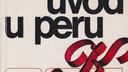
Book from 50 years ago looks and sounds more contemporary than most today
Translated from Croatian, summarized and contextualized by DistantNews.
TLDR
- A book published in Zagreb half a century ago is praised for its surprisingly modern design and prose.
- The book's graphic design by Zoran Pavlović is described as contemporary and worldly, contrasting with current trends in Zagreb bookstores.
- The author reflects on how the book's themes and the era it represents seem more vibrant and free than contemporary Croatian literature, which is perceived as overly constrained by political correctness.
In a striking commentary for Večernji List, Miljenko Jergović argues that a book published in Zagreb fifty-one years ago, "Uvod u Peru K.," possesses a timeless quality that makes it feel more contemporary than much of today's output. He highlights Zoran Pavlović's graphic design as particularly modern and international in feel, a stark contrast to the often uninspired offerings found in Zagreb's current bookstores. Jergović suggests that this older book transports the reader to a more sophisticated European city, a feeling absent from the local literary scene.
Pavlovićev dizajn, naime, u odnosu na to kako danas izgledaju knjige u izlozima zagrebačkih knjižara, djeluje moderno i nekako svjetski, kao da smo nekim sporim vlakom - a ni vlakova koji sa zagrebačkog kolodvora polaze prema Europi ustvari više nema! - stigli u Beč, Zürich ili svejedno koji veliki europski grad
Beyond the aesthetics, Jergović contrasts the seemingly unpretentious yet profound prose of the book's author, Kvesić, with the work of contemporary Croatian writers. He criticizes the latter for adhering strictly to the dictates of political correctness, focusing on issues like gender equality, ecology, and various social causes, often at the expense of style and genuine expression. In Jergović's view, Kvesić's work, emerging from the seemingly restrictive environment of 1975, feels remarkably free and forward-looking from the perspective of 2026.
Kvesićeva slobodna i naizgled nepretenciozna proza u odnosu na komesarski strogo kontrolirane tekstove mladih hrvatskih spisateljica i pisaca, u kojima se ne vodi računa ni o stilu ni o jeziku, ali se dobro pazi na načela političke korektnosti, na rodnu ravnopravnost, odnos prema ekologiji, prema djeci i životinjama, kao i prema pušenju, veganstvu i stradanju ljudi u Gazi, čini kao tekst iz daleke budućnosti u kojoj će ljudi biti slobodni da govore, misle i osjećaju što god im dođe
This perspective offers a unique insight into how Croatian cultural commentators perceive their own literary landscape. The piece suggests a disillusionment with the current state of affairs, where adherence to social and political norms seems to stifle artistic freedom and innovation. The article implies that the past, even a period often viewed critically, might hold lessons in authenticity and creative bravery that are sorely missed today. The very act of praising an older work for its modernity underscores a perceived stagnation in the present, making this a commentary not just on a book, but on the cultural trajectory of Croatia itself.
Dakle, iz perspektive 2026. u Zagrebu se siva i tmurna 1975. čini godinom slobode, suvremenosti i sveopćeg moderniteta.
DistantNews Editorial
Originally published by Večernji List in Croatian. Translated, summarized, and contextualized by our editorial team with added local perspective. Read our editorial standards.
More Stories



From Our Blog

What Gets Lost (and Found) When News Is Translated

The Critical Role of Diaspora Media in Global News

What Travellers Should Know About Countries with Restricted Press

A Digital Nomad's Guide to Following Local News

How the Same Story Looks Different in Different Countries
