


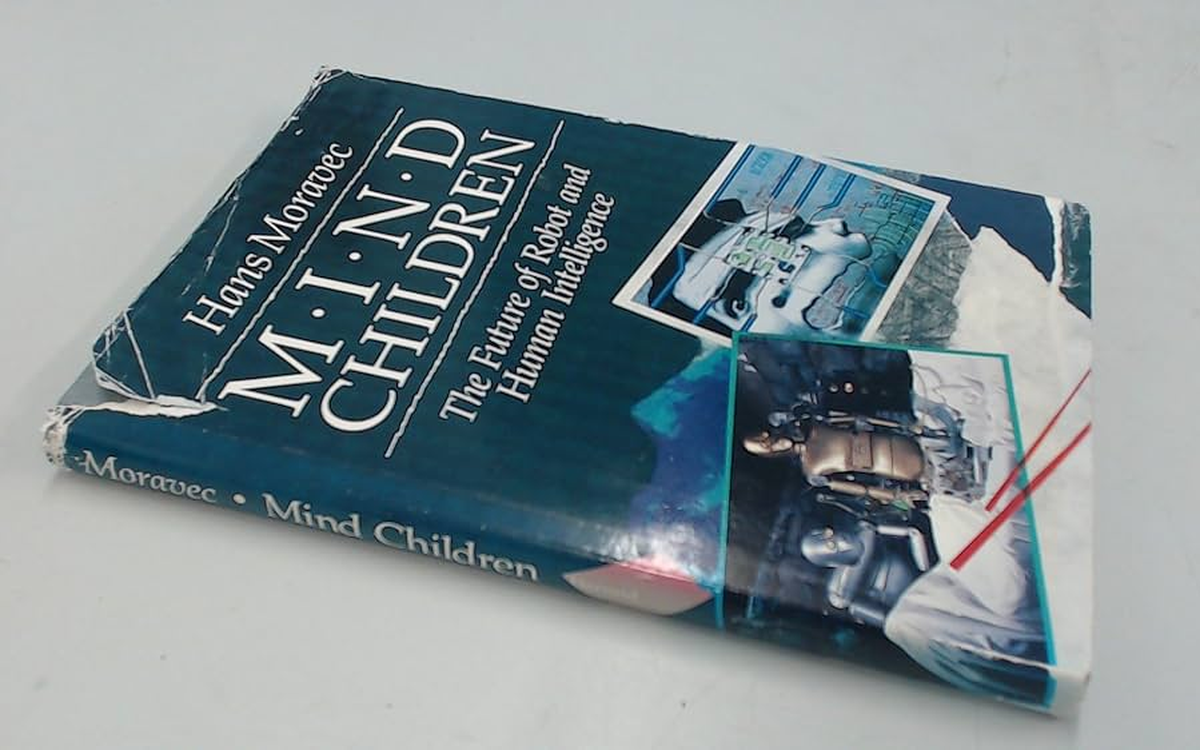
Book on AI 'mind children' resurfaces as humans ponder future reproduction
Translated from Vietnamese, summarized and contextualized by DistantNews.
At a glance
In-depth
Sources not specified
Context piece
- A 1988 book, "Mind Children" by Hans Moravec, is resurfacing in AI discussions about the future of humanity and reproduction.
- The book proposed that human consciousness could eventually be uploaded to digital environments, creating "mind children" as successors.
- Advances in AI have made Moravec's once-fictional concepts, like digital consciousness and AI relationships, seem more plausible today.
A concept once confined to science fiction is now fueling contemporary debates in artificial intelligence circles: the possibility that future generations might not need to reproduce biologically.
This idea gained traction following a recent gathering of AI researchers in Silicon Valley, where the notion of "mind children", digital or machine-based successors carrying human consciousness, was discussed. The term originates from Hans Moravec's 1988 book, "Mind Children: The Future of Robot and Human Intelligence."
The current generation might be the last to have to think about biological reproduction, because in the future humans might be able to upload their consciousness into a digital environment.
Moravec, a roboticist, argued in his book that cultural and technological evolution had begun to outpace biological evolution. He posited that the information defining a human could one day be stored not in DNA, but in software and hardware. These digital entities, he suggested, would be "mind children," descendants of humanity existing in a non-biological form. Moravec predicted that within a century, machines would be intelligent enough to consider themselves human descendants.
Cultural and technological evolution has gradually surpassed biological evolution in shaping the future of humanity.
Economist and futurist Robin Hanson of George Mason University believes this scenario could become reality if AI achieves human-level intelligence. He envisions a future with numerous entities possessing human-like cognitive abilities but existing in diverse forms, potentially serving as humanity's "offspring."
Angela Aristidou, an AI application researcher at University College London, notes that Moravec's ideas are resonating now because AI advancements have made them more conceivable. She points to the rise of digital human replicas and emotional relationships people form with AI chatbots as evidence that once-fictional concepts are becoming increasingly tangible.
In the future, humans could create AI entities that possess a part of their consciousness or personality, blurring the lines between self, partner, and child.
DistantNews Editorial
Originally published by Tuổi Trẻ in Vietnamese. Translated, summarized, and contextualized by our editorial team with added local perspective. Read our editorial standards.
More Stories



From Our Blog

What Gets Lost (and Found) When News Is Translated

The Critical Role of Diaspora Media in Global News

What Travellers Should Know About Countries with Restricted Press

A Digital Nomad's Guide to Following Local News

How the Same Story Looks Different in Different Countries
