


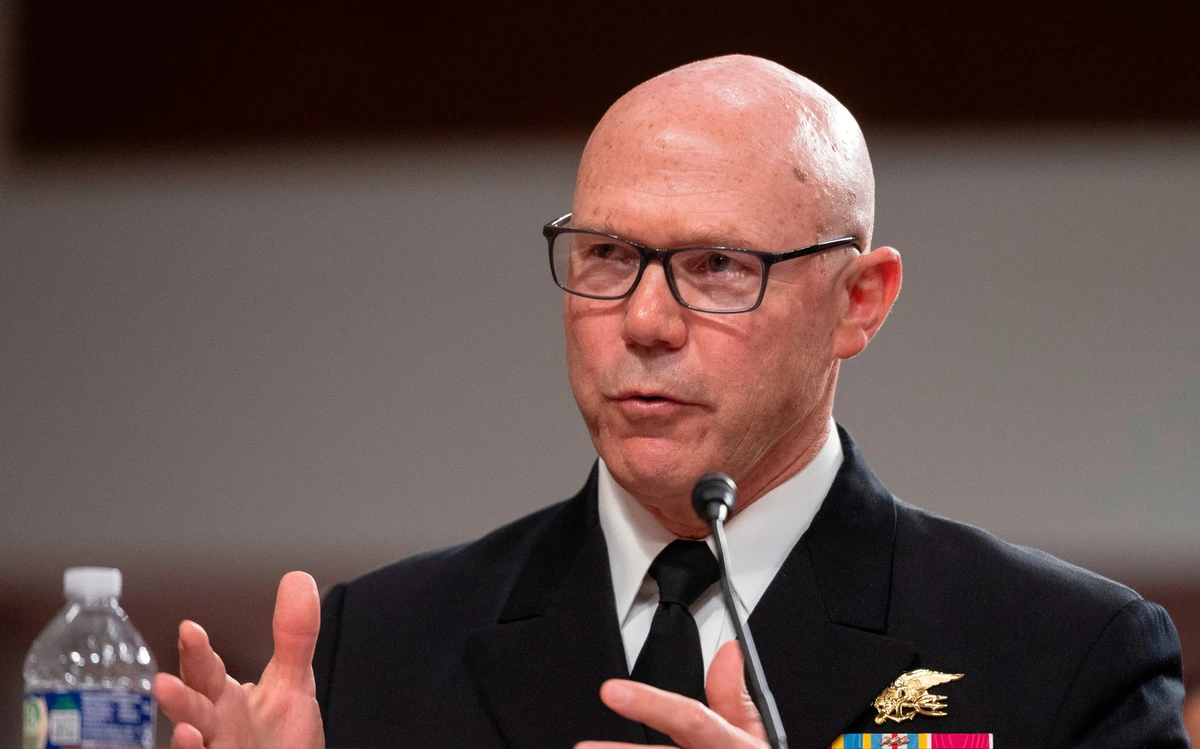
US Navy Admiral urges caution on AI in warfare; War Secretary pushes for rapid adoption
Translated from Vietnamese and summarized by DistantNews. Read the original for the full story.
At a glance
News
Named sources
New plan
- US Navy Admiral Frank Bradley urged caution in integrating Artificial Intelligence into military operations.
- His remarks contrast with War Secretary Pete Hegseth's push for rapid AI adoption for all legal military purposes.
- The debate highlights concerns over AI's role in targeting, potential unintended damage, and ethical considerations in warfare.
U.S. Navy Admiral Frank Bradley has advised significant caution regarding the integration of Artificial Intelligence (AI) into military operations, emphasizing the need for human oversight to ensure technology is used appropriately and avoids unintended consequences.
AI can support target identification in the future, but humans must ensure this technology is used only for its intended purpose and does not cause unintended damage.
Admiral Bradley, Commander of the U.S. Special Operations Command (SOCOM), stated at a conference in Florida that while AI could assist in target identification in the future, humans must remain in control to guarantee its proper use. These comments come amid pressure from War Secretary Pete Hegseth, who advocates for accelerating AI deployment across the Pentagon for all lawful military objectives, arguing against ideological limitations.
President Donald Trump has also stressed the importance of maintaining U.S. leadership in AI, particularly in competition with China. Officials note that AI is being developed to help soldiers identify and select targets more quickly, thereby shortening attack deployment times. However, many SOCOM leaders view AI primarily as a human support tool rather than a replacement.
The Pentagon needs to be allowed to use AI for all lawful military purposes and should not be limited by ideological barriers.
Concerns about AI's role in warfare have surfaced in discussions about potential risks, such as fully autonomous drones or large-scale surveillance systems. This debate has also led to friction between the Pentagon and AI developer Anthropic. After disagreements over using Anthropic's chatbot Claude in secret military networks, the Department of Defense terminated a $200 million contract with the company, citing supply chain risks.
AI can handle administrative tasks so soldiers can focus more on combat missions.
Anthropic has since filed a lawsuit, alleging the decision was retaliatory. Meanwhile, the Pentagon is increasing collaboration with other tech giants like Google, OpenAI, and SpaceX for military AI development. Experts like Helen Toner from Georgetown University's Center for Security and Emerging Technology highlight that while AI enhances operational speed and scale, commanders remain focused on preventing errors like misidentification of targets.
AI is helping the military operate at a greater speed and scale than before.
About this summary
Originally published by Tuổi Trẻ in Vietnamese. Translated, summarized, and contextualized automatically by DistantNews, with a note on how the source frames the story. Not individually reviewed before publishing. How this works.
More Stories



From Our Blog

What Gets Lost (and Found) When News Is Translated

The Critical Role of Diaspora Media in Global News

What Travellers Should Know About Countries with Restricted Press

A Digital Nomad's Guide to Following Local News

How the Same Story Looks Different in Different Countries
