

Brazil turns to China trade deal after Trump’s tariffs, as years of resistance end
Summarized and contextualized by DistantNews.
At a glance
News
Official statement
New plan
- Brazil and China agreed to speed up negotiations for a trade deal between China and Mercosur, marking a significant shift in Brazil's long-standing resistance to such agreements.
- The leaders discussed expanding cooperation in strategic sectors like artificial intelligence and critical minerals, and announced a visa waiver agreement to boost travel.
- This move comes as Brazil plans to retaliate against new U.S. tariffs imposed on dozens of trading partners, including Brazil, over concerns about forced labor.
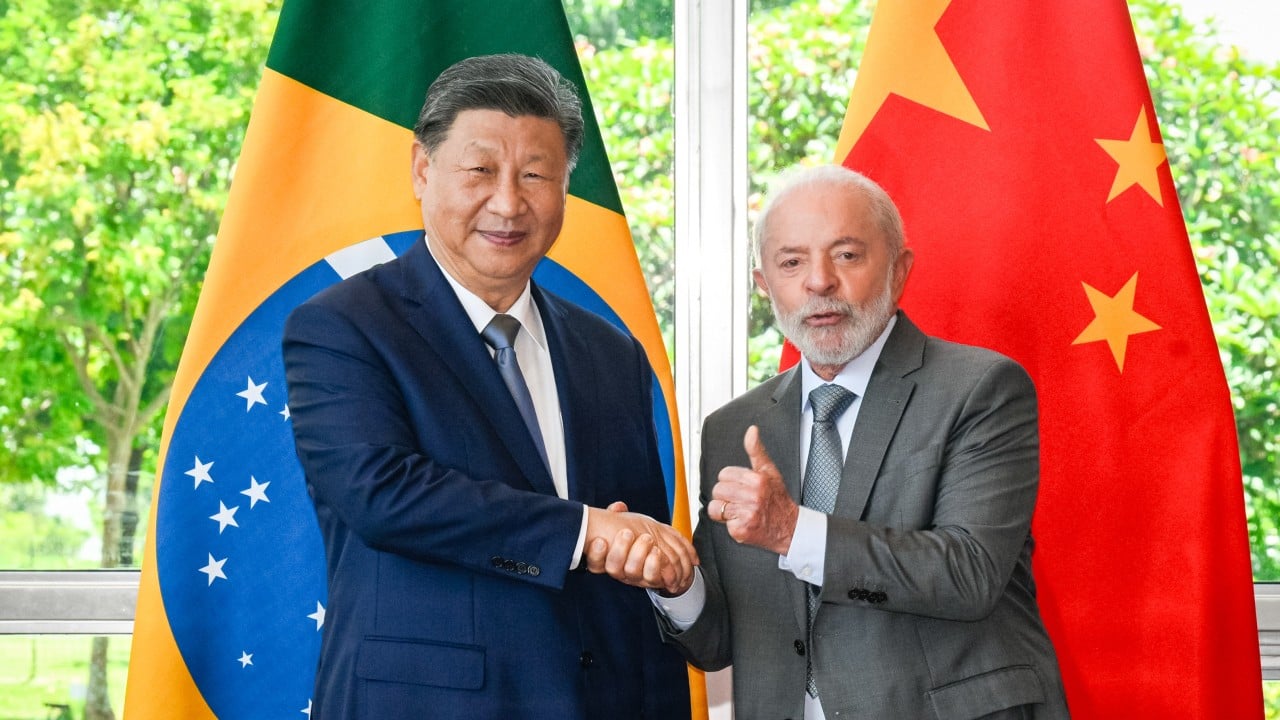
Brazil is accelerating trade talks with China for a Mercosur agreement, a notable reversal from its previous stance. President Luiz Inacio Lula da Silva and Chinese President Xi Jinping spoke by phone, agreeing to expedite negotiations for a deal that includes "necessary flexibilities."
The leaders also explored deepening cooperation in high-technology areas such as artificial intelligence, satellites, and processing critical minerals. A visa waiver agreement was announced to encourage tourism and business travel between the nations.
This strategic shift by Brazil occurs as it prepares to counter new U.S. tariffs. Washington recently imposed an additional 12.5% levy on 60 trading partners, including Brazil, citing inadequate measures against forced labor.
coincided on the importance of speeding up the talks for a Mercosur-China agreement that contemplates the necessary flexibilities
DistantNews Editorial
Originally published by South China Morning Post. Summarized and contextualized by our editorial team with added local perspective. Read our editorial standards.
More Stories


From Our Blog

Countries Without a Free Press: What You Need to Know

What Press Freedom Means for the News You Read

What Gets Lost (and Found) When News Is Translated

The Critical Role of Diaspora Media in Global News

What Travellers Should Know About Countries with Restricted Press
