


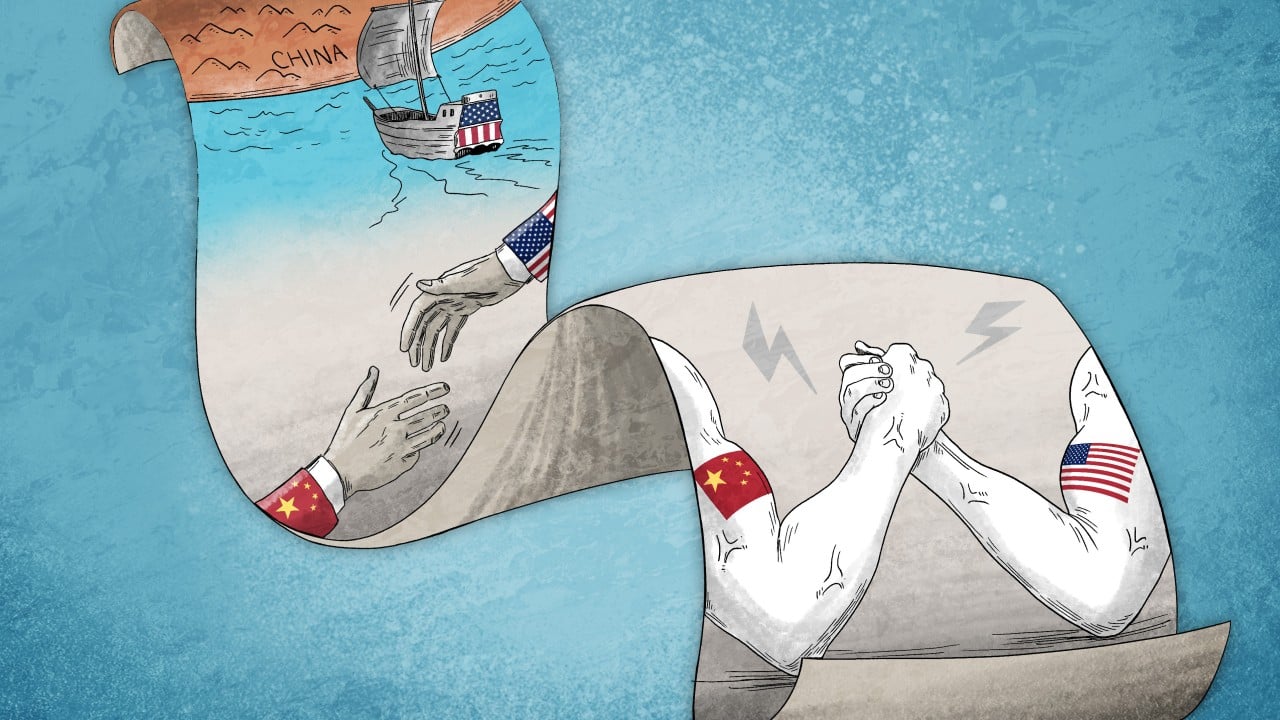
How America’s 250-year China dream became its greatest strategic challenge
Summarized and contextualized by DistantNews.
At a glance
In-depth
Sources not specified
Context piece
- The United States' relationship with China has transformed from a dream of a coveted market to its greatest strategic challenge over 250 years.
- The first American ship, the Empress of China, sailed to Canton in 1784, marking the beginning of a complex relationship.
- Today, the two largest economies are locked in a struggle over trade, technology, security, and the global order.
America's long-held vision of China, beginning with a merchant's dream in 1784, has evolved into its most significant strategic challenge. The journey of the Empress of China, which sailed from New York to Canton (now Guangzhou) in 1784, marked the nascent republic's first engagement with a nation then ruled by the Qing dynasty.
At the time, the United States was a newly independent nation, less than a decade removed from the Declaration of Independence and less than a year from the Treaty of Paris. Lacking a navy and international standing, the young republic harbored a powerful dream of China as a market for its goods.
Over two and a half centuries, this perception of China has repeatedly been reinvented by America. It shifted from a coveted market to an admired civilization, then a missionary project, and finally, a strategic rival. Each reinvention, historians note, revealed as much about America's own evolving identity and ambitions as it did about China itself.
Now, the United States and China, the world's two largest economies, are locked in a profound struggle. This competition spans trade, technology, security, and the very structure of the global order, underscoring the dramatic transformation of their relationship from one of hopeful commerce to intense rivalry.
DistantNews Editorial
Originally published by South China Morning Post. Summarized and contextualized by our editorial team with added local perspective. Read our editorial standards.
More Stories
From Our Blog

Countries Without a Free Press: What You Need to Know

What Press Freedom Means for the News You Read

What Gets Lost (and Found) When News Is Translated

The Critical Role of Diaspora Media in Global News

What Travellers Should Know About Countries with Restricted Press
