

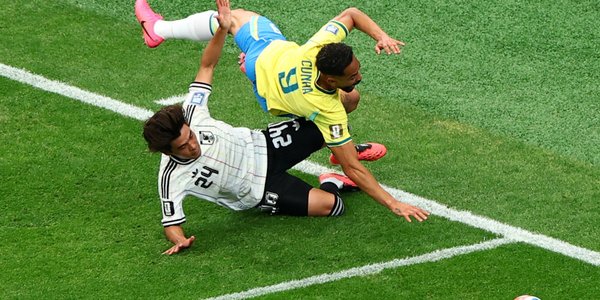
Brazilians taught Japan football, even Tsubasa. The World Cup asks 'prove it'
Translated from Polish, summarized and contextualized by DistantNews.
At a glance
News
Sources not specified
Context piece
- Brazil has a long history of influencing Japanese football, from anime inspiration to professional league development.
- Legendary players like Kazuyoshi Miura and Zico played key roles in shaping Japanese soccer, with many Brazilians coaching and playing in Japan.
- Current Japanese coach Hajime Moriyasu, who played under Brazilian coach Paulo Roberto Falcão, emphasizes confidence and character while respecting Japanese football's identity.
The relationship between Brazil and Japan in football extends far beyond the pitch, deeply influencing the sport's development in Japan. This connection is so profound that it even inspired the popular anime series "Captain Tsubasa," which depicted a fictional mentorship between a Japanese prodigy and a Brazilian legend.
My sense of professionalism, my 'win or die' attitude, and my approach to training – it all originated in Brazil. (...) The joy of victory, the pain of defeat, and the meaning of hard work – I learned all of this in Brazil.
The influence began with players like Kazuyoshi Miura, who trained in Brazil during the 1980s, absorbing the nation's footballing ethos. This was amplified in the 1990s with the launch of the professional J.League, which attracted Brazilian stars like Zico. Zico, a World Cup winner, aimed to instill a winning mentality in Japanese players, famously stating that "history remembers the team that lifted the cup." Following Zico, other Brazilian World Cup champions, including Dunga, Leonardo, and Jorginho, also contributed to Japanese football.
A club finishing second or third can be satisfied with a good season. But history remembers the team that lifted the cup.
Brazil's impact also came from the coaching side. Paulo Roberto Falcão managed the Japanese national team, and later, Zico led the team in the 2006 World Cup, facing his home country in a match Japan initially led before losing 4-1. Current Japanese coach Hajime Moriyasu played under Falcão and learned the importance of confidence and strong character, supported by technical skill. Moriyasu, however, stresses that while he values these lessons, there's no need to alter Japan's unique footballing identity, which he believes can be proudly showcased to the world.
Falcao taught me that the most important thing in football is self-confidence and a strong character supported by a high level of technique. However, there is no need to change the identity of Japanese football. We have many characteristics that are unique, that we can proudly show the world.
DistantNews Editorial
Originally published by Rzeczpospolita in Polish. Translated, summarized, and contextualized by our editorial team with added local perspective. Read our editorial standards.
More Stories

From Our Blog

What Gets Lost (and Found) When News Is Translated

The Critical Role of Diaspora Media in Global News

What Travellers Should Know About Countries with Restricted Press

A Digital Nomad's Guide to Following Local News

How the Same Story Looks Different in Different Countries
