


🇭🇺
Hungary
Budapest Tests New Traffic Plan Amid Criticism Over Integration and Evaluation
Translated from Hungarian, summarized and contextualized by DistantNews.
At a glance
News
Sources not specified
Context piece
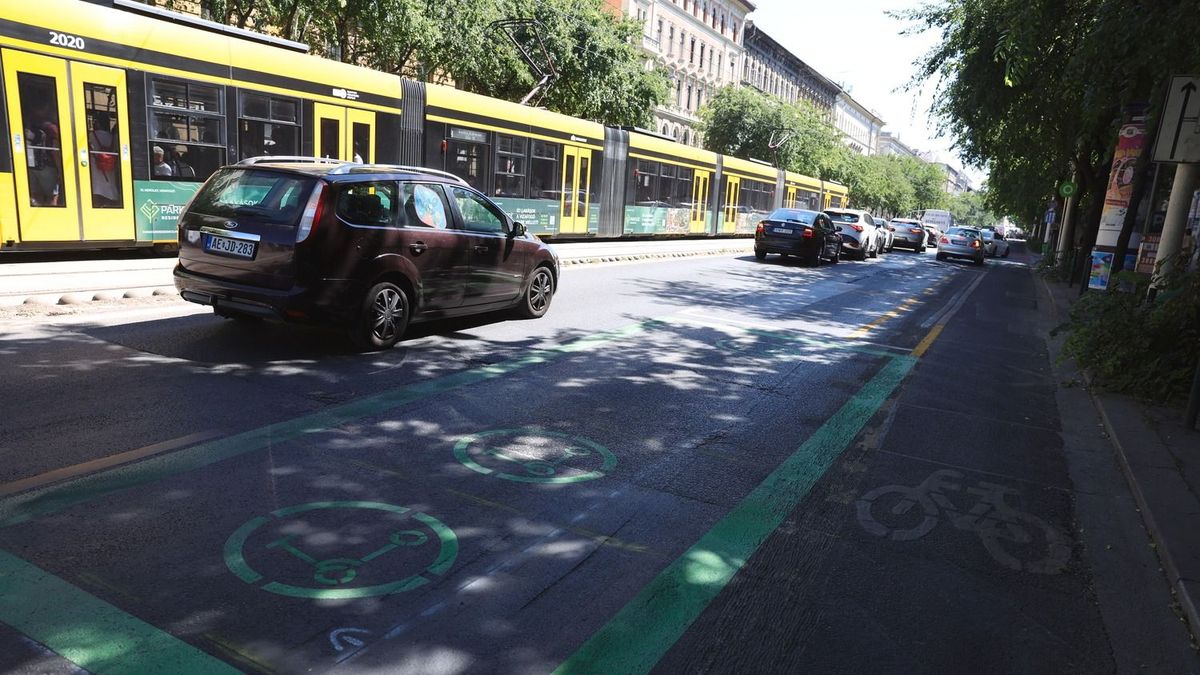
- Budapest is testing new traffic arrangements on József Boulevard, aiming to increase cycling's share of transport.
- Critics, including an auto club, question the integration of these measures with broader Nagykörút development and the lack of evaluation of previous traffic changes.
- The Hungarian Cycling Club supports moving bike lanes off sidewalks but calls for more stable and substantial funding for cycling infrastructure.
Budapest is embarking on another traffic experiment on József Boulevard, with Mayor Gergely Karácsony asserting that the changes will create a more orderly environment for local businesses. However, the auto club questions how this intervention connects to the overall redevelopment of the Nagykörút, criticizing the isolated handling of individual measures.
Concerns are mounting as the city has yet to thoroughly assess the effectiveness of previous lane-narrowing experiments implemented "provisionally" years ago. This is particularly relevant because the mayor intends to use the solutions tested on József Boulevard as the foundation for the entire Nagykörút's future design. While the auto club seeks a comprehensive evaluation of past trials, the city is already preparing for the next one.
We do not see the connections with other developments.
The Hungarian Automobile and Motorcycle Sports Club (MMMK) also points out that the study for the Nagykörút's final design omitted alternative options, such as a dual two-lane road configuration or a network of parallel streets prioritizing cyclists. The Hungarian Cycling Club, however, supports moving cycling traffic from sidewalks, citing conflicts between pedestrians and cyclists in the previous setup. They propose an 80-centimeter "door opening zone" between parked cars and bike lanes to reduce accident risks.
The city aims to boost cycling's share from 2-3% to around 10%, a goal requiring significant infrastructure development. Currently, annual funding for cycling projects is approximately 200 million forints, a fraction of the total transport budget of around 200 billion forints. The Cycling Club advocates for more stable and substantial dedicated funding, while the auto club insists on a comprehensive comparison of costs, traffic impacts, and overall consequences for Budapest's transport system before proceeding.
The solution cannot be to treat individual measures as isolated 'separate projects'.
DistantNews Editorial
Originally published by Magyar Nemzet in Hungarian. Translated, summarized, and contextualized by our editorial team with added local perspective. Read our editorial standards.
More Stories



From Our Blog

Countries Without a Free Press: What You Need to Know

What Press Freedom Means for the News You Read

What Gets Lost (and Found) When News Is Translated

The Critical Role of Diaspora Media in Global News

What Travellers Should Know About Countries with Restricted Press
