


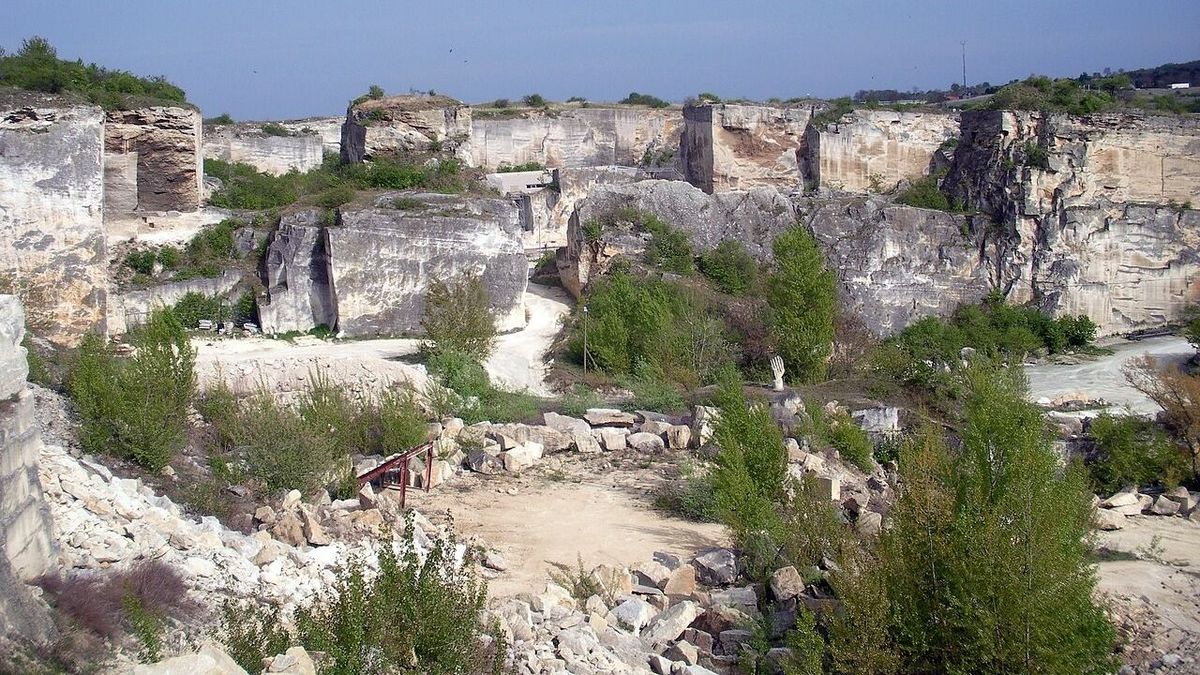
Burgenland Quarries Dispute Greenpeace Asbestos Measurements
Translated from Hungarian, summarized and contextualized by DistantNews.
TLDR
- Quarry operators in Burgenland are seeking to reopen mines after a provincial authority measured rock concentration but not airborne asbestos levels, which are crucial for worker and public safety.
- The operators applied for trial operation to conduct air measurements under full operating conditions, but Greenpeace's measurements are deemed unreliable by quarry management.
- Quarry management questions the sudden increase in asbestos levels found in a parking lot, arguing that pre-closure measurements in the mines were always below limits and that the mines pose no danger.
The recent measurements conducted by Greenpeace concerning asbestos levels in Burgenland's stone quarries have ignited a heated debate, with local quarry operators vehemently challenging the environmental group's findings. Frank Eichhorn, the plant manager at the Pilgersdorf quarry, has voiced strong criticism, pointing out that the provincial authorities measured asbestos concentration in the rock itself but failed to assess airborne asbestos levels. This oversight is critical, especially considering Austria has no határérték (limit value) for asbestos concentration in rock, posing a significant risk to workers and the public.
A tartományi hatóságok a kőzetben található tömegkoncentrációt mérték, a levegőben lévő azbeszt koncentrációját azonban nem. Ez pedig döntő fontosságú a munkavállalók és a lakosság védelme szempontjából, főleg mivel Ausztriában a kőzetben található azbesztkoncentrációra nincs határérték
All four quarry operators are eager to resume operations and have applied for trial runs. This is deemed essential to conduct air measurements under full operational capacity, thereby generating reliable data for evaluating the quarries. However, the reliability of Greenpeace's data is questioned by quarry management. Kirschbaum argues that the environmental group selected individual pebbles for testing without adhering to statistical accuracy, asserting that two pebbles cannot represent the asbestos prevalence in an entire area.
Mind a négy üzemeltető szeretné újra megnyitni a bányákat, és próbaüzemet kérelmeztek. Ez azért is szükséges lenne, hogy teljes üzemeltetés mellett levegőméréseket lehessen végezni, és így megbízható értékek álljanak rendelkezésre a bányák értékeléséhez
Kirschbaum further questions the discrepancy: measurements taken before the quarries' closure consistently remained below the limits, yet a parking lot suddenly showed a 50% asbestos load. He rhetorically asks about the source of this "miraculous" increase, emphasizing that the danger does not originate from the stone quarries themselves. From the perspective of the Burgenland quarry operators, this situation highlights a misunderstanding or misrepresentation of the actual risks, potentially jeopardizing local livelihoods based on flawed data.
A vételezett anyagból egyes kavicsokat vettek ki és vizsgáltak meg anélkül, hogy a mintavétel során figyeltek volna a statisztikai pontosságra. Két kavics – mint fogalmazott – még nem mond semmit az azbeszt előfordulásáról egy egész területen.
DistantNews Editorial
Originally published by Magyar Nemzet in Hungarian. Translated, summarized, and contextualized by our editorial team with added local perspective. Read our editorial standards.
More Stories


From Our Blog

Countries Without a Free Press: What You Need to Know

What Press Freedom Means for the News You Read

What Gets Lost (and Found) When News Is Translated

The Critical Role of Diaspora Media in Global News

What Travellers Should Know About Countries with Restricted Press
