


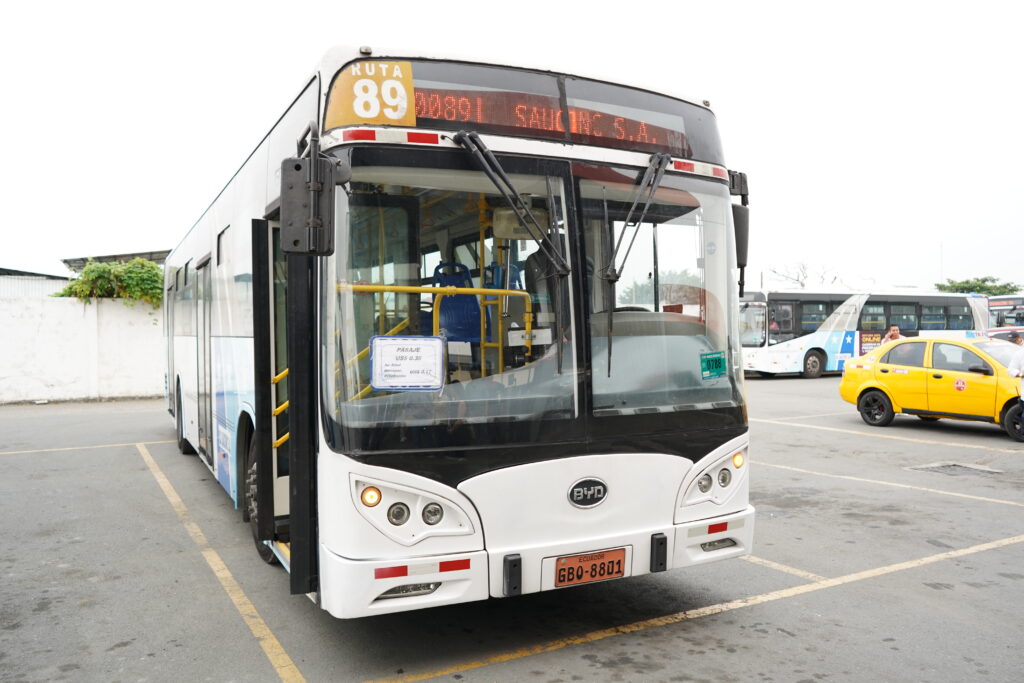
Bus inspections in Guayaquil: First line meets requirements
Translated from Spanish, summarized and contextualized by DistantNews.
At a glance
News
Official statement
Context piece
- Guayaquil's Transit and Mobility Authority (ATM) began its vehicle inspection schedule for urban public transport buses.
- The first cooperative, Saucinc, had 18 buses meet all requirements, making them eligible for a new fare structure pending a trust fund.
- Inspections will continue for four weeks, covering 461 buses from 54 operators, to ensure compliance with safety, comfort, and operational standards.
Guayaquil's Transit and Mobility Authority (ATM) has initiated its vehicle inspection schedule for urban public transport buses, a key step in implementing the municipal ordinance that regulates public transport fares. The process began on Thursday, August 13, 2026, with the first buses inspected belonging to the Saucinc cooperative.
Out of the Saucinc cooperative's 18 units presented, all successfully met the established requirements. These buses are now eligible to access the new fare structure, contingent upon the formation of a trust fund to manage the revenue. Edgar Lupera, the ATM's general manager, stated that Saucinc, being the first operator to fully comply, can access the new fare before the six-month deadline.
The inspection process is set to continue for the next four weeks, with the ATM aiming to review a total of 461 buses from 54 different transport operators by September 10. Lupera emphasized that these inspections are mandatory, and operators must adhere to the required improvements to remain in compliance with the ordinance. Failure to do so could result in consequences, including the revocation of their operating permits.
The inspections will verify that buses meet specific standards for safety, comfort, and operation, including functional air conditioning, Wi-Fi connectivity, electronic payment systems, door locking mechanisms, emergency exits, and preferential seating. Operators also need to present their units according to the schedule and provide proof of fuel consumption to be eligible for a monthly compensation of USD 1.13 per unit. While the inspection is a prerequisite for the new fare structure, it does not automatically increase the current 0.30 centavos fare for passengers. Operators have up to six months to implement the required improvements and the electronic payment system, after which they must establish a trust fund to manage common funds before the new fare structure can be applied.
DistantNews Editorial
Originally published by El Comercio in Spanish. Translated, summarized, and contextualized by our editorial team with added local perspective. Read our editorial standards.
More Stories


From Our Blog

What Gets Lost (and Found) When News Is Translated

The Critical Role of Diaspora Media in Global News

What Travellers Should Know About Countries with Restricted Press

A Digital Nomad's Guide to Following Local News

How the Same Story Looks Different in Different Countries
