


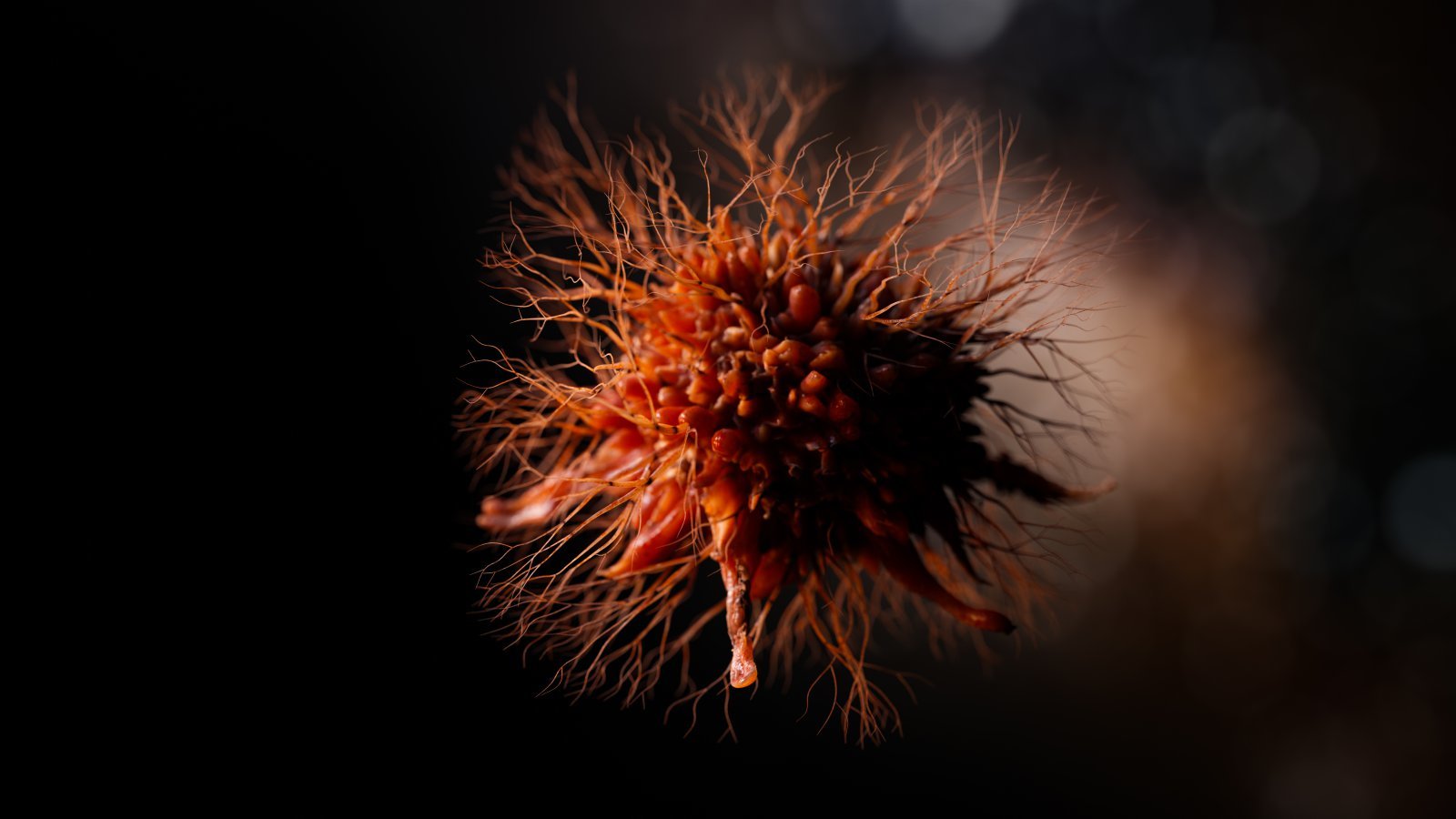
Cancer Cells' Mutations Snipped Away: '4th Generation' Cancer Therapy Reduces Side Effects
Translated from Korean, summarized and contextualized by DistantNews.
At a glance
News
Named sources
Context piece
- South Korean researchers are developing a "fourth-generation" cancer therapy that targets only cancer cells, minimizing side effects.
- The new strategy uses gene-editing tools to disable cancer cells' DNA repair mechanisms or directly cut unique mutations.
- While promising, challenges remain in efficient delivery and safety assessment for personalized treatments.
A groundbreaking cancer treatment strategy is emerging from South Korea, aiming to selectively destroy cancer cells while sparing healthy ones. This "fourth-generation" approach seeks to overcome the debilitating side effects of traditional chemotherapy and radiation by targeting cancer's own survival mechanisms.
Researchers at the Institute for Basic Science (IBS) are exploring two main avenues. One involves exploiting cancer cells' reliance on DNA repair systems. By blocking these repair pathways, particularly in conjunction with existing treatments like PARP inhibitors, the therapy aims to induce "synthetic lethality" in cancer cells. A candidate compound, UNI418, has shown promise in restoring sensitivity to PARP inhibitors in resistant cancer cells, with positive results observed in animal models.
DNA that is damaged in different ways, so the repair mechanism is also different.
The second, more broadly applicable strategy, dubbed CINDELA (Cancer-specific InDel Attacker), utilizes CRISPR-Cas9 gene-editing technology. Cancer cells accumulate thousands of unique mutations, including insertions or deletions (InDels) in their DNA. CINDELA is designed to identify these cancer-specific InDels and repeatedly cut them using the gene editor. Since normal cells lack these specific sequences, they remain unharmed.
If we create a gene scissor that can only cut in cancer cells, and put it into normal and cancer cells, there is nothing for the gene scissor to cut in normal cells.
This targeted approach has shown success in eliminating cancer cells across more than 10 types of cancer, including colorectal, breast, and blood cancers, in laboratory settings and in mouse models. However, significant hurdles remain before widespread clinical application. Ensuring efficient delivery of the gene-editing tools to cancer cells and rigorously evaluating the safety of these personalized treatments are key challenges.
While the researchers envision a future where customized treatments could be developed within a month based on a patient's genetic profile, they are also exploring ways to create more universal therapies. This includes identifying common mutations across different cancer types and investigating combinations with existing drugs to reduce the number of targets the gene editor needs to address.
The efficiency is not yet as good as with viruses. Increasing efficiency is expected to be the biggest challenge.
DistantNews Editorial
Originally published by Dong-A Ilbo in Korean. Translated, summarized, and contextualized by our editorial team with added local perspective. Read our editorial standards.
More Stories



From Our Blog

What Gets Lost (and Found) When News Is Translated

The Critical Role of Diaspora Media in Global News

What Travellers Should Know About Countries with Restricted Press

A Digital Nomad's Guide to Following Local News

How the Same Story Looks Different in Different Countries
