

Chief Economist of Alior Bank on the Polish Economy: Slowing Growth Awaits Us
Translated from Polish, summarized and contextualized by DistantNews.
At a glance
Analysis
Named sources
Context piece
- Poland's economic growth model is nearing exhaustion, potentially leading to stagnation in the coming years, according to Alior Bank's chief economist.
- Key challenges include high energy costs, a strained labor market, and lagging investment in infrastructure and R&D compared to EU averages.
- Future growth will depend on shifting from consumption-driven to investment-driven strategies, focusing on capital, productivity, and innovation.
Poland's current economic development model is running out of steam, signaling a period of slowing growth and potential stagnation if structural challenges are not addressed, according to Alior Bank's chief economist.
While recent economic data, including strong GDP figures and a stable zloty, suggest resilience, particularly against geopolitical shocks, this performance may mask deeper issues. The economist notes that while short-term growth might remain solid, long-term convergence with higher-developed European economies faces significant hurdles. These include demographic shifts and a changing global economic landscape.
We are facing a very large convergence of economists' forecasts. We are all speaking with one voice: stable but slowing growth awaits us in the coming years, inflation will be contained, the labor market will be balanced, and unemployment will be close to historically low levels.
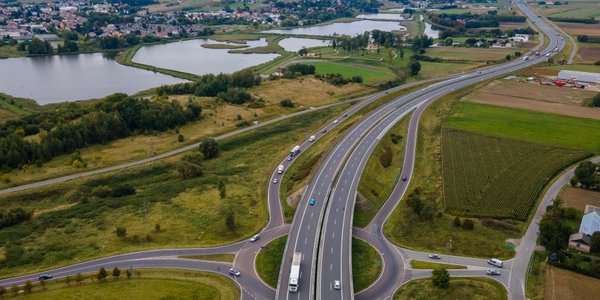
A primary concern is the country's reliance on investment, rather than consumption, as the key driver for the next decade. However, Poland faces substantial structural challenges. Energy costs are significantly higher than the EU average, impacting competitiveness. The labor market is tight, and while road infrastructure is well-developed, the railway network lags considerably, with 80% of lines being uncompetitive in terms of speed.
However, in the longer term, I fear the middle-income trap. We are still dreaming of convergence with higher-developed European economies, but some factors may not favor this. The structure of the economy is changing, the demographic situation is changing.
Furthermore, Poland's spending on research and development and its utilization of data analysis fall below the EU average. The economist warns that without a significant pivot towards investment, capital, and productivity, Poland risks falling behind other nations. The current growth model, which has seen Poland outpace Germany and the EU average in value-added growth, is not translating into comparable investment levels.
Addressing these issues requires a strategic shift, moving beyond slogans like ESG to embrace necessary changes in energy mix and technology adoption. The economist emphasizes that innovation and embracing new technologies are crucial to prevent the country from lagging behind Europe and other global economies. State-led strategic investments are occurring, but a broader corporate shift is needed.
Our growth model has been exhausted and it will be difficult to compete internationally for longer. Changing the energy mix, technologies, automation – these are not just ESG slogans, they are must-haves to prevent Europe and other countries from leaving us behind.
DistantNews Editorial
Originally published by Rzeczpospolita in Polish. Translated, summarized, and contextualized by our editorial team with added local perspective. Read our editorial standards.
More Stories

From Our Blog

What Gets Lost (and Found) When News Is Translated

The Critical Role of Diaspora Media in Global News

What Travellers Should Know About Countries with Restricted Press

A Digital Nomad's Guide to Following Local News

How the Same Story Looks Different in Different Countries
