


Children's Day Gift Costs Nearly Double in a Decade
Translated from Korean, summarized and contextualized by DistantNews.
TLDR
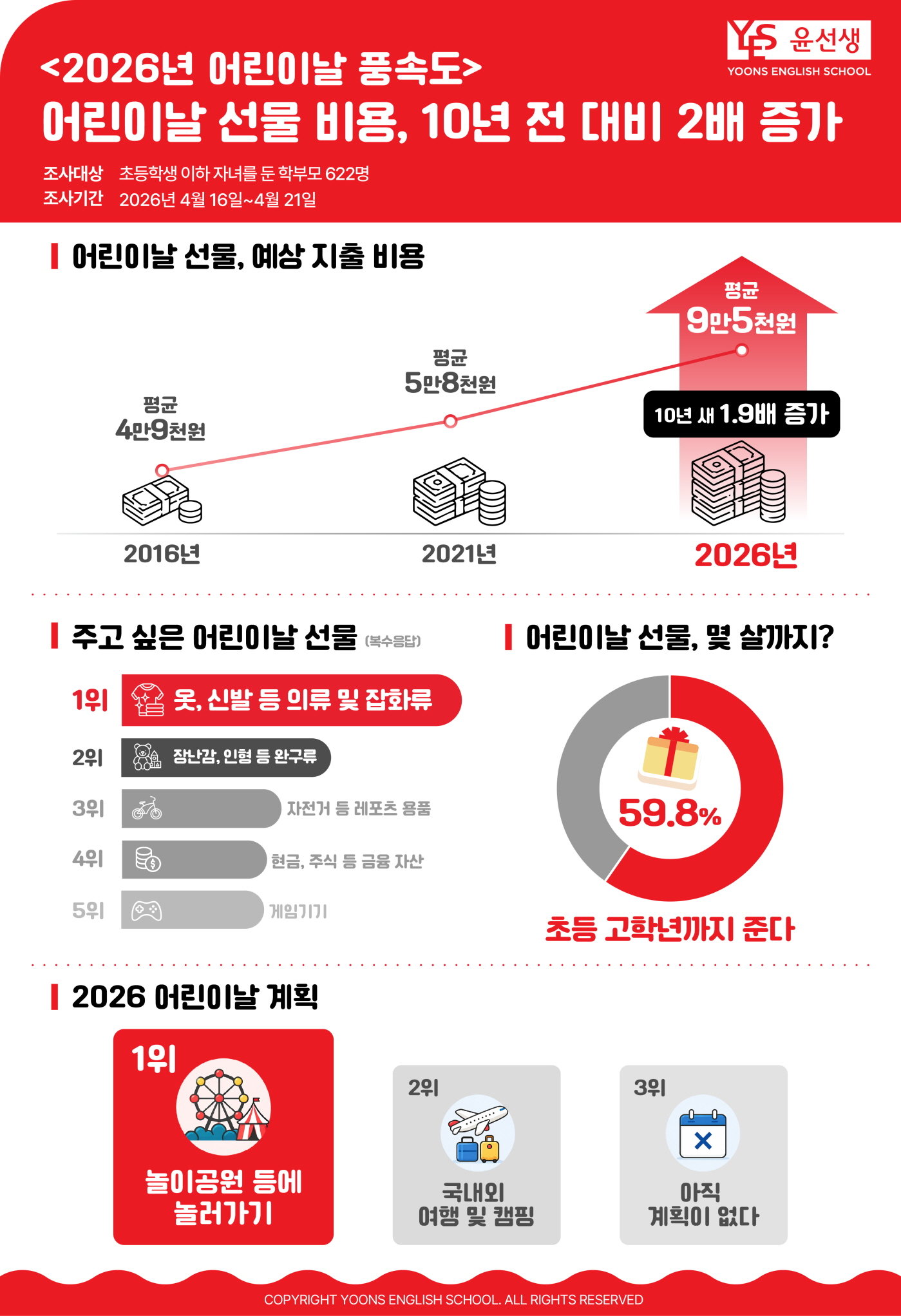
- The average spending on Children's Day gifts in South Korea has nearly doubled in the past decade, reaching 95,000 won this year.
- A survey by Yoonseung indicates that 67.2% of parents receive financial support from grandparents and relatives for gift purchases.
- Clothing and accessories are the most desired gifts, followed by toys, sports equipment, and financial assets, with parents prioritizing their child's wishes.
Children's Day, a cherished occasion on May 5th, is becoming an increasingly significant financial event for South Korean families. A recent survey by the English education company Yoonseung highlights a dramatic rise in gift expenditure, with parents now expecting to spend an average of 95,000 won (approximately $70 USD) on presents this year. This figure represents a near doubling from the 49,000 won average recorded in 2016, underscoring a decade-long trend of escalating gift costs.
The survey reveals that the financial burden is often shared, with a substantial 67.2% of respondents indicating they receive assistance from grandparents, relatives, and other family members. This collective effort reflects the deep cultural importance placed on celebrating children and ensuring they feel cherished on their special day. When it comes to gift preferences, clothing and accessories top the list, chosen by 72.7% of parents, followed by toys, sports equipment, and even financial assets like stocks. Notably, parents are prioritizing their children's desires, with 69.2% citing 'what the child wants' as the primary factor in their selection, followed by necessity and appropriateness of price.
Beyond material gifts, families are planning memorable experiences. A significant portion of parents (31.3%) intend to visit amusement or theme parks, while 21.5% are considering domestic or international travel and camping. This focus on creating lasting memories highlights a shift towards experiential celebrations, alongside the traditional gift-giving. The survey also indicates that most parents (59.8%) plan to continue giving gifts until their children are in the upper elementary grades, with a smaller percentage extending this tradition into middle school, high school, or even adulthood. This data provides a fascinating snapshot into contemporary parenting trends and the evolving nature of celebrating Children's Day in South Korea, where familial support and creating joyful experiences remain paramount.
DistantNews Editorial
Originally published by Dong-A Ilbo in Korean. Translated, summarized, and contextualized by our editorial team with added local perspective. Read our editorial standards.
More Stories


From Our Blog

What Gets Lost (and Found) When News Is Translated

The Critical Role of Diaspora Media in Global News

What Travellers Should Know About Countries with Restricted Press

A Digital Nomad's Guide to Following Local News

How the Same Story Looks Different in Different Countries
