


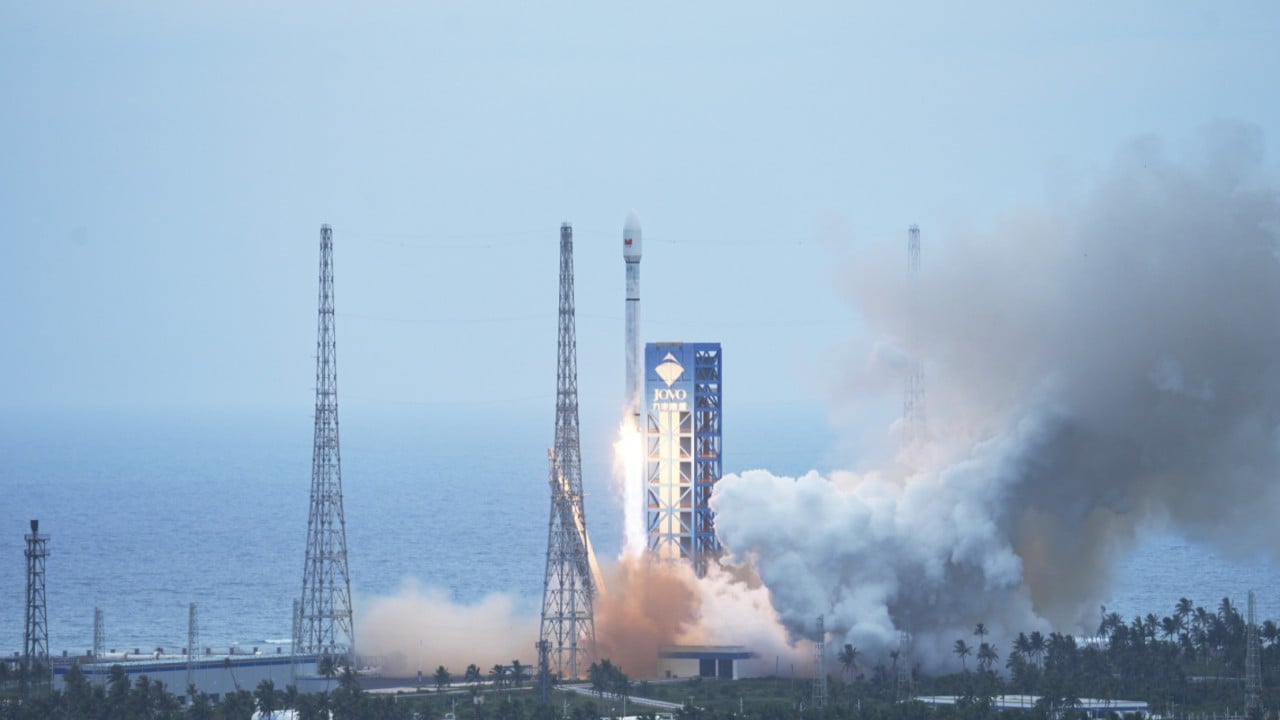
China’s new ‘super fuel’ could help Long March rockets increase payload by 10%
Summarized and contextualized by DistantNews.
At a glance
News
Official statement
New plan
- A Chinese Long March-12 rocket successfully launched using a new "super fuel."
- The new fuel, a high-energy synthetic kerosene, increased the rocket's payload capacity by 10 percent.
- This development aims to improve rocket efficiency without designing larger, more expensive rocket bodies.
China's aerospace ambitions have taken a significant leap forward with the successful launch of a Long March-12 rocket powered by a novel "super fuel." The new propellant, a high-energy synthetic kerosene developed by the Beijing Aerospace Test Technology Research Institute, a subsidiary of the China Aerospace Science and Technology Corporation (CASC), has demonstrated its capability by increasing the rocket's payload capacity by an impressive 10 percent. This breakthrough addresses a key challenge in rocketry: maximizing performance without resorting to larger, more costly rocket designs. Traditional liquid oxygen-kerosene engines, while common, have reached their performance limits. The CASC's innovation lies in enhancing the fuel's energy density, resulting in a substantial boost to the engine's specific impulse, a critical measure of efficiency. This advancement signifies China's commitment to pushing the boundaries of space exploration technology and enhancing its capabilities for future missions.
DistantNews Editorial
Originally published by South China Morning Post. Summarized and contextualized by our editorial team with added local perspective. Read our editorial standards.
More Stories



From Our Blog

Countries Without a Free Press: What You Need to Know

What Press Freedom Means for the News You Read

What Gets Lost (and Found) When News Is Translated

The Critical Role of Diaspora Media in Global News

What Travellers Should Know About Countries with Restricted Press
