


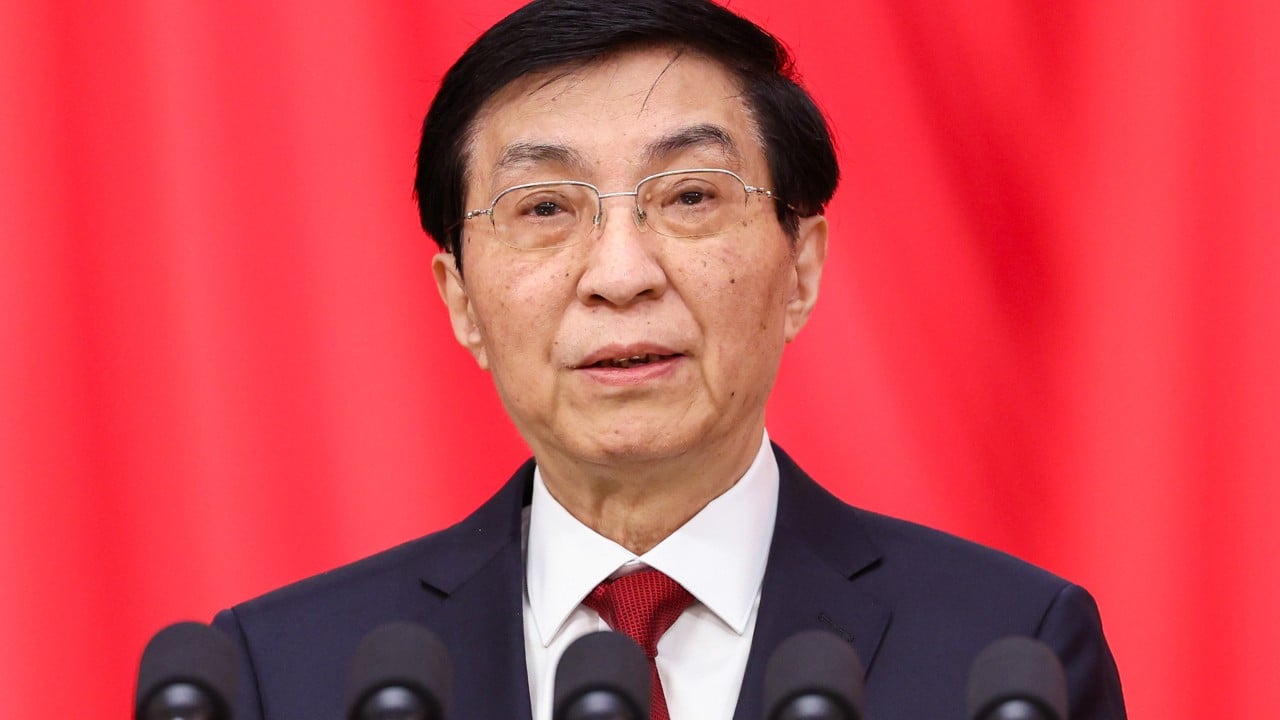
China's No. 4 official Wang Huning to visit North Korea amid rising exchanges
Translated from English, summarized and contextualized by DistantNews.
At a glance
News
Named sources
New plan
- China's fourth-highest-ranking official, Wang Huning, is set to visit North Korea for an official goodwill visit.
- The visit follows a recent trip by North Korean Premier Pak Thae-song to Beijing, where he met with Chinese President Xi Jinping.
- During Pak's visit, Xi emphasized expanding cooperation and defending mutual sovereignty and development interests.
Wang Huning, China's fourth-highest-ranking official, will travel to North Korea this week for an "official goodwill visit," signaling a deepening of ties between the two nations. The visit, scheduled from Wednesday to Friday, will see Wang lead a delegation from the Chinese Communist Party and government.
This high-level exchange marks the latest in a series of recent interactions between Beijing and Pyongyang. Just days prior, North Korean Premier Pak Thae-song concluded a three-day visit to Beijing. During his trip, Pak met with Chinese President Xi Jinping to commemorate the 65th anniversary of a friendship treaty between the neighboring countries.
Chinese state news agency Xinhua on Tuesday reported that Wang would lead a Communist Party and government delegation on an “official goodwill visit” to the country from Wednesday to Friday.
In his meeting with Pak, President Xi underscored the importance of expanding cooperation between China and North Korea. He called for both nations to maintain "firm strategic resolve" and "resolutely defend our respective sovereignty, security and development interests," according to a Chinese readout of the talks. Wang Huning's position as a member of the Politburo Standing Committee, the party's top decision-making body, and chairman of the Chinese People's Political Consultative Conference, highlights the significance of this upcoming visit.
Xi called for Beijing and Pyongyang to expand cooperation, maintain “firm strategic resolve” and “resolutely defend our respective sovereignty, security and development interests”, according to a Chinese readout.
DistantNews Editorial
Originally published by South China Morning Post in English. Translated, summarized, and contextualized by our editorial team with added local perspective. Read our editorial standards.
More Stories


From Our Blog

Countries Without a Free Press: What You Need to Know

What Press Freedom Means for the News You Read

What Gets Lost (and Found) When News Is Translated

The Critical Role of Diaspora Media in Global News

What Travellers Should Know About Countries with Restricted Press
