


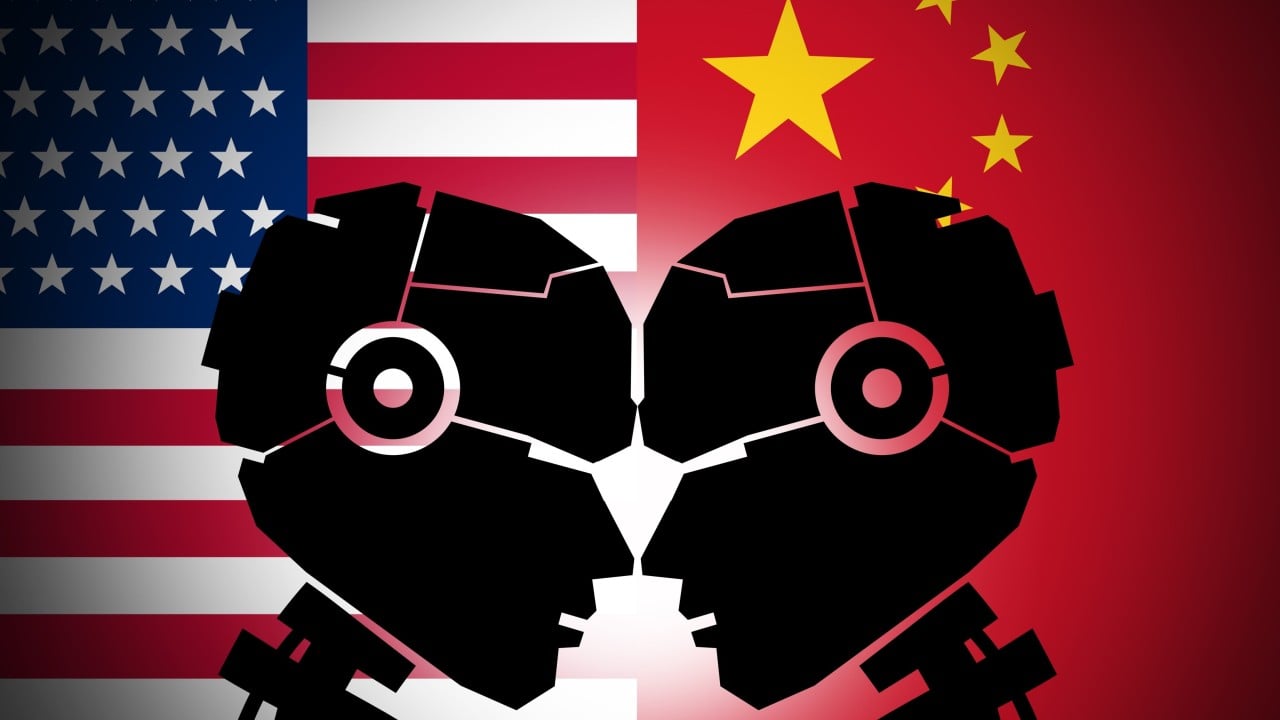
China's quiet industry vs. loud U.S. innovation
Translated from English, summarized and contextualized by DistantNews.
At a glance
Analysis
Sources not specified
Context piece
- The article contrasts the "loud" innovation and public leadership style of the US with China's "quiet" focus on industrial capacity and manufacturing.
- US tech leaders like Elon Musk and Jensen Huang are public figures, while Chinese counterparts such as Wang Chuanfu and Ren Zhengfei maintain lower profiles.
- This difference reflects distinct approaches to technological development, with China emphasizing infrastructure, supply chains, and coordinated industrial policy.
A striking contrast exists between the technological development and leadership styles of China and the United States, often characterized as a clash between "quiet industry" and "loud innovation." While the West, particularly the U.S., often values visible, charismatic leaders who drive results through public presence, the East, exemplified by China, tends to prioritize depth, discipline, and vision.
This divergence is evident in the public profiles of tech leaders. In the U.S., figures like Elon Musk of SpaceX and Tesla, Jensen Huang of Nvidia, and Sam Altman of OpenAI are not only business leaders but also prominent public personalities whose companies have achieved global recognition through groundbreaking innovation. Their visibility is a key component of their companies' brand and influence.
Conversely, Chinese corporate leaders, while influential, largely maintain a low public profile. Founders and CEOs such as Wang Chuanfu of BYD, Ren Zhengfei of Huawei Technologies, Robin Li of Baidu, and Pony Ma of Tencent Holdings have concentrated their efforts on building robust industrial capacity, achieving manufacturing excellence, and fostering long-term national competitiveness. Their focus is on the substance of industrial development rather than public spectacle.
These contrasting approaches shape the very trajectory of technological advancement in each nation. China's ascent as a technological power has been built on substantial investments in infrastructure, the creation of comprehensive manufacturing ecosystems, the development of its own supply chains, and the implementation of coordinated industrial policies to support critical sectors. This methodical, behind-the-scenes approach contrasts sharply with the more visible, innovation-centric model often seen in the United States.
DistantNews Editorial
Originally published by South China Morning Post in English. Translated, summarized, and contextualized by our editorial team with added local perspective. Read our editorial standards.
More Stories

From Our Blog

Countries Without a Free Press: What You Need to Know

What Press Freedom Means for the News You Read

What Gets Lost (and Found) When News Is Translated

The Critical Role of Diaspora Media in Global News

What Travellers Should Know About Countries with Restricted Press
