


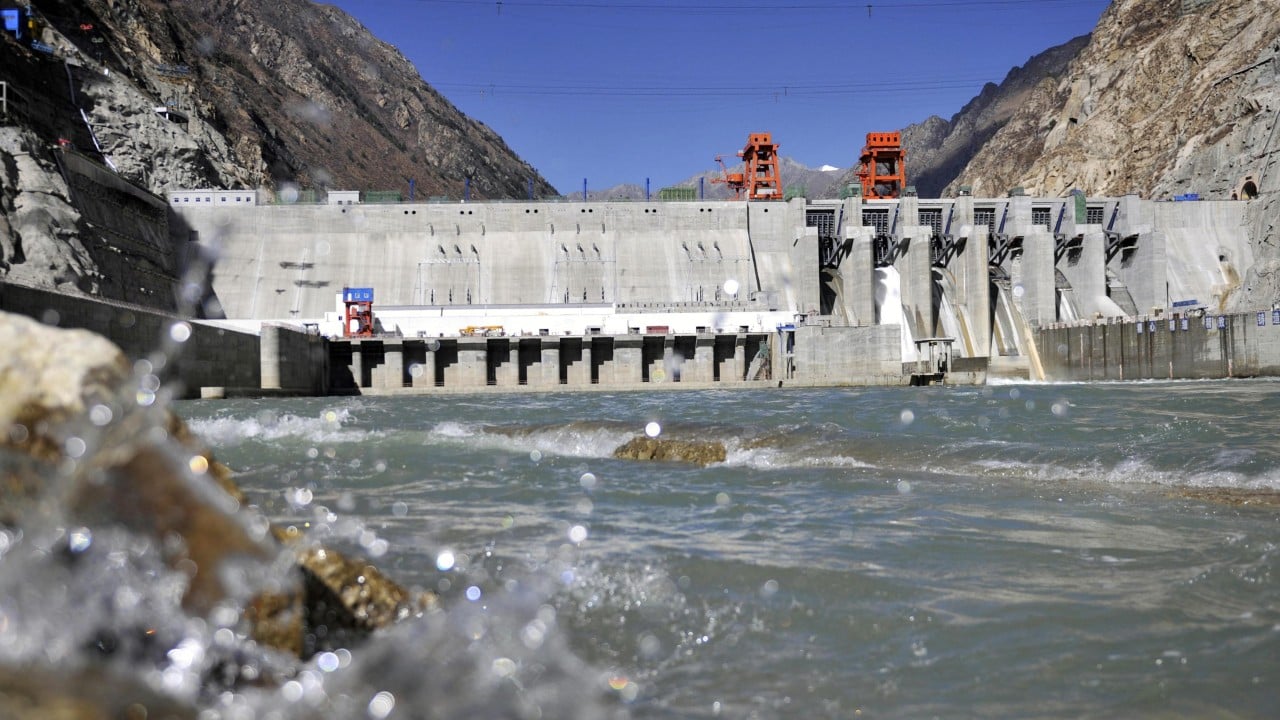
China uses AI facial ID to track migrating fish in Tibet river
Translated from English, summarized and contextualized by DistantNews.
At a glance
News
Sources not specified
Context piece
- China employs AI facial recognition to monitor fish migration at a dam on Tibet's Yarlung Tsangpo River.
- The system replaces manual counts, enabling 24/7 tracking of species passing through the dam's fishway.
- Officials state the dam's operation has not decreased fish populations and has positively impacted the aquatic ecosystem.
China is leveraging artificial intelligence to monitor fish populations in Tibet, employing an AI-driven facial recognition system for round-the-clock tracking at the Zangmu Hydropower Station on the Yarlung Tsangpo River. This advanced technology replaces traditional, labor-intensive manual counts, allowing for precise identification of species unique to the region.
The fishway at the 116-meter-tall dam, operational since 2015, has facilitated the upstream migration of approximately 570,000 rare fish. According to Yang Xiaocheng, director of safety and environmental protection at the dam, the monitoring results indicate a stable fish population in the river's middle reaches, unaffected by the hydropower station's construction.
From the monitoring results, the fish population in the middle reaches of the Yarlung Tsangpo is very stable and has not decreased because of the construction of the hydropower station.
Yang further asserted that the aquatic ecology and plant life in the entire middle gorge section of the Yarlung Tsangpo River have experienced positive changes. Hydropower facilities are recognized for providing flood protection and a consistent source of renewable energy, though they also present environmental challenges by altering natural water bodies.
On the contrary, the aquatic ecology and animal-plant life in the entire middle gorge section of the Yarlung Tsangpo River have shown positive changes.
DistantNews Editorial
Originally published by South China Morning Post in English. Translated, summarized, and contextualized by our editorial team with added local perspective. Read our editorial standards.
More Stories

From Our Blog

Countries Without a Free Press: What You Need to Know

What Press Freedom Means for the News You Read

What Gets Lost (and Found) When News Is Translated

The Critical Role of Diaspora Media in Global News

What Travellers Should Know About Countries with Restricted Press
