


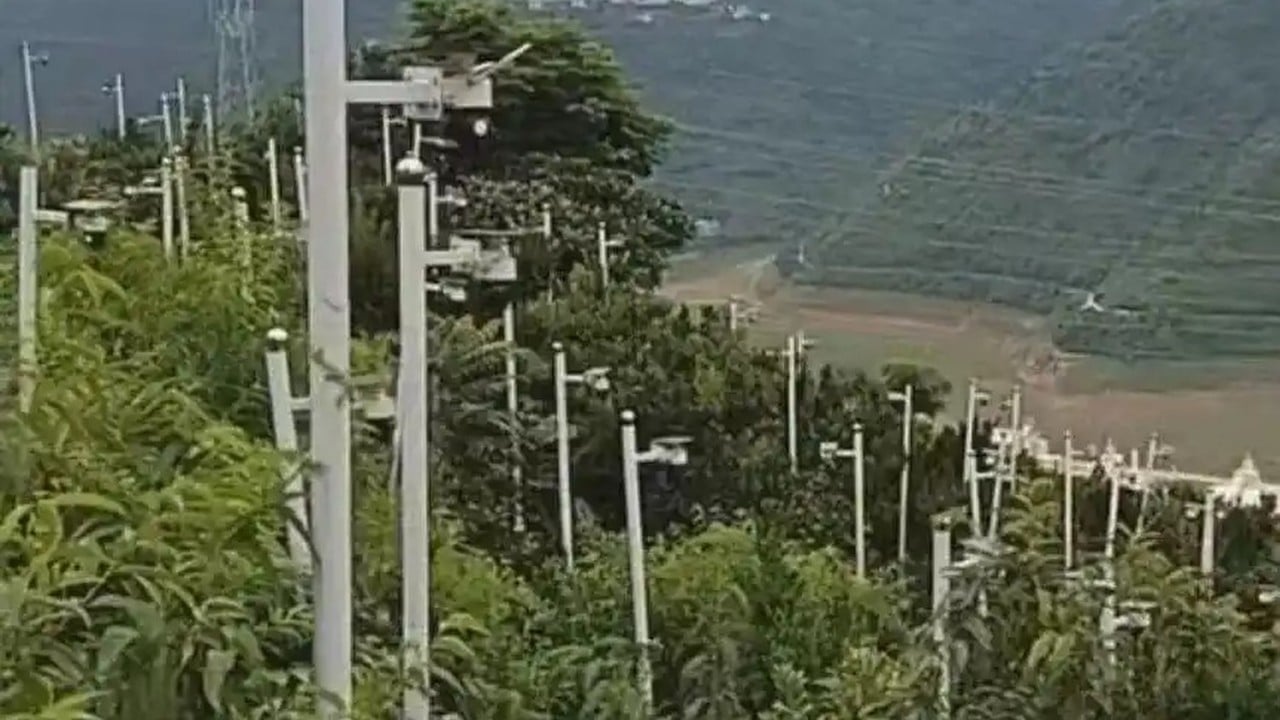
Chinese farmer's 'forest of cameras' fails to boost compensation bid
Translated from English, summarized and contextualized by DistantNews.
At a glance
News
Sources not specified
Context piece
- A Chinese farmer installed over 170 surveillance cameras on his land in an attempt to increase compensation during a compulsory land purchase for a new highway.
- Local authorities stated the farmer planted the cameras after construction in the area was banned and will not compensate him for all of them.
- The incident sparked online discussion, with some speculating about the need for heavy security on an ordinary orchard.
A farmer in China's Hubei province attempted to inflate his compensation payout by installing more than 170 surveillance cameras on his land. The farmer's elaborate setup, which created a "forest of cameras" on a hillside in Badong county, was intended to capitalize on a compulsory purchase scheme for a new highway.
Under China's land acquisition policies, residents can claim compensation for assets on their property, such as fruit trees, sheds, or security cameras. However, the farmer reportedly installed the cameras 12 months after construction in the area had been banned. Local authorities have stated that he will not be compensated for all the devices.
the man was trying to increase his payout under a compulsory purchase scheme to build a new highway.
Footage of the camera-filled orchard circulated widely on social media, prompting speculation about the necessity of such extensive surveillance for a seemingly ordinary orchard. The incident highlights a tactic sometimes employed by residents facing land acquisition, where they add structures or plant trees in the hope of increasing their financial settlement.
the farmer had installed the cameras in his orchard 12 months after construction in the area had been banned and insisted he would not be paid for all the cameras.
DistantNews Editorial
Originally published by South China Morning Post in English. Translated, summarized, and contextualized by our editorial team with added local perspective. Read our editorial standards.
More Stories


From Our Blog

Countries Without a Free Press: What You Need to Know

What Press Freedom Means for the News You Read

What Gets Lost (and Found) When News Is Translated

The Critical Role of Diaspora Media in Global News

What Travellers Should Know About Countries with Restricted Press
