

Chinese rocket scientists find ‘most effective’ way to nuke a doomsday asteroid
Summarized and contextualized by DistantNews.
At a glance
News
Official statement
Context piece
- Chinese researchers propose burying a nuclear bomb beneath an asteroid's surface for maximum deflection or destruction.
- Simulations show a 3-megaton explosion could shatter a 100-meter asteroid, with burying the bomb tripling its speed-changing effect.
- This method, involving two spacecraft, offers lower technical complexity and greater effectiveness than surface explosions, drawing parallels to the movie "Armageddon."
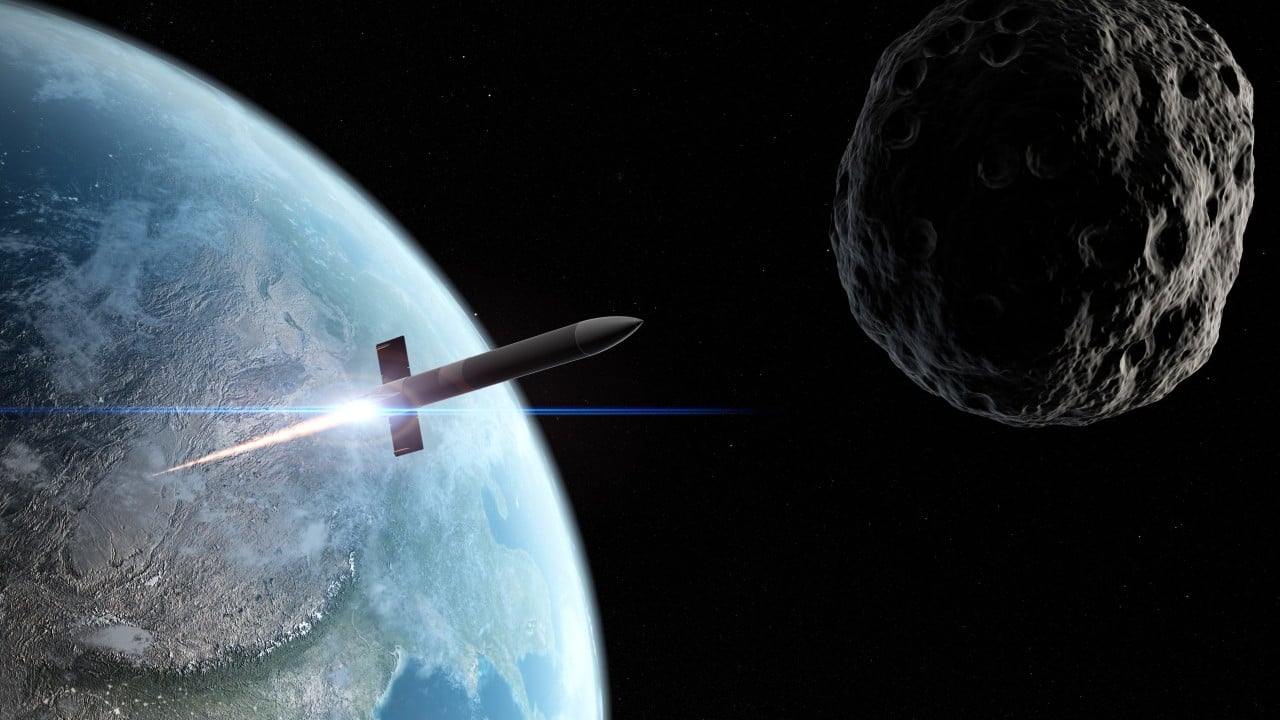
Chinese researchers have devised a strategy they believe is the most effective for neutralizing an asteroid on a collision course with Earth: burying a nuclear device deep within its surface. The proposed method involves a two-stage approach using uncrewed spacecraft.
The initial step requires a metal penetrator to bore a deep hole into the asteroid. Subsequently, a second spacecraft would deliver a nuclear bomb into this cavity. The researchers, affiliated with the China Academy of Launch Vehicle Technology in Beijing, detailed their findings in the journal Space: Science & Technology.
Their simulations indicate that a 3-megaton nuclear explosion, equivalent to 200 Hiroshima bombs, could completely obliterate an asteroid approximately 100 meters in diameter. Crucially, burying the bomb 30 meters below the surface could more than triple the change in the asteroid's velocity compared to a surface detonation. This significantly enhances its capability to alter the asteroid's trajectory.
The team argues that this buried-bomb approach, while reminiscent of the film "Armageddon," presents lower technical challenges and superior defensive capabilities compared to simply impacting the asteroid with a bomb. By strategically choosing the burial site and depth, engineers can achieve a more controlled and effective deflection than a random surface impact.
DistantNews Editorial
Originally published by South China Morning Post. Summarized and contextualized by our editorial team with added local perspective. Read our editorial standards.
More Stories



From Our Blog

Countries Without a Free Press: What You Need to Know

What Press Freedom Means for the News You Read

What Gets Lost (and Found) When News Is Translated

The Critical Role of Diaspora Media in Global News

What Travellers Should Know About Countries with Restricted Press
