

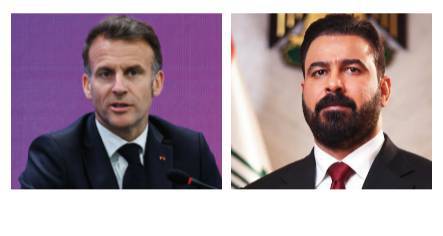

Choose your share from the summit or the bottom?
Translated from Arabic, summarized and contextualized by DistantNews.
TLDR
- The article criticizes a deeply entrenched class of corrupt officials in Iraq who hinder anti-corruption efforts and state modernization.
- These officials, often appointed through partisan floods during the US occupation, remain in power, lacking administrative skills and prioritizing personal gain.
- The author questions why Iraq suffers from such pervasive corruption, expressing a lack of answers and a hope for future purification, urging officials to choose integrity before facing historical judgment.
In Iraq, the persistent specter of corruption continues to plague the nation, casting a long shadow over its prospects for stability and development. Az-Zaman, in its international edition, brings to light a critical analysis of a deeply entrenched bureaucracy that seems impervious to change, regardless of the ministers who cycle through their positions. This "calcified layer" of undersecretaries and directors-general is identified not merely as an obstacle to fighting corruption but as an active facilitator of its spread and a direct cause of the state's administrative stagnation.
There is a calcified and entrenched layer of deputy ministers and directors-general who are not subject to change no matter how much the ministers change. These are one of the most prominent reasons for the inability to fight corruption; rather, most of them are active assistants in its spread, in addition to them being a direct cause of the failure to develop state administration.
The author paints a grim picture of officials who ascended to their posts through "partisan floods" during the American occupation era and who, astonishingly, remain in power. These individuals, described with visceral language as "rotten, degraded, deformed, limping," are said to lack even the basic understanding of administration. Their continued presence ensures that any new ministerial team will be steered by the same corrupt elements, individuals who understand the "game from the inside" and whose primary concern is their own enrichment within the four-year electoral cycle, fearing empty coffers at its end.
This internal rot is starkly contrasted with the external focus on geopolitical issues, such as Iran and oil, which are of concern to figures like former US President Donald Trump. The article laments that such internal problems, which seem "unsolvable," are relegated to domestic affairs. The rarity of finding even a single minister in a decade who is merely "least corrupt" and who "fed others" speaks volumes about the depth of the crisis. The author suggests that the vast majority of the population (46 million) suffers under this system, while only a small fraction (1,500) benefits from the "rotten, backward, and putrid" state of affairs.
They know the game from the inside, and they have more experience than the new ministers rising from the quotas. They lack leadership experience, let alone administration, and their eyes are open to the ministry's economics, and their hearts are trembling and fearful in a race against the four-year cycle, fearing that it will end with empty baskets.
When confronted in international forums, like Arab gatherings in London, with the question of why Iraq endures such immense corruption, the author admits to having no easy answer. There's a fear of appearing to defend a situation that is undeniably pervasive. The plea is for officials to recognize their position, to act with integrity while they are "at the top," before they inevitably find themselves "at the bottom" and bearing the weight of historical condemnation. This is a message reiterated every four years, a desperate call to Iraqi officials to choose their legacy wisely, for the "Iraqi history that forgives no one."
I don't know why my heart doesn't allow me to increase the number. And that the land of the two rivers is sound and pure, and it will be purified one day by the hand of an official with a conscience who tells him that today he is at the top and must do something, before tomorrow comes and he will be at the bottom and will bear the burden of things, so let him choose his share himself rather than receive his share of the curse of history, and not just any history, it is the Iraqi history that forgives no one.
DistantNews Editorial
Originally published by Az-Zaman in Arabic. Translated, summarized, and contextualized by our editorial team with added local perspective. Read our editorial standards.
More Stories


From Our Blog

What Gets Lost (and Found) When News Is Translated

The Critical Role of Diaspora Media in Global News

What Travellers Should Know About Countries with Restricted Press

A Digital Nomad's Guide to Following Local News

How the Same Story Looks Different in Different Countries
