


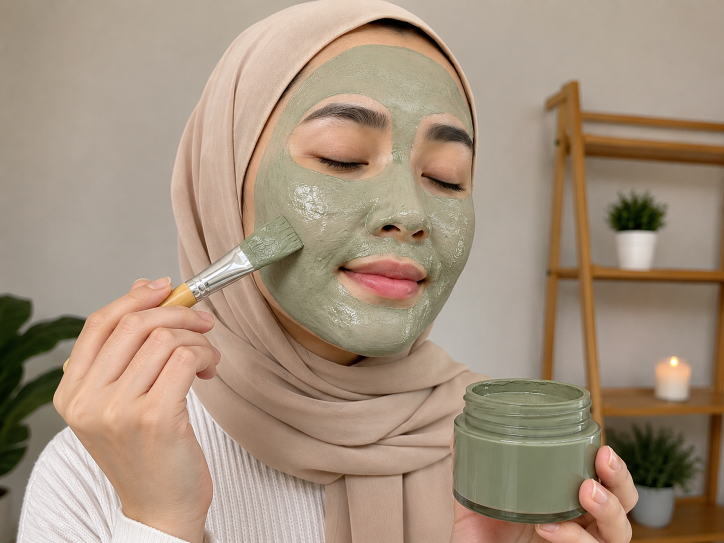
Clay masks control oil and clean pores, but don't shrink them
Translated from Malay, summarized and contextualized by DistantNews.
At a glance
News
Named sources
Context piece
- Clay masks, popular for oily and congested skin, primarily control oil and clean pores, not shrink them.
- Ingredients like kaolin and bentonite absorb excess oil and dead skin cells, leaving a matte finish.
- Over-drying the mask can strip moisture and cause irritation, especially for dry or sensitive skin types.
Clay masks have surged in popularity for skincare routines, particularly among those battling oily skin and clogged pores. While often marketed for their pore-minimizing effects, their true benefit lies in absorbing excess oil and impurities, contributing to a clearer, more matte complexion.
According to Dr. Hamidah Mohd. Salleh, CEO of Klinik Lovina, the natural clays found in these masks, such as kaolin, bentonite, and rhassoul, act as powerful absorbents. They draw out excess oil, dead skin cells, and dirt from the skin's surface. Bentonite clay, in particular, offers mild antimicrobial properties that can further benefit the skin.
Clay acts as an absorbent that helps clean the skin's surface. It can control oil, clean pores, and provide a more matte skin effect after use.
However, Dr. Hamidah cautions that clay masks are not universally suitable for all skin types or frequent use. They are most beneficial for individuals with oily and combination skin, which naturally produce more sebum. Those with dry or sensitive skin must use them sparingly, as the absorbent nature of clay can also draw out essential moisture, potentially leading to irritation.
Many think clay only absorbs excess oil, whereas it can also draw some moisture from the skin's surface. That's why users with dry or sensitive skin need to be more careful.
Proper application involves cleansing the face first, then applying a thin, even layer of the mask, avoiding the eye and lip areas. A common mistake is leaving the mask on until it completely dries and cracks. Dr. Hamidah advises leaving it for only 5 to 10 minutes before rinsing with lukewarm water. Leaving it on too long strips moisture and increases the risk of irritation.
Finally, applying a moisturizer after rinsing is crucial. This step helps restore the skin's moisture balance and maintain its protective barrier, ensuring the skin remains hydrated and healthy after the purifying effects of the clay mask.
Many assume the longer it's left on, the more effective it is. Actually, when the clay starts to crack and becomes too dry, it will draw more moisture from the skin and increase the risk of irritation.
DistantNews Editorial
Originally published by Utusan Malaysia in Malay. Translated, summarized, and contextualized by our editorial team with added local perspective. Read our editorial standards.
More Stories



From Our Blog

What Gets Lost (and Found) When News Is Translated

The Critical Role of Diaspora Media in Global News

What Travellers Should Know About Countries with Restricted Press

A Digital Nomad's Guide to Following Local News

How the Same Story Looks Different in Different Countries
