


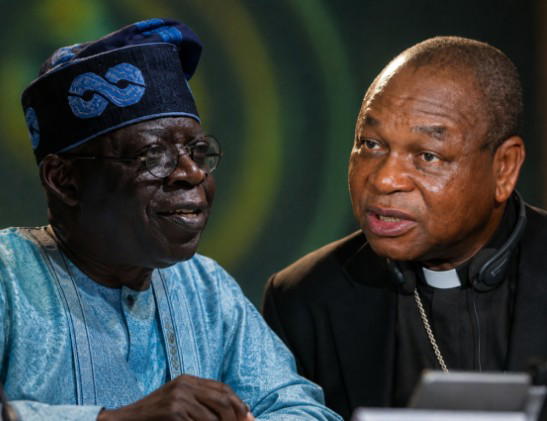
Clerics, presidency clash over economy after Tinubu-bishops meeting
Summarized and contextualized by DistantNews.
At a glance
News
Named sources
Context piece
- A meeting between Nigerian President Bola Tinubu and Catholic bishops has ignited a debate on the role of religious leaders in governance.
- Cardinal John Onaiyekan's interview on the meeting drew reactions from the Presidency and various commentators, highlighting differing views on clerics commenting on government policies.
- Some religious leaders and commentators emphasize prayer and spiritual guidance, while others argue for open criticism of issues like poverty and insecurity, citing historical precedents.
A recent meeting between Nigerian President Bola Tinubu and the Catholic Bishops’ Conference of Nigeria (CBCN) has sparked a public debate regarding the involvement of religious leaders in governance. The discussion intensified after Cardinal John Onaiyekan shared his perspective on the meeting in a television interview, prompting varied responses from the Presidency, religious figures, and the public.
The core of the debate centers on whether clerics should openly comment on government policies or confine their roles to spiritual matters. Pastor Seyi Osuntayo of The Apostolic Church Nigeria suggested that while religious leaders have a role in national discourse, the timing of criticism is crucial. He advised Christian leaders to avoid partisan politics and focus on encouraging good governance and praying for national leaders, referencing 1 Timothy 2:1-4.
The timing of advice and criticism is important. The timing of the Catholic Bishops’ Conference of Nigeria’s comments could be interpreted differently by various audiences.
Conversely, journalist and author Ben Charles-Davies argued that the focus should remain on the concerns raised by the bishops, such as poverty, insecurity, and the cost of living, rather than the controversy surrounding their comments. He noted that Catholic Bishops have historically commented on governance under various administrations, including that of former President Goodluck Jonathan. Charles-Davies believes public officials should be open to differing opinions and avoid personal attacks.
Ugoji Maximillian, a speaker and author, offered another perspective, describing the Catholic bishops as an influential institution with a long history of engagement in national affairs. Maximillian stated that disagreements between political leaders and religious groups are not uncommon in Nigeria's democratic process. The exchange highlights the complex relationship between religious institutions and the government in Nigeria, with differing views on the appropriate level and nature of clerical engagement in public policy.
Our leaders need prayer, whether we agree with their leadership style or not. We may not choose our leaders, but we can choose to obey God’s instruction to pray for them.
DistantNews Editorial
Originally published by Vanguard. Summarized and contextualized by our editorial team with added local perspective. Read our editorial standards.
More Stories


From Our Blog

How the Same Story Looks Different in Different Countries

What Gets Lost (and Found) When News Is Translated

The Critical Role of Diaspora Media in Global News

What Travellers Should Know About Countries with Restricted Press

A Digital Nomad's Guide to Following Local News
