


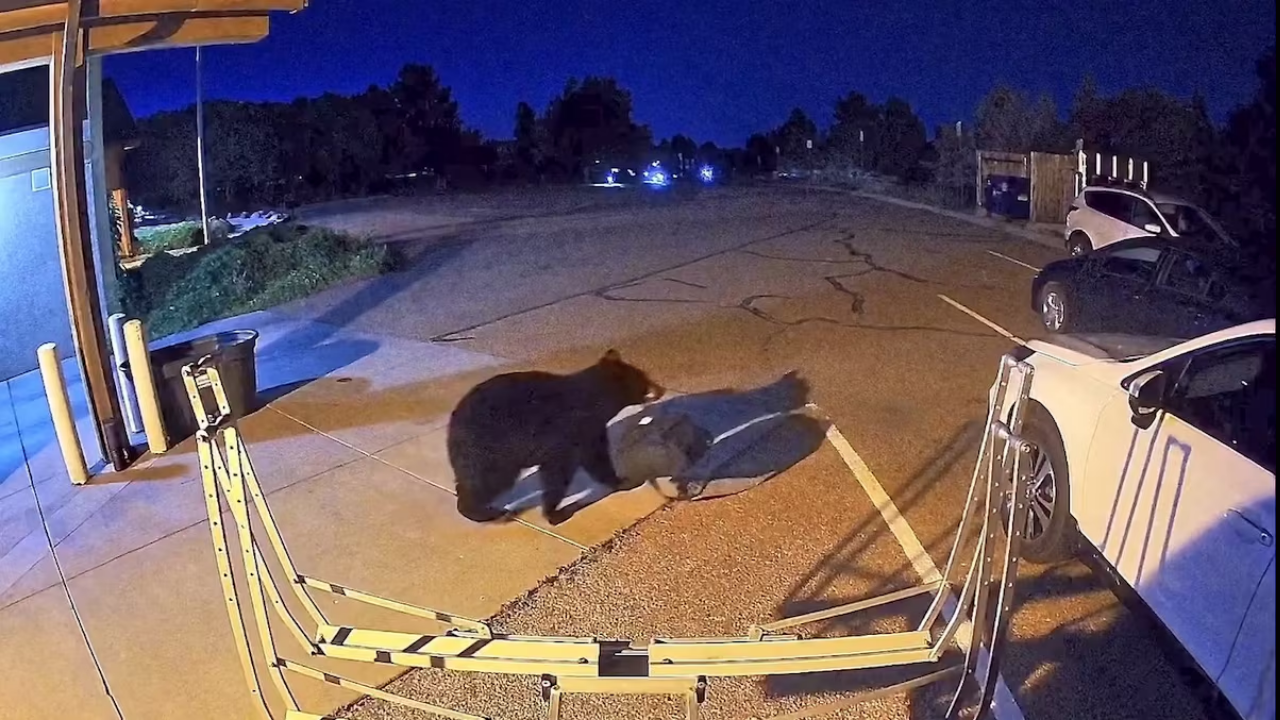
Colorado records more than 7,000 bear sightings in 2026, exceeding full-year record
Translated from English and summarized by DistantNews. Read the original for the full story.
At a glance
In-depth
Named sources
Ongoing story
- Colorado recorded more than 7,000 bear sightings in 2026, surpassing the state’s previous full-year record from 2019.
- Severe drought reduced vegetation, berries, grasses and nuts that make up most of a black bear’s diet, pushing hungry animals toward human settlements.
- Population growth and development in bear habitat have increased encounters, with at least six direct bear attacks on people recorded in Colorado this year.
Two young black bears recently wandered into Matt Errico’s home in Granby, Colorado, appearing in his hallway before fleeing through the front door. Similar encounters have placed bears in a vape shop, near a school and close to a farmers market.
Colorado recorded more than 7,000 bear sightings in 2026, surpassing its previous full-year record, set in 2019. Severe drought has sharply reduced the vegetation, berries, grasses and nuts that provide about 90% of a black bear’s diet.
Hungry bears are using their strong sense of smell to find food in towns and cities. Rubbish, bird feeders and shops offer easier sources than the shrinking supply in the wild. Matt Errico told Reuters, “I’ve definitely never heard of bears inside, you know, cubs inside someone’s house,” after finding the animals in his home.
I’ve definitely never heard of bears inside, you know, cubs inside someone’s house.
Wildlife experts are concerned that continued environmental change could alter bear behaviour. Black bear expert Jon Beckmann described the situation as “testing the bears and humans in a new way.” Biologists fear bears could become accustomed to human food or change their hibernation patterns if warm, dry winters continue.
The pressure is also linked to long-term population growth and expanding development. Colorado’s population has more than doubled over five decades, while housing has spread into wildlife corridors and feeding areas. The state now has an estimated 17,000 to 20,000 black bears, and at least six direct attacks on people have been recorded this year.
It is like testing the bears and humans in a new way.
About this summary
Originally published by Times of India in English. Translated, summarized, and contextualized automatically by DistantNews, with a note on how the source frames the story. Not individually reviewed before publishing. How this works.
More Stories


From Our Blog

What Press Freedom Means for the News You Read

What Gets Lost (and Found) When News Is Translated

The Critical Role of Diaspora Media in Global News

What Travellers Should Know About Countries with Restricted Press

A Digital Nomad's Guide to Following Local News
