


Communism in Cuba is dying. Donald Trump could deliver the final blow.
Translated from Polish, summarized and contextualized by DistantNews.
At a glance
News
Named sources
Context piece
- Cuba is facing its deepest humanitarian crisis in decades, marked by severe power outages and shortages.
- The government has announced 157 urgent reforms, but internal power struggles hinder real change.
- US policy under Donald Trump, coupled with internal dynamics, exacerbates the crisis, with some considering military intervention.
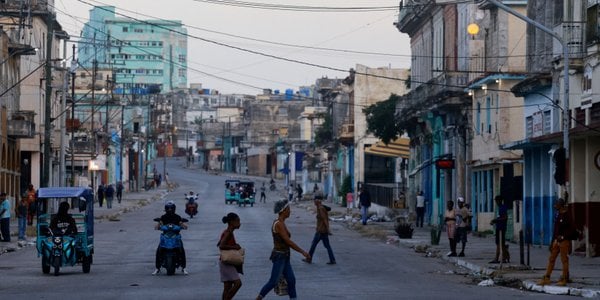
Cuba is grappling with its most profound humanitarian crisis in 67 years, a situation characterized by crippling power outages that plunge cities into darkness for hours, sometimes days. Residents resort to desperate measures, rushing to charge phones and fetch water whenever brief moments of electricity appear. This constant struggle has pushed the patience of many Cubans to its limit.
The power can come on in the middle of the night. Then Cubans rush to charge their mobile phones, pump water, or hurry to workshops to carry out overdue repairs. The light usually goes out after an hour or two, and the island plunges into complete darkness again. For a day or more.
Journalist Yoani Sanchez reports that protests, once confined to the poorest neighborhoods, are now spreading. Even traditionally quiet areas are experiencing "cacerolazos" – pot-banging protests – as fear gives way to desperation. This growing unrest signals a potential shift in public dissent, moving beyond isolated incidents to a more widespread expression of discontent.
The patience of Cubans with such a life seems to be running out.
The crisis is compounded by external factors, particularly the policies of the Donald Trump administration. The collapse of support from Venezuela, a key ally, has further strained Cuba's resources, especially its fuel supply. Internal political dynamics within the ruling junta also play a critical role. As Jose Daniel Ferrer, a leader of the Cuban opposition, explained, any official signaling a willingness to cooperate with the U.S. faces severe repercussions, including exile, imprisonment, or worse. This internal rigidity, coupled with external pressure, creates a deadlock that prevents meaningful reform and exacerbates the suffering of the Cuban people.
I live in a neighborhood of officials and pensioners. Until now, protests have erupted in the clusters of greatest poverty in Havana, like Cayo Hueso, Guanabacoa, Regla, or San Miguel del Padron. But this time, when the lights went out again after 90 minutes, people here started banging pots (so-called cacerolazo, this is already a traditional way of expressing opposition under a communist dictatorship). And with great force. This sound also came from balconies where no one had ever rebelled against anything before. Of course, it was all in the dark. Faces could not be seen. But it is still an expression of a certain courage; fear is giving way to desperation.
The government's announcement of 157 "urgent reforms" appears insufficient to address the systemic issues. Ferrer previously highlighted that unlike in Venezuela, the Cuban junta has proven unwilling to engage with the Trump administration. This lack of a viable partner for dialogue, combined with the regime's internal purges of those who might advocate for openness, leaves Cuba in a precarious state, teetering on the brink of widespread hunger and societal collapse.
Anyone who signals such intentions (to cooperate with the USA - ed.) ends up in exile, in prison, or is even murdered. As happened, for example, with Foreign Minister Felipe Perez Roque, who began to speak of openness, glasnost. Or recently with Economy Minister Alejandro Gil Fernandez, sentenced to life imprisonment by the Castro clan when suspicions arose that he was in agreement with the CIA.
DistantNews Editorial
Originally published by Rzeczpospolita in Polish. Translated, summarized, and contextualized by our editorial team with added local perspective. Read our editorial standards.
More Stories

From Our Blog

What Gets Lost (and Found) When News Is Translated

The Critical Role of Diaspora Media in Global News

What Travellers Should Know About Countries with Restricted Press

A Digital Nomad's Guide to Following Local News

How the Same Story Looks Different in Different Countries
