


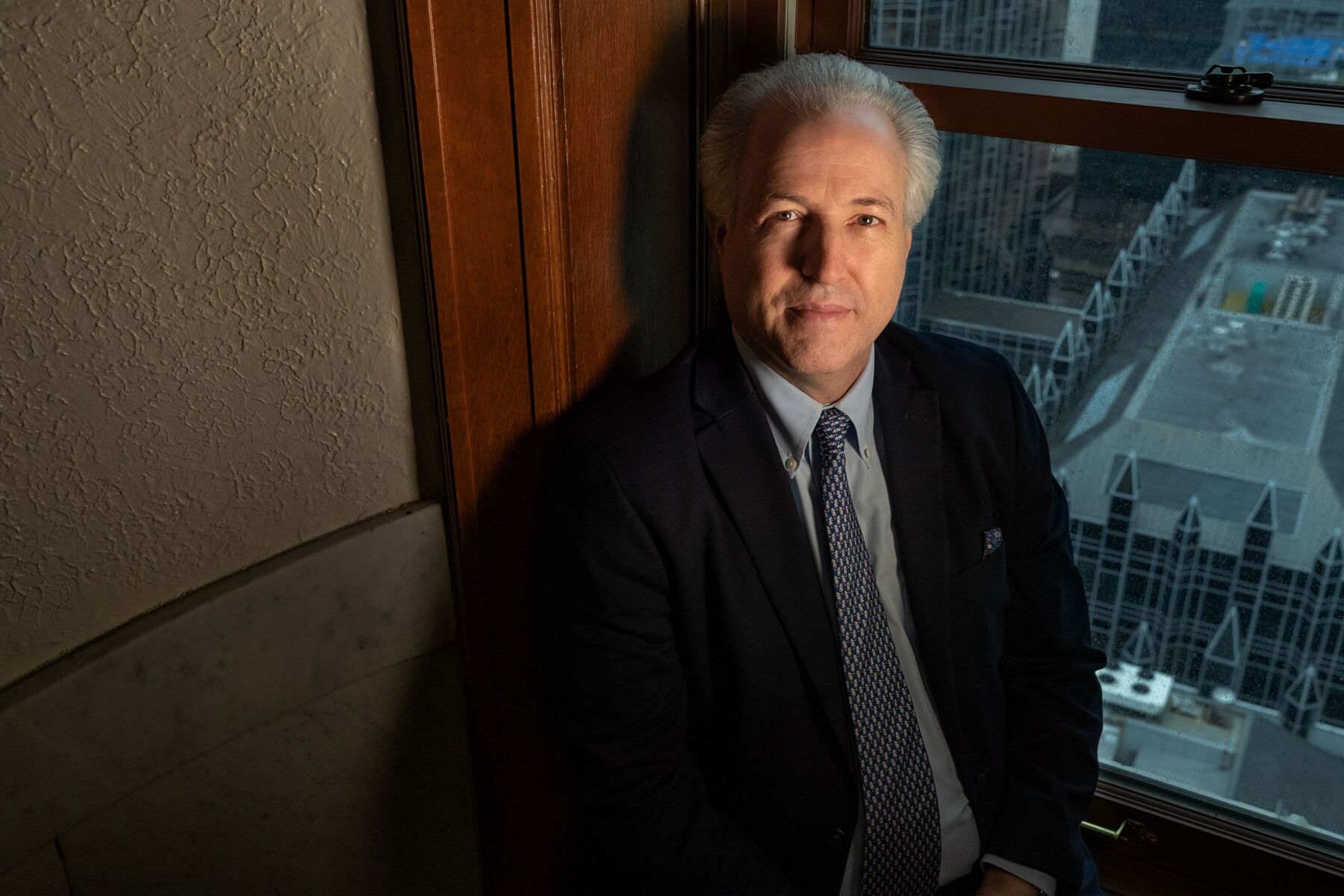
Conductor Manfred Honeck: 'I Still Hear Karajan's Muttered 'Quiet, Quiet!''
Translated from German, summarized and contextualized by DistantNews.
At a glance
Interview
Named sources
Context piece
- Conductor Manfred Honeck has extended his contract with the Pittsburgh Symphony Orchestra until 2033, becoming its longest-serving music director.
- Honeck cited the orchestra's desire for him to stay and his commitment to shaping a specific sound as reasons for the extension.
- He has focused on stylistic consistency and incorporating orchestral suites from operas into concert programs.
Manfred Honeck, music director of the Pittsburgh Symphony Orchestra, has extended his tenure, committing to lead the ensemble until 2033. This decision makes him the longest-serving chief conductor in the orchestra's history, surpassing notable figures like André Previn, Lorin Maazel, and Mariss Jansons.
It has nothing to do with record attempts. When extending the contract before, I thought until 2028 would be enough, and I let that be known. But on tour, orchestra representatives suddenly asked me for a conversation with a serious demeanor. I wondered what I had done wrong, but they said: The orchestra wishes you to stay.
Honeck stated that the extension was not driven by a desire to break records but by the orchestra's strong wish for him to continue. He recalled a moment during a tour when orchestra representatives approached him with a serious request for him to stay, a gesture that deeply moved him and ultimately persuaded him to reconsider his initial plan to conclude his tenure in 2028.
Since taking the helm in 2008, Honeck has focused on cultivating a distinctive sound for the orchestra. He has overseen the addition of 46 new members, representing half of the ensemble. His emphasis has been on stylistic coherence, ensuring musicians can perform Mozart elegantly and avoid excessive force in forte passages, which he dislikes. He believes in playing loudly but with culture.
I have been trying to establish a sound since 2008 that I consider correct, and I have admitted 46 new members, which is half of the orchestra. Technically, everyone is always very good, but I paid attention to the style, that they can play beautiful Mozart, sound elegant, and not always just press in forte: I don't like that at all. Loud, yes, but with culture.
Honeck also expressed his enthusiasm for continuing to reap the artistic rewards with the orchestra, particularly noting its dedication to detailed work and its rejection of guest conductors who merely rush through performances. He has recently focused on creating orchestral suites from large-scale operas for concert hall performance, a move stemming from his deep affection for opera, cultivated during his eight years with the Vienna Philharmonic and the Vienna State Opera. This passion has inspired him to arrange works like "Elektra," "Salome," "Turandot," and "Rusalka" into concert pieces, with "Die tote Stadt" planned next. He also adapted Erwin Schulhoff's "Five Pieces for String Quartet" for orchestra.
Opera is a great love of mine, and the eight years I played with the Vienna Philharmonic and at the State Opera left a deep impression. This experience carries me through my conducting life.
Looking ahead, Honeck is set to conduct Richard Strauss's "Ariadne auf Naxos" at the Salzburg Festival. He described the opera as one of Strauss's most peculiar works, noting its intricate, chamber-music-like score that paradoxically swells to the sound of a full opera orchestra. Honeck highlighted the piece's demanding nature due to its detailed orchestration, emphasizing Strauss's mastery in this regard.
The score is incredibly finely crafted, very chamber-musical – and then it sounds as if a whole 'Rosenkavalier' orchestra were in the pit. Strauss was a master of orchestration. But the piece is very difficult because it is so detail-oriented: One must not be distracted by the sound.
DistantNews Editorial
Originally published by Die Presse in German. Translated, summarized, and contextualized by our editorial team with added local perspective. Read our editorial standards.
More Stories


From Our Blog

What Gets Lost (and Found) When News Is Translated

The Critical Role of Diaspora Media in Global News

What Travellers Should Know About Countries with Restricted Press

A Digital Nomad's Guide to Following Local News

How the Same Story Looks Different in Different Countries
