


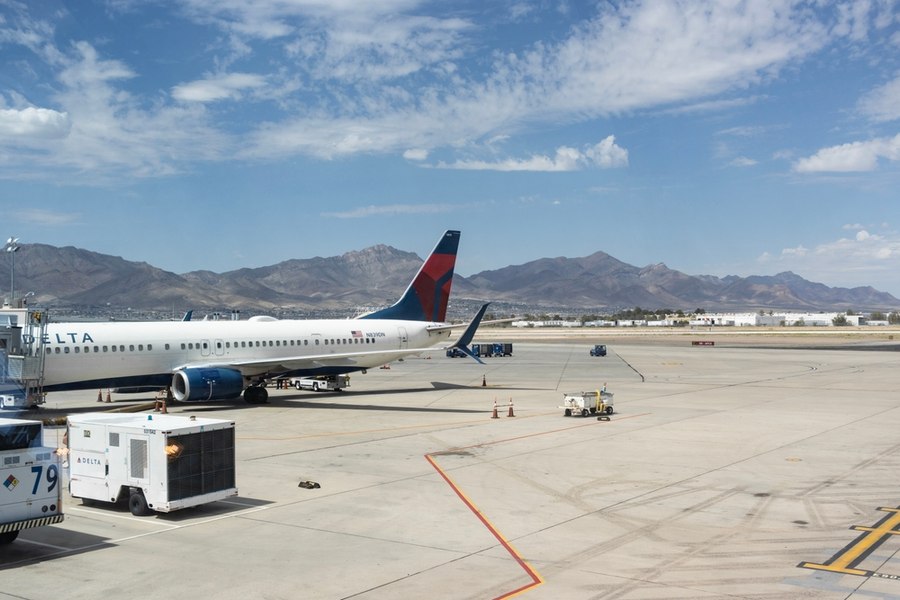
Confusion and Tension Gripped El Paso During Airspace Closure: An Experimental Weapon Test Revealed
Translated from Romanian, summarized and contextualized by DistantNews.
TLDR
- El Paso International Airport's airspace was unexpectedly closed for ten days starting February 10, 2026, due to "special security reasons."
- The closure caused significant confusion and disruption, impacting commercial flights, medical helicopters, and raising concerns about potential threats.
- The shutdown was ultimately caused by a test of a high-powered laser weapon by U.S. Customs and Border Protection, intended to intercept drones, which prompted the FAA to issue the closure over safety concerns.
The night of February 10th, 2026, plunged El Paso into a state of bewildered anxiety as its airspace was abruptly shut down. The notification from the Federal Aviation Administration (FAA) cited "special security reasons" for a ten-day closure, a move unprecedented since 9/11. For air traffic controllers at El Paso International Airport, the implications were immediate and dire: no commercial flights, no medical evacuations, and the looming threat of aircraft being intercepted or even downed. This lack of clear information fueled rampant speculation, ranging from terrorist threats to border conflicts.
Local authorities, including Congresswoman Veronica Escobar and Mayor Renard Johnson, were caught off guard and scrambled to obtain answers from federal agencies. Meanwhile, medical institutions and trauma centers in the region had to urgently devise contingency plans, exploring road transport for patients and organs, highlighting the critical reliance of the city on air access. The confusion was palpable, with residents left to rely on rumors as official explanations remained scarce, underscoring a significant communication breakdown between federal authorities and the local community.
What emerged from the chaos was a story not of external aggression, but of inter-agency conflict and a technological test gone awry. U.S. Customs and Border Protection had been testing a powerful laser weapon designed to counter drones, a tool intended to combat cartel activity. However, the Department of Defense's test, which involved downing an object later identified as a balloon, proceeded despite prior warnings from the FAA about potential aviation safety risks. The FAA's subsequent decision to impose a sweeping no-fly zone was a drastic measure to mitigate these risks, demonstrating the agency's zero-tolerance policy for potential aerial hazards.
This incident, as reported by Adevărul, offers a unique perspective on security operations within the United States. While international coverage might focus on the technological aspect or the disruption to travel, the local El Paso viewpoint, as reflected in the initial confusion and fear, emphasizes the impact on a border city that relies heavily on cross-border cooperation and air transport. The event underscores the challenges of coordinating advanced security measures across different federal agencies and the critical need for transparent communication with affected communities. The fact that a test of a drone-interception weapon led to such a widespread airspace closure is a stark reminder of the complex and sometimes unforeseen consequences of deploying new technologies in sensitive environments.
It caught us completely by surprise.
DistantNews Editorial
Originally published by Adevărul in Romanian. Translated, summarized, and contextualized by our editorial team with added local perspective. Read our editorial standards.
More Stories



From Our Blog

What Gets Lost (and Found) When News Is Translated

The Critical Role of Diaspora Media in Global News

What Travellers Should Know About Countries with Restricted Press

A Digital Nomad's Guide to Following Local News

How the Same Story Looks Different in Different Countries
