



Danube levels plummet despite Romanian rain, drought grips Europe
Translated from Romanian, summarized and contextualized by DistantNews.
At a glance
News
Sources not specified
Context piece
- Despite heavy rainfall in Romania, the Danube River's water level continues to drop, nearing historic lows not seen in decades.
- The decline is attributed to severe drought across the river's vast European basin, affecting upstream countries like Germany, Austria, and Hungary.
- The low water levels impact navigation, aquatic ecosystems, and energy production, with authorities preparing measures for the Cernavodă nuclear power plant.
The Danube River, Europe's second-longest, is experiencing a significant drop in water levels, approaching historic lows, despite recent heavy rainfall in Romania. Hydrologists explain this phenomenon is not due to local weather but a severe drought affecting the river's extensive basin, which spans 19 European countries.
The Danube's flow is largely dependent on its tributaries in upstream nations such as Germany, Austria, Slovakia, Hungary, Croatia, and Serbia. Specialists report that these countries have endured successive heatwaves and significant precipitation deficits in recent months. This drought has drastically reduced the water volumes of the Danube's main tributaries, a situation now impacting the Romanian sector of the river, according to Meteoplus.
This contrasts sharply with Romania, where July saw some of the heaviest rainfall in years, with southern regions receiving over 100-150 liters per square meter. However, these local rains are insufficient to compensate for the lack of water flowing from upstream. The National Institute of Hydrology and Water Management (INHGA) forecasts the Danube's discharge at the Baziaș entry point to decrease slightly to approximately 1,450 cubic meters per second.
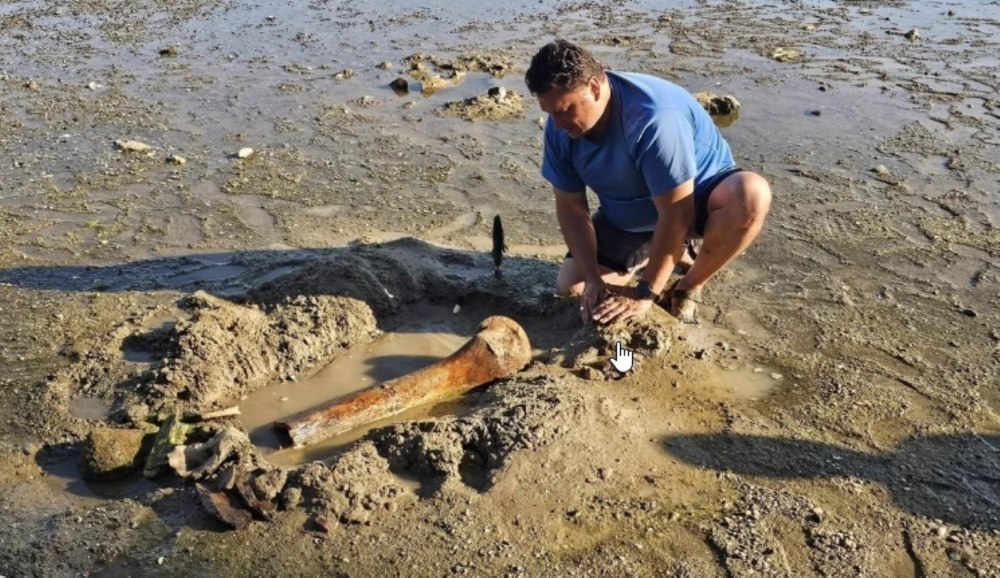
This figure is less than a third of the average for July (4,750 cubic meters per second) and is dangerously close to the historical minimum recorded in 1985 at 1,400 cubic meters per second. The critically low water level is already disrupting navigation, with sandbanks emerging and reducing the depth of the shipping channel. Measures are being prepared to ensure sufficient water flow for the Cernavodă nuclear power plant, including potentially sinking barges to redirect water.
DistantNews Editorial
Originally published by Adevărul in Romanian. Translated, summarized, and contextualized by our editorial team with added local perspective. Read our editorial standards.
More Stories


From Our Blog

What Gets Lost (and Found) When News Is Translated

The Critical Role of Diaspora Media in Global News

What Travellers Should Know About Countries with Restricted Press

A Digital Nomad's Guide to Following Local News

How the Same Story Looks Different in Different Countries
