

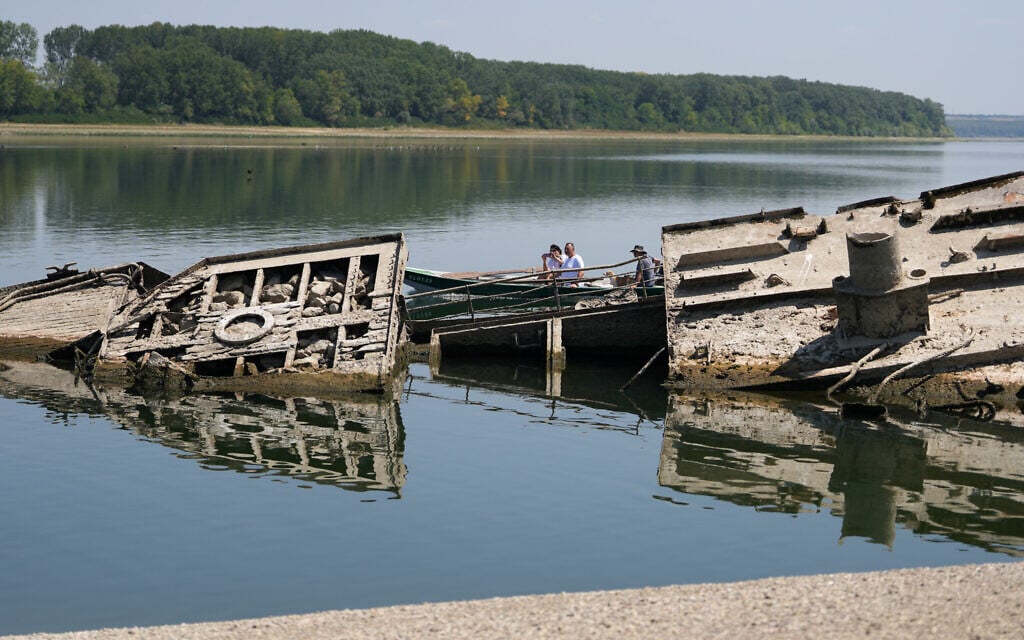
Danube River’s water levels drop so low that sunken Nazi warships are emerging
Summarized and contextualized by DistantNews.
At a glance
News
Named sources
Context piece
- Drought has lowered water levels on the Danube River, exposing dozens of sunken World War II German warships.
- The ships, deliberately sunk by Germans in 1944 to block Soviet forces, are now a visible reminder of the past.
- The low water levels also threaten power plant operations and are forcing energy conservation measures across Central and Eastern Europe.
Europe's longest river, the Danube, has fallen to record low levels due to drought, revealing the haunting hulks of dozens of German warships deliberately sunk by the Nazis in 1944. The submerged vessels, some still carrying weapons, are now emerging from the receding waters near the Serbian port of Prahovo, a stark reminder of the war's final days.
As Nazi Germany retreated from advancing Soviet forces, they scuttled up to 200 warships in September 1944 near Prahovo. The intention was to obstruct the Danube channel and impede the Soviet advance through the Balkans. While the war ended months later with Germany's surrender in May 1945, most of these ships remained submerged, posing a hazard.
Serbian authorities, with EU support, have long sought to address the submerged fleet. While some vessels were removed by Yugoslav authorities, the majority stayed due to the explosives they carried. Now, the dangerously low water levels are not only revealing these historical relics but also creating navigation hazards and threatening the operation of power plants along the river. Governments across Central and Eastern Europe are implementing electricity conservation measures in response to the crisis.
As you can see, the (big) ships can’t pass anymore.
DistantNews Editorial
Originally published by Times of Israel. Summarized and contextualized by our editorial team with added local perspective. Read our editorial standards.
More Stories
From Our Blog

What Gets Lost (and Found) When News Is Translated

The Critical Role of Diaspora Media in Global News

What Travellers Should Know About Countries with Restricted Press

A Digital Nomad's Guide to Following Local News

How the Same Story Looks Different in Different Countries
