


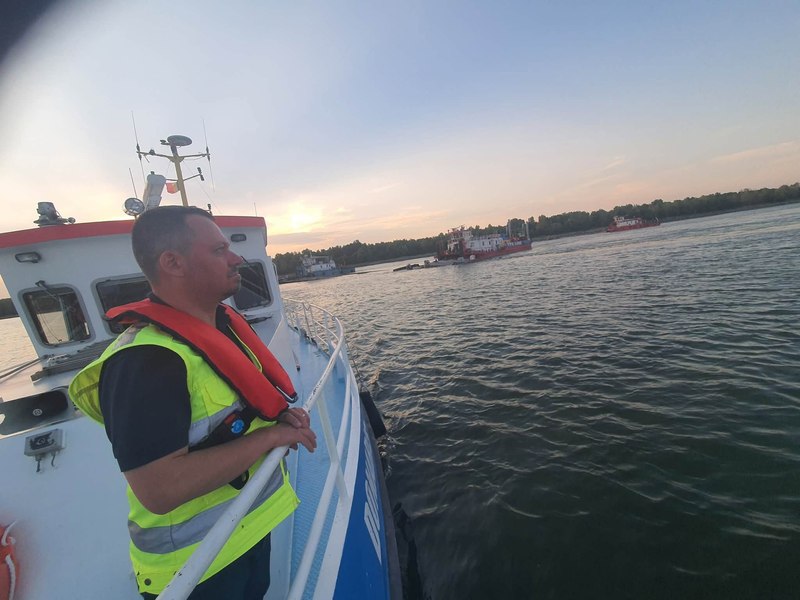
Danube water levels rise slightly, but Cernavodă nuclear plant still at risk
Translated from Romanian, summarized and contextualized by DistantNews.
At a glance
News
Named sources
Ongoing story
- Efforts to increase the Danube River's water level near Cernavodă have shown some success, preventing the shutdown of the Cernavodă nuclear plant's second reactor.
- Strong and unpredictable river currents remain a significant threat, potentially dislodging barges used to redirect water.
- The situation is complex, involving multiple institutions and teams working to manage the critical water flow.
The immediate danger at Cernavodă has not passed, despite successful interventions in the Bala area that have led to a slight increase in the Danube River's water level. Strong and unpredictable currents pose a continuous threat, as they could displace the barges positioned to redirect water towards Cernavodă, potentially negating the efforts made.
Irinel Ionel Scrioșteanu, State Secretary at the Ministry of Transport, announced that last week's efforts in the Bala zone successfully reversed the declining water level trend, allowing Reactor 2 at the Cernavodă Nuclear Power Plant to remain operational. "We managed to reverse the downward trend with a slight increase. According to estimates, the 8 cm 'gained' means we managed to redirect approximately 50 cubic meters of water per second towards Cernavodă," Scrioșteanu stated on Facebook.
We managed to reverse the downward trend with a slight increase. According to estimates, the 8 cm 'gained' means we managed to redirect approximately 50 cubic meters of water per second towards Cernavodă.
Scrioșteanu described the operation in the Bala area as one of the most demanding missions he has faced in his role. "It was one of the most demanding and difficult weeks since I became state secretary. Coordinating the intervention at Bala was a major challenge, and I am glad I was able to fulfill it up to this point," he said. However, he cautioned that the danger is far from over.
It was one of the most demanding and difficult weeks since I became state secretary. Coordinating the intervention at Bala was a major challenge, and I am glad I was able to fulfill it up to this point.
"But the danger has not passed; the Danube currents are strong and can be very unpredictable. At any moment, the barges can be dislodged from their current position, and the redirection of the additional flow to Cernavodă can be diminished (or even canceled). To prevent such a scenario, we continue the intervention at Bala and will provide details on ongoing activities tomorrow," Scrioșteanu added. He thanked the numerous teams involved, including those from AFDJ, ISU Dobrogea, SMURD, and Apele Române.
The critical situation arose from a sharp decline in the Danube's water flow. The interventions aimed to channel more water towards the arm supplying the Cernavodă area, ensuring the necessary conditions for Reactor 2's operation. The river's flow had reached a critical level, threatening the nuclear facility's stability.
But the danger has not passed; the Danube currents are strong and can be very unpredictable. At any moment, the barges can be dislodged from their current position, and the redirection of the additional flow to Cernavodă can be diminished (or even canceled). To prevent such a scenario, we continue the intervention at Bala and will provide details on ongoing activities tomorrow.
DistantNews Editorial
Originally published by Adevărul in Romanian. Translated, summarized, and contextualized by our editorial team with added local perspective. Read our editorial standards.
More Stories



From Our Blog

What Gets Lost (and Found) When News Is Translated

The Critical Role of Diaspora Media in Global News

What Travellers Should Know About Countries with Restricted Press

A Digital Nomad's Guide to Following Local News

How the Same Story Looks Different in Different Countries
