


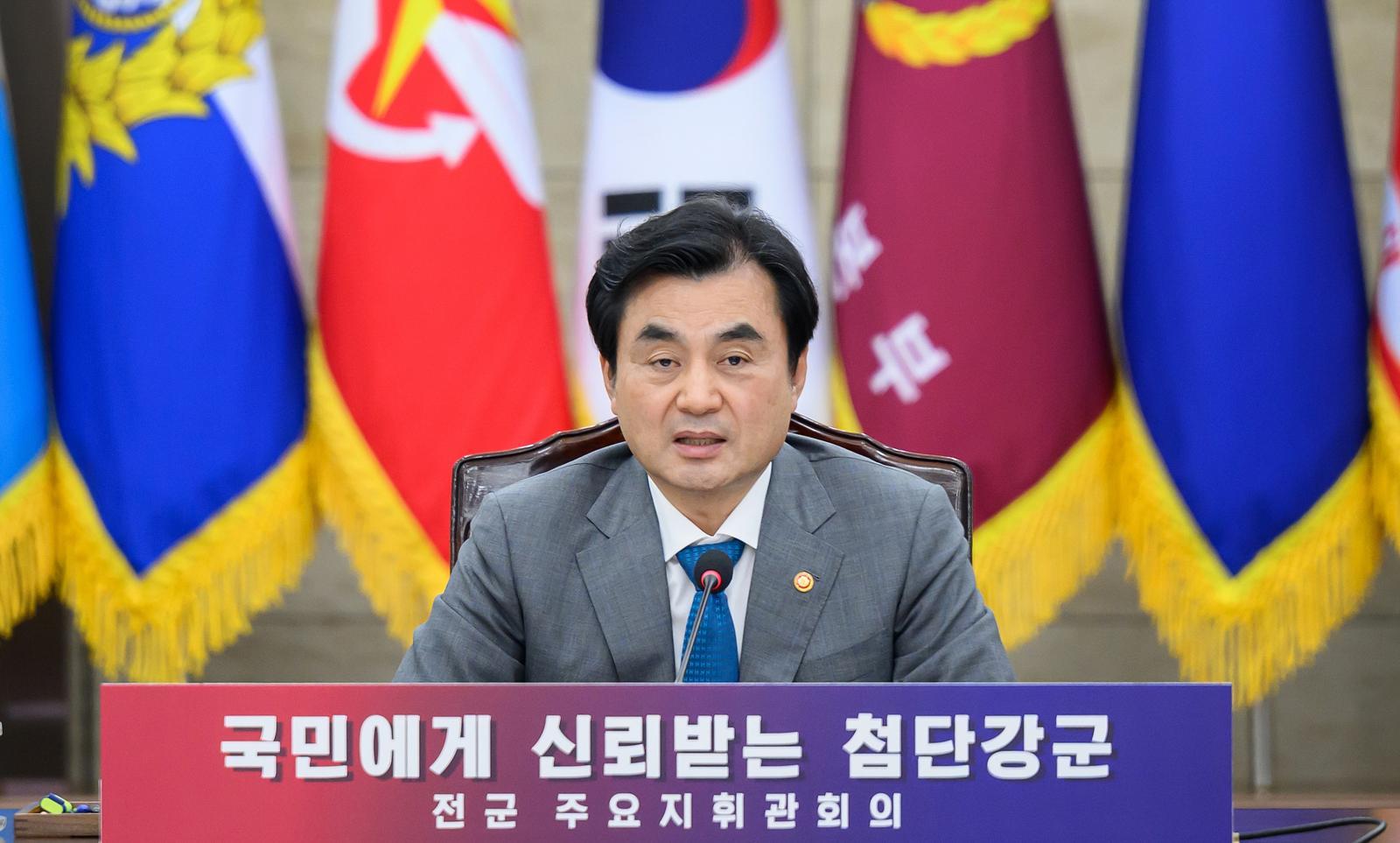
Defense Minister: Military Academies Must Reform for Joint Operations, Not Create Silos
Translated from Korean, summarized and contextualized by DistantNews.
At a glance
News
Official statement
New plan
- South Korean Defense Minister Ahn Kyu-baek called for fundamental reforms in service academies to enhance joint operations.
- He emphasized that while each military branch's expertise must be preserved, it should not create silos hindering collaboration.
- The ministry plans to merge the three service academies by 2028, a move opposed by alumni associations.
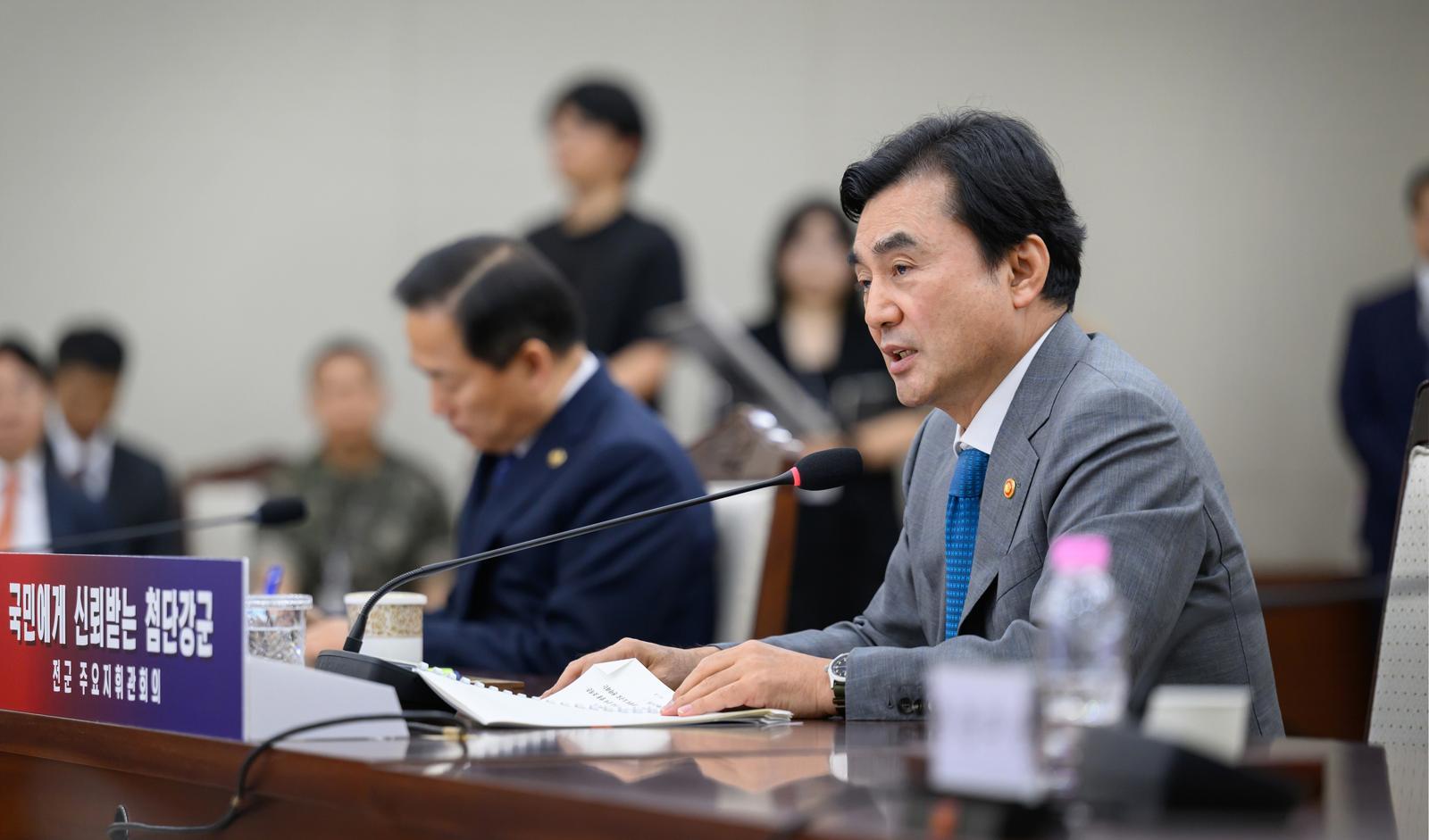
South Korean Defense Minister Ahn Kyu-baek stated on Monday that while the expertise of each military branch, Army, Navy, and Air Force, must be protected, it should not become a barrier to effective collaboration. Speaking at the 2026 First Half Joint Chiefs of Staff Meeting in Seoul, Ahn stressed the urgent need for fundamental reforms in service academies to strengthen joint operational capabilities.
Ahn directly addressed concerns and criticisms from within and outside the military regarding the ministry's plan to integrate the service academies. He questioned the commanders present about the time currently allocated to joint training, both annually and individually, urging them to reflect on the current state of inter-service cooperation.
The expertise of each military branch must be preserved, but that expertise should not become a 'partition.'
"Jointness must be ingrained from the service academy level, learned and trained together, and refined in the field after being systemized through a shared thought process," Ahn explained. He warned that failing to cultivate officers and personnel capable of designing drone warfare and conceptualizing AI-based operational systems now could jeopardize the military's future beyond 2040. "If we miss the golden time, the resulting vacuum will be a loss to national interest and could even become a matter of national survival," he added.
Jointness must be ingrained from the service academy level, learned and trained together, and refined in the field after being systemized through a shared thought process.
The Ministry of National Defense plans to merge the three service academies into a single 'Armed Forces Academy' starting in 2028. Under this proposal, cadets would be selected jointly, with the first two years involving common education and the final two years focusing on specialized military training. The potential relocation of the Korea Military Academy from its current site in Seoul to Chunghak-dong, Jangseong, has also been discussed.
In response, the alumni associations of the three service academies announced they will hold a large-scale rally opposing the integration on August 8 in front of the National Assembly Building in Seoul. The event is co-hosted by several lawmakers from the People Power Party, including Han Ki-ho and Im Jong-deuk, both graduates of the Korea Military Academy, along with security organizations. Approximately 1,000 alumni are expected to attend, marking the first collective action by the associations against the integration plan.
If we miss the golden time, the resulting vacuum will be a loss to national interest and could even become a matter of national survival.
DistantNews Editorial
Originally published by Dong-A Ilbo in Korean. Translated, summarized, and contextualized by our editorial team with added local perspective. Read our editorial standards.
More Stories

From Our Blog

What Gets Lost (and Found) When News Is Translated

The Critical Role of Diaspora Media in Global News

What Travellers Should Know About Countries with Restricted Press

A Digital Nomad's Guide to Following Local News

How the Same Story Looks Different in Different Countries
