


Demand for Metals Supports and Reinforces Our Priorities
Translated from Polish and summarized by DistantNews. Read the original for the full story.
At a glance
Interview
Named sources
Context piece
- KGHM reported nearly 5.6 billion złoty in first-half net profit, a 90% increase in EBITDA and 41% revenue growth year on year.
- The company says it has added 300 million złoty to EBITDA through cost optimization and is targeting 1 billion złoty in savings.
- KGHM is diversifying customers, markets and products, while shifting away from European automotive exposure toward high-voltage cables and long-term offshore and onshore projects.
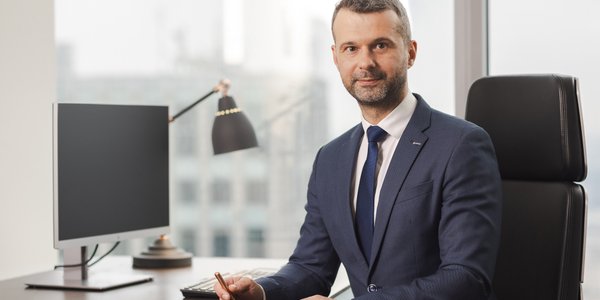
KGHM’s record first half brought nearly 5.6 billion złoty in net profit, a 90% rise in EBITDA and revenue growth of 41% from a year earlier. Piotr Krzyżewski, the company’s vice president for finance, attributes the performance to favorable macroeconomic conditions, but also to preparations made over several years.
Those preparations included work on cash flow, the balance sheet, debt reduction and investment planning. Krzyżewski said the company had to use the current opportunity while preparing for less favorable conditions, since the economy moves in cycles. He also credited KGHM employees for contributing to the result.
The company’s strategy centers on resilience. It is seeking to diversify customers, export markets and products, including more processed goods. Sales records were reported for products such as sulfuric acid, rhenium and selenium. KGHM has also generated 300 million złoty in EBITDA through a cost-optimization program over the past 18 months, with a target of 1 billion złoty in savings. The plan now feeds into budgets and employee performance indicators in Poland and abroad.
KGHM adjusts its sales strategy throughout the year in response to customer discussions and market conditions. In the first quarter, it increased silver sales to North America when prices exceeded $100. After the first half, its market mix contained less China, the largest producer and consumer of copper, and more of the United States and other Asian countries.
The company also changed its exposure to the automotive sector two years ago, reducing it to zero because of concerns about European conditions and margin pressure. It shifted toward high-voltage cables, which require large amounts of copper, and toward long-term offshore and onshore projects in Europe, the United States and Asia. Krzyżewski said declining global raw-material supply remains the biggest risk, while the long-term direction for copper and silver prices is positive.
Our key is building the company’s resilience.
About this summary
Originally published by Rzeczpospolita in Polish. Translated, summarized, and contextualized automatically by DistantNews, with a note on how the source frames the story. Not individually reviewed before publishing. How this works.
More Stories

From Our Blog

What Gets Lost (and Found) When News Is Translated

The Critical Role of Diaspora Media in Global News

What Travellers Should Know About Countries with Restricted Press

A Digital Nomad's Guide to Following Local News

How the Same Story Looks Different in Different Countries
