


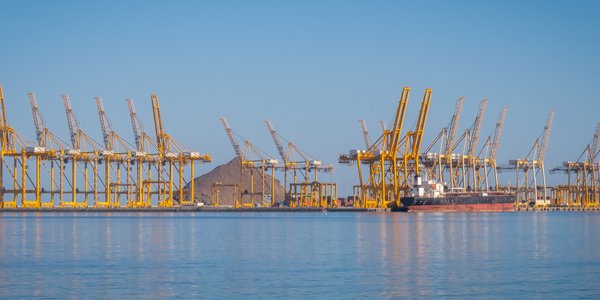
War with Iran spurs Persian Gulf investment in new infrastructure
Translated from Polish and summarized by DistantNews. Read the original for the full story.
At a glance
News
Sources not specified
Context piece
- The war with Iran has highlighted the Persian Gulf's overreliance on the Strait of Hormuz, a critical chokepoint for global oil flow.
- Attacks have disrupted shipping, damaged energy facilities, and impacted regional economies, leading to economic contraction in Qatar and Kuwait.
- Gulf nations are accelerating investments in alternative infrastructure, including ports and pipelines, to bypass the Strait of Hormuz, with state funds and international investors showing interest.
The ongoing conflict with Iran has starkly revealed the Persian Gulf's vulnerability, particularly its deep dependence on the Strait of Hormuz. This vital waterway, responsible for 20% of global oil transit, has been under constant threat from Iran for decades. In the past six months, the strait has faced significant disruptions, leading to a surge in commitments from exporting nations.
Beyond shipping delays, attacks on facilities within the Persian Gulf have crippled oil refineries, aluminum plants, and data centers. Air traffic remains below pre-war levels, affecting tourism and broader economic activity. This instability has shaken the reputation of Gulf hubs as secure havens. Qatar, a major liquefied natural gas exporter, relies heavily on the strait and has suffered substantial production losses due to damaged energy infrastructure.
In response, Gulf states are urgently working to secure their economies, which are facing a significant slowdown. Reuters surveys indicate that Qatar and Kuwait's economies are projected to contract by over 8% this year, while Saudi Arabia's growth is expected to be 1.4%, a notable decrease from 4.5% in 2025. Alternative trade routes have always existed, with traffic now being rerouted to Saudi Red Sea ports and eastern UAE ports, though their capacity is limited.
To overcome these limitations, governments are seeking sustainable, integrated solutions to bypass the Strait of Hormuz. This strategic shift is attracting significant interest from major infrastructure funds and international investors, with costs potentially reaching hundreds of billions of dollars in the coming years. The region's sovereign wealth funds, among the world's largest, are stepping in to expedite these crucial developments, prioritizing ports and energy pipelines.
About this summary
Originally published by Rzeczpospolita in Polish. Translated, summarized, and contextualized automatically by DistantNews, with a note on how the source frames the story. Not individually reviewed before publishing. How this works.
More Stories



From Our Blog

What Gets Lost (and Found) When News Is Translated

The Critical Role of Diaspora Media in Global News

What Travellers Should Know About Countries with Restricted Press

A Digital Nomad's Guide to Following Local News

How the Same Story Looks Different in Different Countries
