


Demographic dividend and AI challenge Indonesia to strengthen workforce development
Translated from Indonesian and summarized by DistantNews. Read the original for the full story.
At a glance
News
Named sources
Context piece
- Indonesia’s large working-age population offers an opportunity but could create social and economic problems without relevant education, health services, character development and quality jobs.
- West Sumatra Governor Mahyeldi Ansharullah urged local governments to connect education, business and communities while strengthening digital and AI literacy.
- Indonesia had 155.41 million people in its labor force in May 2026, while reports cited in the article project that 39% of core worker skills could change by 2030.
Indonesia’s demographic dividend will not automatically translate into development gains. With artificial intelligence reshaping the workplace, local governments are being asked to do more to ensure people gain the skills, character and access to quality employment they need.
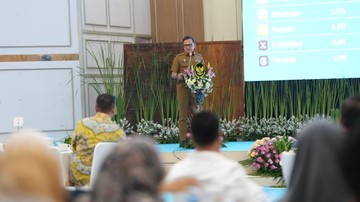
West Sumatra Governor Mahyeldi Ansharullah said development could not rely only on economic growth, infrastructure, investment or technological progress. The people who direct and use those tools will determine whether they produce lasting results. “The nation’s future will not be won by technology alone, but by people capable of giving it direction,” he said at a public lecture and book launch at the SEBI Institute on Aug. 31, 2026.
Mahyeldi described Indonesia’s large working-age population as both an opportunity and a challenge. Without relevant education, health services, character-building, lifelong learning and quality jobs, he said, the demographic dividend could become a social and economic problem.
The nation’s future will not be won by technology alone, but by people capable of giving it direction.
Statistics Indonesia reported that the country’s labor force reached 155.41 million people in May 2026. Of those, 148.19 million were employed, while the open unemployment rate stood at 4.65%.
Mahyeldi called for practical policies to improve worker skills, align education with business needs, strengthen digital and AI literacy, and give young people room to help solve problems in their communities. He said local governments were strategically placed because they work directly with residents, schools, universities, businesses, villages and nagari administrations. “National leadership is ultimately also built from the regions. Regions must become places where competent, principled people are born, people who dare to take responsibility and are able to work for broader interests,” he said.
The article cites the Future of Jobs Report 2025, which estimates that about 39% of core worker skills will change by 2030, and an International Labour Organization study finding that roughly one in four workers worldwide has some exposure to generative AI. Mahyeldi said that exposure does not automatically mean jobs will disappear. The more immediate issue, he said, is the change in tasks and competencies workers will need.
National leadership is ultimately also built from the regions. Regions must become places where competent, principled people are born, people who dare to take responsibility and are able to work for broader interests.
About this summary
Originally published by Republika in Indonesian. Translated, summarized, and contextualized automatically by DistantNews, with a note on how the source frames the story. Not individually reviewed before publishing. How this works.
More Stories


From Our Blog

What Gets Lost (and Found) When News Is Translated

The Critical Role of Diaspora Media in Global News

What Travellers Should Know About Countries with Restricted Press

A Digital Nomad's Guide to Following Local News

How the Same Story Looks Different in Different Countries
