


Denmark's Prime Minister Declares Wealth Tax Dead Amid Government Negotiations
Translated from Danish, summarized and contextualized by DistantNews.
TLDR
- Danish Prime Minister Mette Frederiksen has declared the wealth tax, a key Social Democratic proposal, effectively dead due to a lack of parliamentary majority.
- Frederiksen stated that while the party proposed the tax to combat inequality, they can proceed with other anti-inequality measures if a new government takes other initiatives.
- The difficulty in forming a government is attributed to a fragmented parliament where no single bloc holds a majority, requiring parties to "work together in a completely new way."
In a significant political development, Danish Prime Minister Mette Frederiksen has signaled the effective end of the wealth tax, a cornerstone of the Social Democrats' election platform. Speaking on May Day at the Workers' Museum in Copenhagen, Frederiksen acknowledged that there is no parliamentary majority to implement the tax, a crucial blow to one of her party's most prominent policy goals.
The wealth tax is not supported by a majority.
Frederiksen explained that the Social Democrats had championed the wealth tax as a means to address rising inequality. However, she indicated a willingness to compromise, stating that if a new government pursues alternative initiatives to combat inequality, she would have "no problem" setting ambitious goals for wealth growth through other means. This pragmatic stance reflects the complex realities of coalition negotiations in a highly fragmented Danish parliament.
If a new government takes other initiatives that go against inequality in our society. Then I have no problem with us also setting an ambitious goal for how much wealth should be increased.
The Prime Minister candidly described the electoral outcome as a challenge for her as a negotiator. With 12 parties represented and no clear red or blue majority, the current Folketing demands a "completely new way" of collaboration. This necessitates "unbelievably many meetings" and a period of adjustment as parties accustomed to traditional bloc politics learn to work across divides.
You Danes have put together a parliament where, for the first time in this millennium, there is neither a red majority nor a blue majority. 12 parties. Many want to be in government. Just not with each other. You have not made the task easy.
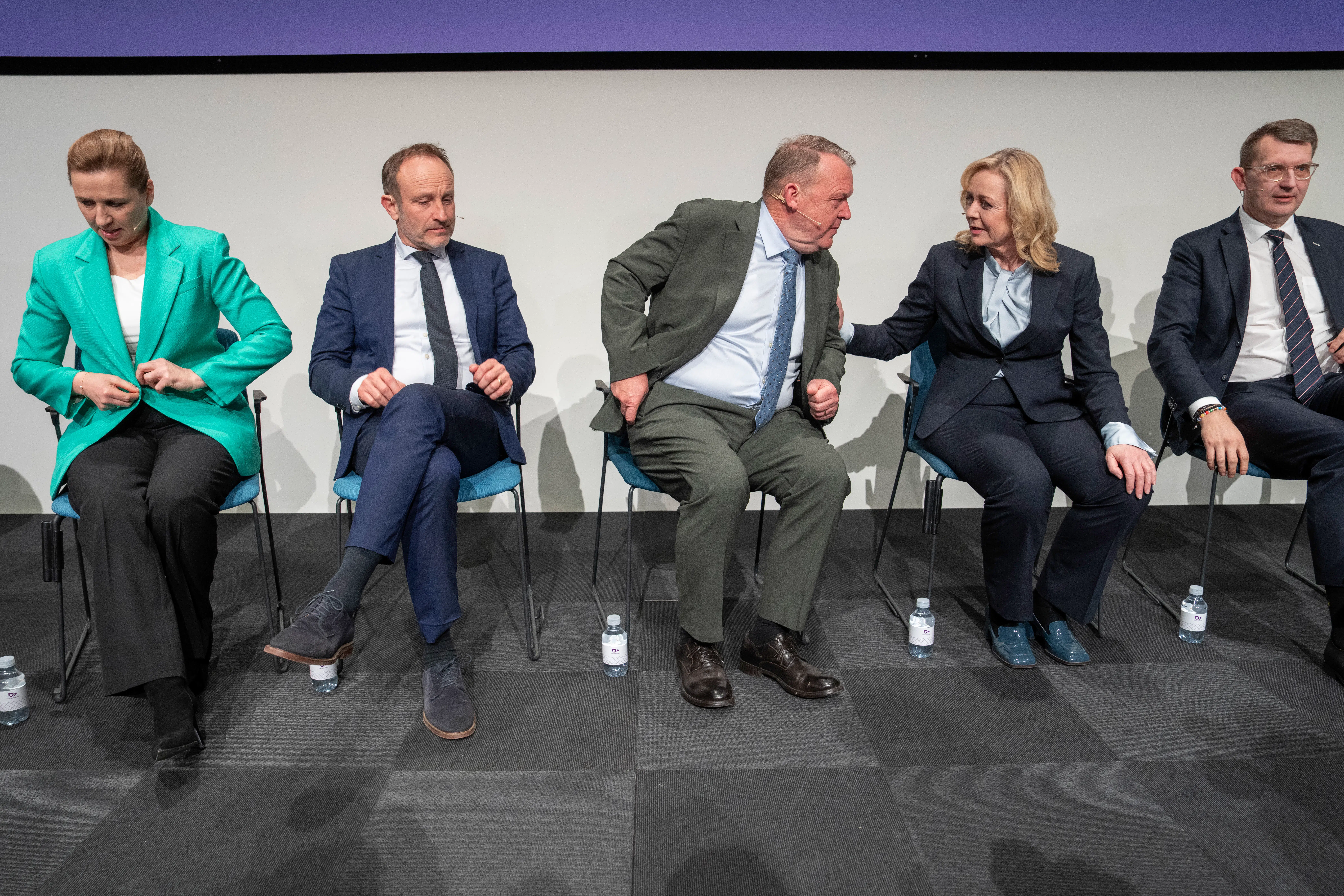
Frederiksen's schedule following her speech, which included meetings with the Moderate and Social Liberal parties—key players in the ongoing government formation talks—underscores the delicate balancing act required. Her pointed remark about Lars Løkke Rasmussen, leader of the Moderates, noting he is "certainly not a Social Democrat," highlights the ideological distances that must be bridged. The burial of the wealth tax, therefore, is not just a policy shift but a symbol of the new political landscape Denmark is navigating, one that prioritizes compromise and cross-party cooperation over singular party agendas.
Much can be said about him, but a Social Democrat - he is certainly not.
DistantNews Editorial
Originally published by Berlingske in Danish. Translated, summarized, and contextualized by our editorial team with added local perspective. Read our editorial standards.
More Stories

From Our Blog

What Gets Lost (and Found) When News Is Translated

The Critical Role of Diaspora Media in Global News

What Travellers Should Know About Countries with Restricted Press

A Digital Nomad's Guide to Following Local News

How the Same Story Looks Different in Different Countries
