

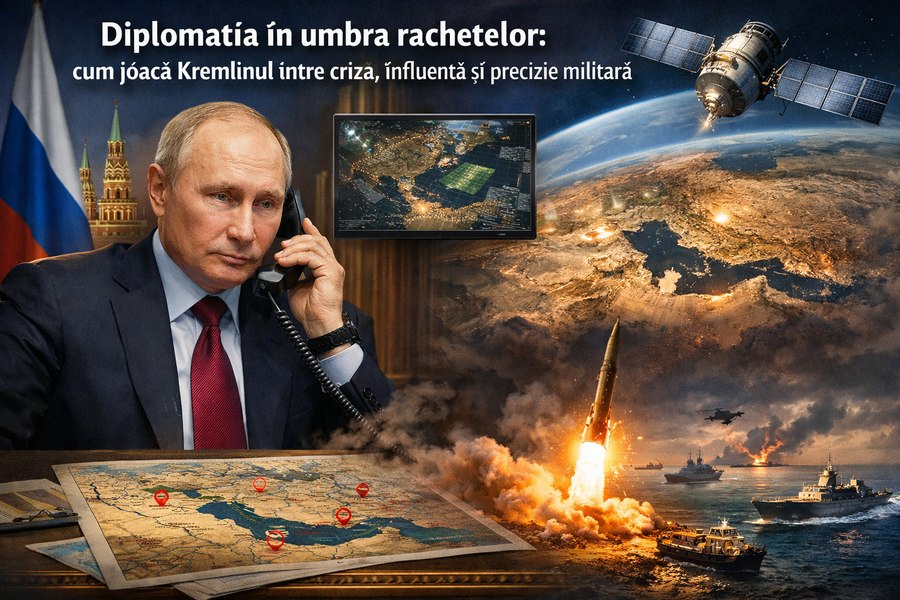
Diplomacy in the Shadow of Missiles: How the Kremlin Plays Between Crisis, Influence, and Military Precision
Translated from Romanian, summarized and contextualized by DistantNews.
TLDR
- Russia is leveraging diplomatic vacuums to increase its influence in the Middle East without direct military involvement.
- The Kremlin's recent call between Putin and Iran's president highlights Russia's strategic positioning amidst regional crises.
- Russia benefits from regional instability through increased oil prices, while also seeking to maintain its investments and influence in Iran.
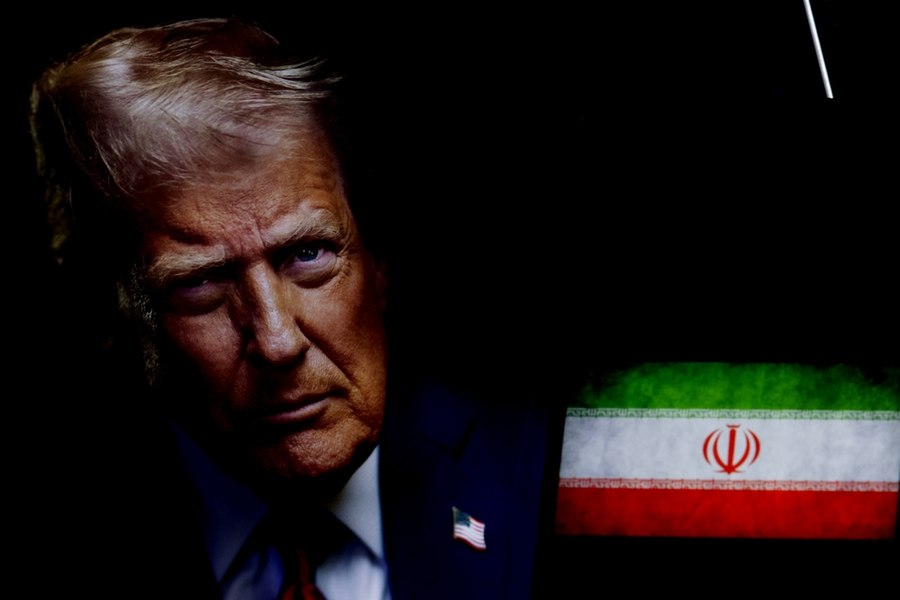
In a masterful display of strategic diplomacy, the Kremlin has adeptly filled the void left by faltering Western negotiations, particularly in the Middle East. President Vladimir Putin's recent phone call with Iranian President Masoud Pezeshkian, offering Russia's support for crisis resolution, was not merely a diplomatic nicety but a calculated message. This intervention occurred precisely as American negotiation teams withdrew from Islamabad, leaving a significant diplomatic vacuum that Moscow was quick to occupy.
Rusia exploatează vidul diplomatic pentru a-și crește influența în Orient fără a se implica direct.
Putin's critique of the West's "two-speed approach" and his affirmation of Iran's sovereignty underscore Russia's commitment to its strategic partner. By supporting Iran's demand for security guarantees and reparations, Russia positions itself as a key player in regional stability, while simultaneously benefiting from the economic implications of the ongoing crisis. The rise in oil prices, a direct consequence of the tensions, has significantly bolstered Russia's budget, achieving fiscal stability without direct military expenditure.
Președintele rus Vladimir Putin a vorbit duminică 12 aprilie telefonic cu omologul său iranian Masoud Pezeshkian, oferind sprijinul Rusiei pentru eforturile de rezolvare a crizei din Orientul Mijlociu, după prăbușirea negocierilor dintre Iran și Statele Unite.
However, Russia's position is nuanced. While it benefits from the current instability, continued attacks on Iran also jeopardize Moscow's substantial investments in the country, particularly in gas projects. A weakened Iran could become more dependent on Russia, granting Moscow greater leverage. Yet, Russia is unlikely to risk a direct confrontation with the United States and Israel, prioritizing its relationship with Israel and its hopes for a deal concerning Ukraine. Thus, Moscow's role remains that of a mediator, potentially offering limited military assistance rather than direct intervention, as it navigates a complex geopolitical landscape.
Putin a criticat vehement „abordarea cu două viteze" a Occidentului și a subliniat necesitatea respectării suveranității și integrității teritoriale a Iranului.
DistantNews Editorial
Originally published by Adevărul in Romanian. Translated, summarized, and contextualized by our editorial team with added local perspective. Read our editorial standards.
More Stories
From Our Blog

What Gets Lost (and Found) When News Is Translated

The Critical Role of Diaspora Media in Global News

What Travellers Should Know About Countries with Restricted Press

A Digital Nomad's Guide to Following Local News

How the Same Story Looks Different in Different Countries
